אנגלית לכיתה ח׳ — 100 טקסטים אנסין + שאלות ופתרונות באנגלית
אנסין באנגלית בכיתה ח׳ הוא אחד הנושאים שהכי מלחיצים תלמידים והורים, לא בגלל שהטקסטים תמיד קשים מאוד, אלא בגלל שהמשימה דורשת כמה יכולות בבת אחת: להבין מילים, לזהות רעיון מרכזי, לקרוא שאלה בצורה מדויקת, למצוא הוכחה בטקסט, לענות באנגלית, לא להילחץ מזמן, ולא להיתקע כשמופיעה מילה לא מוכרת. תלמיד יכול לדעת רשימות מילים, להצליח בשיעור רגיל, ואפילו לקבל ציונים טובים בהכתבות, אבל ברגע שהוא מקבל טקסט חדש שלא ראה לפני כן, משהו נתקע. הוא קורא שורה, חוזר אחורה, מנסה לתרגם הכול בראש לעברית, מאבד את הרעיון, ואז מרגיש שהוא פשוט “לא טוב באנגלית”.
אבל ברוב המקרים הבעיה אינה חוסר יכולת. הבעיה היא חוסר שיטה. תלמידים רבים בכיתה ח׳ לא קיבלו מספיק הדרכה איך ניגשים לטקסט אנסין, איך מזהים מילים חשובות, איך מבינים שאלה בלי להיבהל, ואיך עונים בצורה ברורה גם אם לא מבינים מאה אחוז מהטקסט. הם מנסים לקרוא כמו שקוראים בעברית, אבל באנגלית זה לא תמיד עובד. הם מתחילים במילה הראשונה, מנסים לתרגם כל משפט, מתעכבים על מילים קטנות, ואז מפספסים את התמונה הגדולה. במקום להשתמש בקריאה חכמה, הם משתמשים במאמץ עצום — וזה מתיש.
המדריך הזה נכתב כדי לתת לתלמידים, להורים ולכל מי שמחפש חיזוק באנגלית דרך הבנת הנקרא, דרך עבודה אמיתית: לא רק הסברים, אלא גם 100 טקסטים קצרים באנגלית ברמה שמתאימה לתלמידי כיתה ח׳, עם שאלות ופתרונות באנגלית. המטרה אינה רק “לעשות תרגילים”, אלא ללמוד איך לחשוב בזמן קריאה. כל טקסט יכול לשמש לתרגול עצמאי, לתרגול עם הורה, או כחומר מעולה לשיעור פרטי באנגלית בזום עם מורה שמתקן בזמן אמת, מסביר למה התשובה נכונה, ומראה איך להפוך טעות להבנה.
חשוב לומר את זה בצורה ברורה: אנסין טוב אינו מבחן זיכרון. הוא מבחן הבנה. תלמיד לא אמור לדעת את כל המילים מראש. הוא אמור לדעת איך להסתדר גם כשיש מילים חדשות. בדיוק כאן נכנסים לימוד אנגלית אונליין, שיעור אנגלית אישי, ומורה פרטי לאנגלית אונליין. בשיעור אחד על אחד אפשר לעצור ברגע שהתלמיד נתקע, לשאול מה בדיוק בלבל אותו, לפרק את השאלה, לקרוא את המשפט שוב בקול, לזהות רמזים, ולבנות הרגלי קריאה חדשים. זה שונה מאוד מלימוד כללי שבו כולם מקבלים את אותו הסבר ומי שלא הבין נשאר מאחור.
הטקסטים במאמר מחולקים כך שהתלמיד יוכל לתרגל מגוון נושאים: בית ספר, חברים, טכנולוגיה, ספורט, משפחה, סביבה, קריאה, עבודה עתידית, חיות, מסעות, בריאות, תחביבים, קבלת החלטות, ביטחון עצמי, ועולם מודרני. חלק מהשאלות בודקות פרטים, חלק בודקות רעיון מרכזי, חלק דורשות הסקה, וחלק מלמדות איך לזהות משמעות של מילה מתוך הקשר. זו בדיוק העבודה שתלמידי כיתה ח׳ צריכים כדי לא רק לעבור מבחן, אלא להתחיל להרגיש שהם מסוגלים לקרוא באנגלית בלי פחד.
למה אנסין באנגלית בכיתה ח׳ חשוב הרבה יותר מציון במבחן אחד?
בכיתה ח׳ תלמידים נמצאים בשלב מעבר חשוב מאוד. הם כבר לא בתחילת הדרך כמו בכיתות ה׳ או ו׳, אבל הם עדיין לא הגיעו לרמת התיכון שבה מצפים מהם להתמודד עם טקסטים ארוכים, משימות כתיבה, דיבור, הבנת הנשמע ומבחנים מורכבים יותר. לכן אנסין בכיתה ח׳ הוא לא רק תרגיל בית ספרי. הוא סימן מוקדם שמראה האם התלמיד יודע לקרוא באנגלית בצורה עצמאית, או שהוא עדיין תלוי בתרגום, ניחוש, עזרה מבחוץ או מזל.
הבעיה שתלמידים רבים מרגישים היא פער בין “אני לומד אנגלית כבר שנים” לבין “אני לא באמת מבין טקסט חדש לבד”. הפער הזה מתסכל מאוד, במיוחד כשהתלמיד משווה את עצמו לחברים בכיתה. הוא יכול לחשוב שכולם מבינים ורק הוא לא, למרות שבפועל הרבה תלמידים מתקשים באותה נקודה בדיוק. הם פשוט לא תמיד אומרים את זה בקול. כשילד או נער חווה שוב ושוב חוסר הצלחה באנסין, הוא עלול להתחיל להאמין שהאנגלית שלו חלשה באופן קבוע, וזה עלול לפגוע גם במוטיבציה וגם בביטחון.
הבעיה נוצרת בדרך כלל כי לימוד אנגלית בבית הספר צריך להתאים לכיתה שלמה. בכיתה יש תלמידים חזקים, תלמידים בינוניים, תלמידים עם פערים, תלמידים שמתביישים לשאול, ותלמידים שצריכים יותר זמן כדי להבין. המורה בכיתה לא תמיד יכול לעצור לכל תלמיד, לבדוק איך הוא קורא, למה הוא טעה בשאלה מסוימת, או מה גרם לו לבחור תשובה לא נכונה. כך נוצר מצב שתלמידים מתרגלים הרבה, אבל לא תמיד מקבלים אבחון מדויק של דרך החשיבה שלהם.
אם מתעלמים מהבעיה, היא לרוב לא נעלמת לבד. תלמיד שמתקשה באנסין בכיתה ח׳ עלול להמשיך להתקשות גם בכיתה ט׳, ואז בתיכון, כאשר הטקסטים נעשים ארוכים יותר והשאלות דורשות הבנה עמוקה יותר. הקושי יכול להשפיע גם על דיבור באנגלית, כי מי שמרגיש שהוא לא מבין טקסטים, הרבה פעמים גם מפחד לדבר. הוא חושש לטעות, לא בטוח באוצר המילים שלו, ולא מאמין שהוא יכול לבנות משפט ברור.
הטעות הנפוצה היא לחשוב שצריך רק “לקרוא יותר טקסטים”. קריאה מרובה בהחלט עוזרת, אבל רק אם היא נעשית נכון. תלמיד יכול לקרוא 50 טקסטים ועדיין להמשיך לטעות באותן שאלות אם אף אחד לא מראה לו מה דפוס הטעות שלו. האם הוא לא מבין את השאלה? האם הוא מדלג על מילת שלילה כמו not? האם הוא עונה מהזיכרון ולא לפי הטקסט? האם הוא בוחר תשובה שנשמעת הגיונית אבל לא מופיעה בטקסט? בלי בדיקה כזאת, התרגול עלול להפוך לעוד מקור תסכול.
הפתרון המקצועי הוא לבנות שיטה: קריאה ראשונה להבנת רעיון כללי, קריאה שנייה לאיתור פרטים, סימון מילים חשובות, זיהוי סוג השאלה, חיפוש הוכחה בטקסט, ואז ניסוח תשובה קצרה וברורה. בשיעור אנגלית אונליין אחד על אחד אפשר לתרגל בדיוק את השלבים האלה בקצב של התלמיד. המורה יכול לשמוע איך התלמיד קורא, לראות איפה הוא מתעכב, וללמד אותו לא להיבהל ממילים לא מוכרות. זה הופך את האנסין ממשימה מפחידה לתהליך שאפשר ללמוד.
למה תלמידים יודעים מילים באנגלית אבל עדיין לא מצליחים להבין טקסט אנסין?
אחת התופעות הנפוצות ביותר בלימודי אנגלית היא תלמיד שיודע הרבה מילים בנפרד, אבל מתקשה להבין טקסט שלם. הוא יכול לדעת ש־weather זה מזג אוויר, friend זה חבר, decide זה להחליט, ו־important זה חשוב, אבל כשהמילים מופיעות בתוך פסקה, עם זמן דקדוקי, כינויי גוף, מילות קישור ושאלה בסוף, הוא מאבד את הביטחון. זה קורה מפני שהבנת הנקרא אינה רק אוצר מילים. היא שילוב של מילים, דקדוק, הקשר, היגיון, זיהוי מבנה, והיכולת להבין מה הכותב מנסה לומר.
הבעיה נוצרת כשמלמדים מילים בצורה מנותקת. תלמידים משננים רשימות, עושים הכתבות, מתרגמים מילים, אבל לא תמיד משתמשים במילים בתוך משפטים חיים. כשהמילה מופיעה בטקסט, היא לא עומדת לבד. היא קשורה למילים שלפניה ואחריה. לדוגמה, המילה light יכולה להיות אור, קל, או אפילו פועל במשמעות להדליק. אם תלמיד רגיל לחשוב שלכל מילה יש רק תרגום אחד, הוא עלול לפרש משפט בצורה שגויה.
אם מתעלמים מזה, התלמיד ממשיך לחפש תרגום מדויק לכל מילה במקום להבין משמעות כללית. זו אחת הסיבות לכך שאנסין מרגיש איטי ומעייף. במקום לשאול “מה הכותב אומר כאן?”, התלמיד שואל “מה כל מילה אומרת בעברית?”. השאלה השנייה גוזלת זמן, מעלה לחץ, ולא תמיד מובילה להבנה טובה. לפעמים דווקא תלמיד שמנסה לתרגם הכול נכשל יותר מתלמיד שמוכן להבין את הרעיון גם בלי לדעת כל מילה.
הטעות הנפוצה היא ללחוץ על הילד ללמוד עוד ועוד מילים בלי ללמד אותו איך להשתמש בהן. אוצר מילים חשוב מאוד, אבל הוא צריך להיבנות דרך הקשרים: משפטים, סיפורים, שאלות, דיבור, כתיבה ותיקון. כאשר לומדים מילה בתוך טקסט, כדאי לשאול: מי עושה את הפעולה? מה קרה לפני? מה קרה אחרי? האם המילה חיובית או שלילית? האם אפשר לנחש אותה לפי המשפט? השאלות האלה מפתחות חשיבה באנגלית.
הפתרון המקצועי הוא לחבר בין קריאה לדיבור. אחרי קריאת טקסט, לא מספיק לענות על שאלות בכתב. כדאי לבקש מהתלמיד להסביר בעל פה מה קרה בטקסט, לתאר את הדמות, לומר מה הבעיה, או לתת דעה פשוטה. כך אוצר המילים עובר מהבנה פסיבית לשימוש פעיל. לפי עקרונות תרגול קריאה שמופיעים גם באתרי למידה כמו British Council LearnEnglish Teens, קריאה לפי רמות ותרגול שאלות עוזרים לתלמידים לשפר גם הבנה וגם אוצר מילים בצורה הדרגתית.
בשיעור אנגלית אונליין אחד על אחד, המורה יכול לקחת טקסט קצר ולבנות ממנו שיעור שלם: קודם קריאה, אחר כך שאלות, אחר כך הסבר מילים, אחר כך דיבור, ואז כתיבה קצרה. תלמיד בכיתה ח׳ שמתקשה באנסין לא צריך רק עוד דף עבודה. הוא צריך שמישהו יראה לו איך מוח באנגלית עובד. לדוגמה, אם הוא קורא טקסט על ילד שהצטרף לקבוצת כדורסל, המורה יכול לתרגל איתו מילים כמו join, team, practice, nervous, improve, ואז לבקש ממנו לספר על חוג שהוא התחיל. כך הטקסט הופך לחיים.
השיטה הנכונה לקריאת אנסין: לפני הקריאה, בזמן הקריאה ואחרי הקריאה
הדרך שבה תלמיד מתחיל לקרוא אנסין משפיעה מאוד על התוצאה. תלמידים רבים מתחילים מיד מהשורה הראשונה ומנסים להבין הכול. זו תגובה טבעית, אבל לא תמיד חכמה. לפני שקוראים לעומק, צריך לקבל תמונה כללית: מה הכותרת? כמה פסקאות יש? האם יש שמות, מספרים, ימים, מקומות או מילים שחוזרות? האם הטקסט נראה כמו סיפור, הודעה, מייל, כתבה קצרה, יומן, מודעה או קטע מידע? השלב הזה מוריד לחץ כי הוא נותן לתלמיד תחושת כיוון.
הבעיה שתלמיד מרגיש בזמן אנסין היא חוסר שליטה. הוא רואה טקסט חדש ומרגיש שהכול זר. לכן חשוב ללמד אותו שיש פעולות קבועות שאפשר לעשות בכל טקסט. גם אם הנושא חדש, השיטה מוכרת. זה כמו להיכנס לחדר חשוך עם פנס קטן: לא רואים הכול מיד, אבל מתחילים לזהות צורות. קריאה חכמה באנגלית היא בדיוק הפנס הזה.
בזמן הקריאה הראשונה, המטרה אינה להבין כל פרט. המטרה היא להבין את הרעיון המרכזי. מי הדמות? מה קרה? מה הבעיה? מה השתנה? מה הכותב רוצה להסביר? לאחר מכן, בקריאה השנייה, מחפשים תשובות לשאלות. כאן חשוב לא לנחש מהר מדי. תלמיד צריך ללמוד לחזור לטקסט, למצוא את המשפט שמוכיח את התשובה, ולבדוק אם התשובה באמת מתאימה לשאלה.
אחרי הקריאה, חשוב לעשות תיקון חכם. לא מספיק לסמן נכון או לא נכון. צריך להבין למה התשובה הנכונה נכונה ולמה התשובה הלא נכונה מבלבלת. לפעמים תשובה לא נכונה כוללת מילה שמופיעה בטקסט, אבל המשמעות שלה שונה. לפעמים היא נכונה חלקית, אבל לא עונה בדיוק על השאלה. לפעמים היא מבוססת על ידע אישי ולא על הטקסט. אלה ההבדלים שמורה פרטי לאנגלית אונליין יכול להסביר בצורה אישית וברורה.
הטעות הנפוצה היא לתרגל אנסין כאילו מדובר במבחן בלבד. תלמיד מקבל טקסט, עונה, בודק תשובות, וסוגר את הדף. אבל התרגול האמיתי מתחיל דווקא אחרי הבדיקה. כדאי לחזור לטקסט ולסמן שלושה משפטים חשובים, חמש מילים חדשות, שאלה אחת שהייתה מבלבלת, ותשובה אחת שאפשר לנסח טוב יותר. כך כל טקסט הופך לכלי למידה ולא רק לציון.
הפתרון המקצועי הוא לעבוד במחזור קבוע: Preview, Read, Find, Answer, Explain. קודם מסתכלים על הטקסט, אחר כך קוראים, אחר כך מחפשים הוכחה, אחר כך עונים, ולבסוף מסבירים למה. בשיעור אנגלית בזום, המורה יכול לבקש מהתלמיד לומר בקול איפה הוא מצא את התשובה. זה שלב קריטי, כי תלמיד שמסביר את הבחירה שלו לומד לחשוב באנגלית ולא רק לנחש.
איך להשתמש נכון ב־100 הטקסטים במאמר הזה?
100 הטקסטים שמופיעים כאן לא נועדו לקריאה מהירה ביום אחד. הם נועדו לבנות יכולת בהדרגה. תלמיד בכיתה ח׳ יכול להתחיל מטקסט אחד או שניים ביום, לקרוא בקול, לענות על השאלות, לבדוק את הפתרונות, ואז לחזור ולכתוב במחברת שלוש מילים חדשות. הורה יכול לשבת לידו גם אם האנגלית שלו אינה מושלמת, כי התשובות מופיעות באנגלית והמבנה ברור. אבל העבודה הטובה ביותר מתרחשת כאשר התלמיד גם מסביר את התשובה בקול.
הבעיה של תלמידים רבים היא שהם רוצים לסיים מהר. הם רואים 100 טקסטים וחושבים שצריך “לעבור על הכול”. אבל בלימוד אנגלית, כמות בלי איכות אינה מספיקה. עדיף לקרוא טקסט אחד לעומק מאשר לקרוא עשרה טקסטים בלי להבין את הטעויות. אם תלמיד טעה בשאלה, זו לא בעיה. זו הזדמנות. הטעות מראה בדיוק איפה צריך לעבוד: מילים, הבנת שאלה, איתור מידע, הסקה, או ניסוח תשובה.
אם מתעלמים מהדרך הנכונה, התרגול עלול להפוך למכני. תלמיד עונה, מעתיק תשובה, ושוכח. כדי שזה לא יקרה, כדאי לעבוד עם סימון צבעוני או מחברת. אחרי כל טקסט, לכתוב: “Main idea”, “New words”, “One sentence I understood well”, “One question that was hard”. כך נוצרת מודעות. תלמיד לא רק מתרגל, אלא לומד להכיר את עצמו כלומד.
הטעות הנפוצה של הורים היא לבקש מהילד לתרגם את כל הטקסט לעברית. לפעמים תרגום יכול לעזור, אבל אם הוא הופך לשיטה קבועה, הילד לא מפתח קריאה באנגלית. במקום לתרגם הכול, עדיף לשאול באנגלית שאלות פשוטות: Who is the text about? Where does it happen? What is the problem? What does the character do? שאלות כאלה בונות הבנה ישירה באנגלית.
בשיעור אנגלית אונליין אחד על אחד, אפשר להשתמש בטקסטים האלה בצורה הרבה יותר עמוקה. המורה יכול לבחור טקסט שמתאים לרמת התלמיד, להקריא יחד איתו, לעצור במילים חשובות, לבקש ממנו לנחש משמעות, לתרגל תשובות מלאות, ואז להפוך את הנושא לשיחה. לדוגמה, אחרי טקסט על חבר חדש בכיתה, אפשר לדבר על איך מרגישים ביום הראשון בבית ספר. כך קריאה מובילה לדיבור, ודיבור מוביל לביטחון.
טיפ מעשי: אל תתחילו ב־10 טקסטים ביום. התחילו ב־3 טקסטים בשבוע, אבל עשו אותם היטב. בכל טקסט סמנו משפט אחד שמוכיח תשובה, מילה אחת שלא הכרתם, ותשובה אחת שתנסחו מחדש. אחרי חודש, תגלו שהתלמיד לא רק יודע יותר מילים, אלא קורא עם יותר שקט פנימי.
למה שיעור אנגלית אונליין אחד על אחד יכול לשנות את הדרך שבה תלמיד מתמודד עם אנסין?
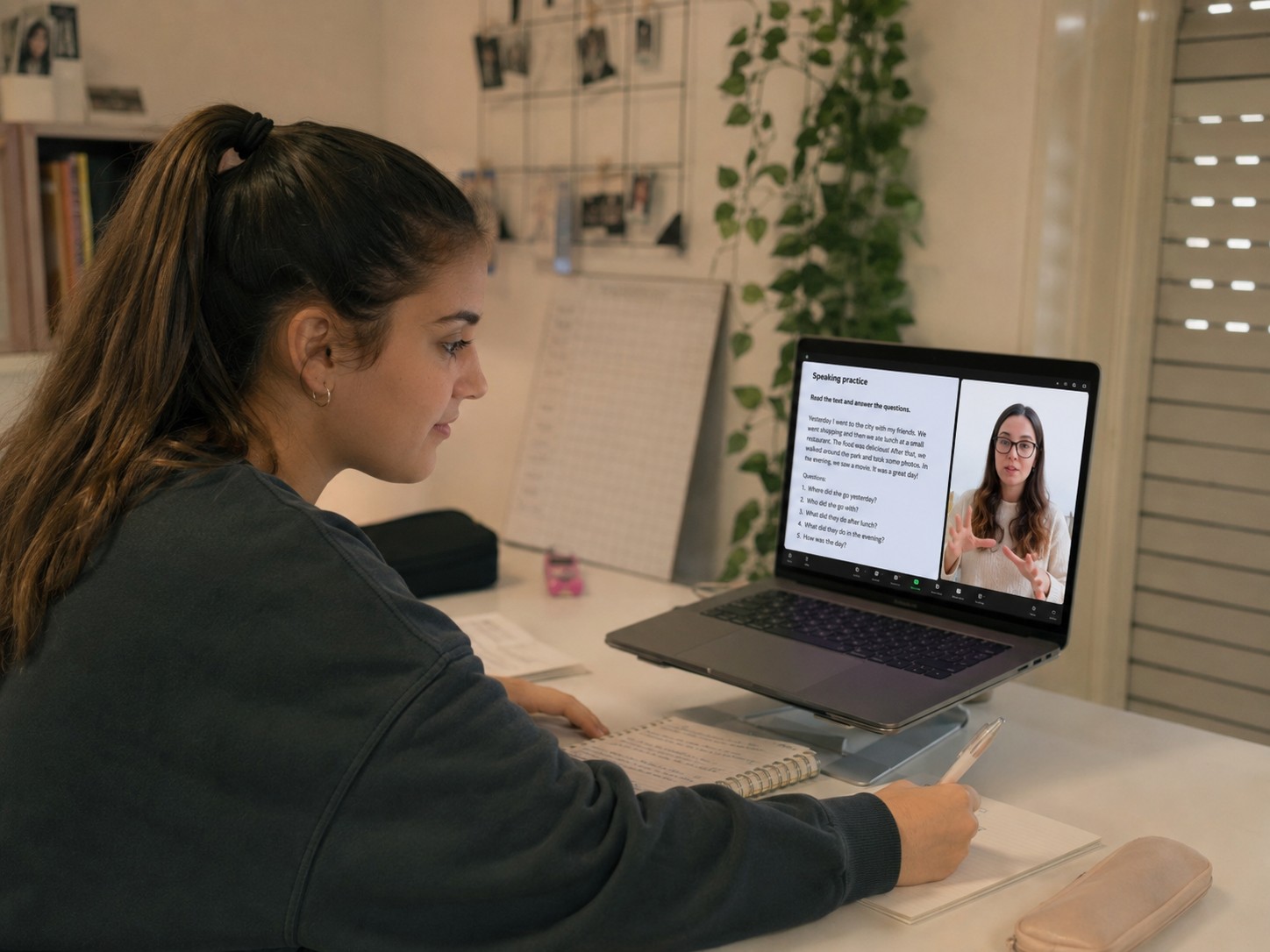
שיעור פרטי באנגלית בזום אינו רק “עוד שיעור”. כאשר הוא נעשה נכון, הוא הופך למקום שבו התלמיד יכול להראות את הקושי האמיתי שלו בלי להתבייש. בכיתה רגילה, תלמיד לא תמיד יגיד שהוא לא הבין את השאלה. הוא עלול לפחד שילדים אחרים יצחקו, או שהמורה ימשיך הלאה. בשיעור אחד על אחד, אין קבוצה שמחכה, אין לחץ חברתי, ואין צורך להעמיד פנים שהכול ברור.
הבעיה המרכזית של תלמידים רבים היא לא רק קושי באנגלית, אלא פחד מטעות. הם כבר חוו מספיק פעמים מצב שבו ענו לא נכון, קיבלו הערה, או הרגישו מאחור. הפחד הזה גורם להם לקרוא לאט יותר, לחשוב פחות חופשי, ולפעמים לוותר מראש. כאשר מורה עובד איתם רגוע, מסביר שטעות היא כלי למידה, ומראה להם איך מתקנים אותה, נבנה ביטחון חדש.
אם מתעלמים מהצד הרגשי של לימוד אנגלית, גם שיטה טובה לא תמיד תעבוד. תלמיד לחוץ לא תמיד מצליח להשתמש במה שהוא יודע. הוא יכול לדעת מילה, אבל לשכוח אותה בזמן מבחן. הוא יכול להבין משפט, אבל לפחד לנסח תשובה. לכן לימודי אנגלית מהבית, בסביבה מוכרת, עם מורה קבוע, יכולים לעזור במיוחד לתלמידים שמתביישים, נלחצים או צריכים זמן לחשוב.
הטעות הנפוצה היא לבחור מורה רק לפי מחיר או זמינות. חשוב יותר לבדוק האם המורה יודע לאבחן את סוג הקושי. תלמיד שמתקשה באנסין לא תמיד צריך שיעור דקדוק כללי. אולי הוא צריך לעבוד על הבנת שאלות. אולי הוא צריך להרחיב אוצר מילים. אולי הוא צריך ללמוד לקרוא בקול כדי לשפר שטף. אולי הוא צריך תרגול קצר וקבוע במקום שיעור עמוס מדי.
הפתרון המקצועי הוא לבנות מסלול אישי. בשיעור הראשון אפשר לבדוק טקסט קצר, לראות איך התלמיד קורא, אילו שאלות קשות לו, כמה הוא מבין בלי תרגום, ואיך הוא עונה. לאחר מכן בונים תרגול שבועי: טקסטים קצרים, שאלות, דיבור על הטקסט, חיזוק מילים, דקדוק מתוך הטקסט, ומשוב ברור. מחקרים והנחיות חינוכיות בתחום הבנת הנקרא מדגישים את החשיבות של אסטרטגיות קריאה מפורשות, כפי שאפשר לראות גם בסקירה של Education Endowment Foundation.
דוגמה מעשית: תלמיד קורא טקסט על ילדה שמצאה ארנק בבית הספר. הוא מבין את הסיפור הכללי, אבל טועה בשאלה “Why did she go to the office?”. בשיעור אחד על אחד המורה לא רק אומר שהתשובה לא נכונה. הוא חוזר עם התלמיד למשפט המתאים, מסביר את מילת השאלה Why, מבדיל בין סיבה לבין פעולה, ואז נותן עוד שתי שאלות דומות. כך טעות אחת הופכת לשיעור שלם בהבנה.
מפת עבודה לתלמידי כיתה ח׳: מה צריך לחזק כדי להצליח באנסין?
כדי להצליח באנסין, תלמיד צריך לפתח כמה שכבות של יכולת. השכבה הראשונה היא אוצר מילים בסיסי: בית ספר, משפחה, זמן, רגשות, פעולות יומיומיות, מקומות, תחביבים, טכנולוגיה וסביבה. השכבה השנייה היא הבנת משפטים: מי עושה מה, מתי, למה, ואיך. השכבה השלישית היא הבנת פסקה: מה הרעיון המרכזי ומה הפרטים שתומכים בו. השכבה הרביעית היא מענה על שאלות.
הבעיה נוצרת כאשר עובדים רק על שכבה אחת. לדוגמה, תלמיד מתרגל מילים אבל לא שאלות. תלמיד אחר קורא טקסטים אבל לא כותב תשובות. תלמיד שלישי יודע לענות נכון בעברית, אבל מתקשה לנסח באנגלית. לכן תרגול טוב צריך לשלב קריאה, הבנה, דיבור וכתיבה. אנסין הוא לא רק קריאה שקטה. הוא אימון חשיבה בשפה.
אם מתעלמים מאחת השכבות, הפער מופיע בזמן מבחן. תלמיד עם אוצר מילים טוב אבל בלי אסטרטגיה עלול לבזבז זמן. תלמיד עם דקדוק טוב אבל בלי ביטחון עלול לא לענות. תלמיד שקורא מהר מדי עלול לפספס מילת שלילה. תלמיד שקורא לאט מדי עלול לא לסיים. לכן צריך לזהות את נקודת החולשה האישית ולא לתת לכולם אותה תרופה.
הטעות הנפוצה היא לחשוב שכל קושי באנסין נובע מאוצר מילים. לפעמים זה נכון, אבל לא תמיד. לפעמים הקושי הוא במילות שאלה: who, where, when, why, how, what. לפעמים הקושי הוא בזמנים: past simple מול present simple. לפעמים התלמיד לא מבין כינויים כמו he, she, it, they. לפעמים הוא לא יודע שמילה כמו however משנה כיוון במשפט. אלו נקודות קטנות שיוצרות הבדל גדול.
הפתרון הוא לבנות רשימת בדיקה אישית. אחרי כל טקסט, התלמיד יכול לסמן מה היה קשה: vocabulary, question words, finding proof, writing answer, main idea, inference. אחרי כמה טקסטים אפשר לראות דפוס. אם רוב הטעויות הן ב־why questions, עובדים על סיבות. אם רוב הטעויות הן ב־true/false, עובדים על הוכחות. אם רוב הטעויות הן במילים, בונים מחברת מילים לפי נושאים.
בשיעור אנגלית אונליין אחד על אחד, מורה טוב לא מנחש מה הבעיה. הוא בודק. הוא רואה איך התלמיד מתמודד עם טקסטים שונים, ואז בונה תרגול שמתאים לו. זה היתרון הגדול של לימוד אנגלית בהתאמה אישית: התלמיד לא מקבל עוד חומר כללי, אלא מסלול שמבוסס על מה שקורה לו באמת בזמן קריאה.
100 טקסטים אנסין באנגלית לכיתה ח׳ עם שאלות ופתרונות
לפני שמתחילים, חשוב לעבוד נכון. קראו כל טקסט פעם אחת כדי להבין את הרעיון הכללי. לאחר מכן קראו את השאלות, חזרו לטקסט, וחפשו את המשפט שעוזר לענות. אל תנסו לתרגם כל מילה. נסו להבין את הסיפור, את המצב, ואת הקשר בין המשפטים. אם אתם לומדים עם מורה פרטי לאנגלית אונליין, בקשו מהמורה לא רק לבדוק תשובות, אלא גם לשאול אתכם איפה מצאתם את ההוכחה.
כל הטקסטים כאן מקוריים ונכתבו לתרגול. הם אינם מועתקים ממבחנים או מספרי לימוד. הם מתאימים לתלמידי כיתה ח׳, אך יכולים לעזור גם לתלמידי כיתה ז׳ חזקים, תלמידי כיתה ט׳ שצריכים חיזוק, מבוגרים מתחילים, והורים שרוצים להבין איך הילד שלהם מתמודד עם אנגלית. חלק מהטקסטים קלים יותר וחלק מעט מאתגרים יותר.
שימו לב לסוגי השאלות. יש שאלות של פרטים, שאלות של רעיון מרכזי, שאלות של הסקה, ושאלות על מילים מתוך הקשר. כאשר תלמיד לומד לזהות את סוג השאלה, הוא מפסיק לענות לפי תחושה ומתחיל לעבוד לפי שיטה. זו אחת המיומנויות החשובות ביותר בהבנת הנקרא באנגלית.
אפשר להשתמש בטקסטים גם לדיבור. אחרי כל טקסט, נסו לענות בעל פה על שאלה נוספת: What do you think? Have you ever had a similar experience? What would you do? כך האנסין הופך מגיליון עבודה לתרגול אנגלית מדוברת. זה חשוב במיוחד לתלמידים שמבינים באנגלית אבל קופאים כשהם צריכים לדבר.
אם טקסט מרגיש קשה, אל תוותרו מיד. קראו אותו בקול. סמנו שמות, מקומות, מספרים ופעלים. נסו למצוא את המשפט החשוב ביותר. לאחר מכן בדקו את התשובות. המטרה אינה להיות מושלמים, אלא לבנות יכולת. כל טקסט הוא עוד צעד קטן בדרך לאנגלית בטוחה יותר.
Text 1: The New Desk
When Maya came to school on Monday, her teacher asked her to sit next to a new student named Tom. At first, Maya was quiet because she did not know him. During the lesson, Tom could not find his ruler, so Maya gave him hers. At break time, Tom thanked her and they talked about their favorite books.
- Why was Maya quiet at first?
- What helped Maya and Tom start talking?
Answers: 1. She was quiet because she did not know Tom. 2. Maya helped Tom by giving him her ruler, and later they talked about books.
Text 2: A Rainy Football Game
David’s football team had an important game on Friday. The sky was dark, and after ten minutes it started to rain. Some players wanted to stop, but the coach told them to stay focused. David slipped once, but he got up and kept playing. In the last minute, he passed the ball to Amir, who scored the winning goal.
- What problem did the team have during the game?
- How did David help his team?
Answers: 1. It started to rain during the game. 2. He passed the ball to Amir, who scored the winning goal.
Text 3: The Library Card
Noa wanted to borrow a mystery book from the library, but she forgot her library card at home. She felt disappointed because the book was the last copy on the shelf. The librarian smiled and said, “I can keep it for you until tomorrow.” Noa left the library happy and promised to return with her card.
- Why could Noa not borrow the book?
- What did the librarian do to help her?
Answers: 1. She forgot her library card at home. 2. The librarian kept the book for her until the next day.
Text 4: A Small Garden
Ben’s family moved to an apartment with a small balcony. Ben wanted a garden, but there was no yard. His grandmother suggested growing herbs in pots. Ben planted mint, basil, and parsley. After a few weeks, the plants grew well. Ben used the mint to make tea and felt proud of his little garden.
- Why couldn’t Ben have a garden in a yard?
- What did Ben grow?
Answers: 1. His family lived in an apartment with only a small balcony. 2. He grew mint, basil, and parsley.
Text 5: The Lost Lunch
Roni opened her school bag at lunchtime and saw that her lunch box was missing. She remembered putting it on the kitchen table in the morning. Her friend Lior shared a sandwich with her. After school, Roni found her lunch box at home. Her mother laughed and said, “Tomorrow, check your bag before you leave.”
- Where was Roni’s lunch box?
- What lesson did Roni learn?
Answers: 1. It was on the kitchen table at home. 2. She learned to check her bag before leaving for school.
Text 6: The Quiet Student
Adam was good at English, but he rarely spoke in class. He was afraid of making mistakes. One day, the teacher asked students to describe a picture. Adam said only one sentence, but it was correct. The teacher smiled and asked him another question. Slowly, Adam answered more. By the end of the lesson, he felt less nervous.
- Why did Adam rarely speak in class?
- What made him feel less nervous?
Answers: 1. He was afraid of making mistakes. 2. The teacher encouraged him, and he answered more questions successfully.
Text 7: The Science Poster
Ella and Shira had to make a poster about the moon. Ella wanted to draw pictures, but Shira wanted to write facts. They argued for a few minutes. Then they decided to divide the work. Ella drew the moon and stars, and Shira wrote short explanations. Their teacher said the poster was clear and beautiful.
- Why did Ella and Shira argue?
- How did they solve the problem?
Answers: 1. They had different ideas about the poster. 2. They divided the work between drawing and writing.
Text 8: The Broken Headphones
Yarden used his headphones every day on the bus. One morning, only one side worked. He wanted to buy new headphones, but his father suggested checking the cable first. They found a small piece of dirt inside the plug. After cleaning it carefully, the headphones worked again. Yarden was glad he did not spend money.
- What was wrong with the headphones?
- Why was Yarden glad at the end?
Answers: 1. Only one side worked because there was dirt in the plug. 2. He was glad because he did not need to buy new headphones.
Text 9: The Class Trip
The eighth grade went on a trip to a nature park. The students walked near a river and listened to a guide. The guide told them not to leave plastic bags or bottles in the park. After lunch, the students collected their rubbish and also picked up rubbish left by other people. They wanted the park to stay clean.
- What did the guide ask the students not to do?
- What extra thing did the students do after lunch?
Answers: 1. The guide asked them not to leave plastic bags or bottles. 2. They picked up rubbish left by other people.
Text 10: A Message from Grandma
Every Sunday, Daniel called his grandmother. One week, he forgot because he was busy with homework. On Monday, he received a short message from her: “I missed your voice yesterday.” Daniel felt sorry and called her immediately. They talked for twenty minutes. After that, he wrote a reminder on his phone for every Sunday afternoon.
- Why did Daniel feel sorry?
- What did he do to remember next time?
Answers: 1. He felt sorry because he forgot to call his grandmother. 2. He wrote a reminder on his phone.
Text 11: The Old Bicycle
Michal found an old bicycle in her uncle’s garage. The wheels were dirty and the bell was broken, but the frame was strong. Her uncle taught her how to clean it and put air in the tires. A week later, Michal rode the bicycle to the park. It was not new, but it worked perfectly.
- Where did Michal find the bicycle?
- What can we learn from the story?
Answers: 1. She found it in her uncle’s garage. 2. Old things can be useful if we repair and care for them.
Text 12: The Music Practice
Omer wanted to play the guitar well, but he hated practicing scales. His teacher explained that scales help fingers move faster. Omer practiced for ten minutes every day instead of practicing for one long hour once a week. After a month, he could play a song that had been too difficult before.
- Why did Omer need to practice scales?
- What helped him improve?
Answers: 1. Scales helped his fingers move faster. 2. Practicing a little every day helped him improve.
Text 13: The Wrong Bus
Leah was going to her cousin’s house for the first time. She looked at the bus number quickly and got on. After fifteen minutes, she noticed that the streets were unfamiliar. She asked the driver, and he told her she was on the wrong bus. Leah called her cousin, got off at the next stop, and waited for the correct bus.
- What mistake did Leah make?
- What did she do after speaking to the driver?
Answers: 1. She got on the wrong bus. 2. She called her cousin, got off, and waited for the correct bus.
Text 14: The Class Plant
Each week, a different student watered the plant in the classroom. When it was Itai’s turn, he forgot for three days. The leaves became dry. Itai felt bad and asked the teacher what to do. She told him to water it a little each day, not too much at once. Slowly, the plant became green again.
- Why did the plant become dry?
- Why should Itai not give it too much water at once?
Answers: 1. Itai forgot to water it for three days. 2. Too much water at once can hurt the plant.
Text 15: A New Recipe
Hila wanted to bake cookies for her family. She found a recipe online, but it was in English. At first, she felt worried. She used a dictionary for words like flour, sugar, and teaspoon. The cookies were not perfect, but everyone enjoyed them. Hila decided to learn more cooking words in English.
- Why was the recipe difficult for Hila?
- What did she decide to learn?
Answers: 1. The recipe was in English. 2. She decided to learn more cooking words in English.
Text 16: The School Radio
The school started a short radio program during lunch break. Students could share news, jokes, and songs. Tamar wanted to join but was afraid people would not like her voice. Her friend told her to read one short announcement first. Tamar tried it and received many smiles. The next week, she read a longer part.
- Why was Tamar afraid to join the radio program?
- How did she start?
Answers: 1. She was afraid people would not like her voice. 2. She started by reading one short announcement.
Text 17: The Missing Page
During English class, students had to read a story. Yonatan could not understand the ending. Then he saw that one page was missing from his copy. He borrowed the page from a friend and read it carefully. Suddenly, the ending made sense. Yonatan learned that sometimes confusion has a simple reason.
- Why could Yonatan not understand the ending?
- What did he learn?
Answers: 1. One page was missing from his copy. 2. He learned that confusion can have a simple reason.
Text 18: The Early Runner
Every morning, Gal ran around his neighborhood before school. His friends thought he was strange because they preferred sleeping late. Gal said running helped him feel awake in class. Before a sports test, his friends asked him for advice. He told them to start slowly and run a little more each week.
- Why did Gal run in the morning?
- What advice did he give his friends?
Answers: 1. Running helped him feel awake in class. 2. He told them to start slowly and increase the running each week.
Text 19: The Phone Rule
In Lior’s family, phones were not allowed during dinner. At first, Lior thought the rule was annoying. One evening, his little sister told a funny story from kindergarten, and everyone laughed. Lior noticed that dinner felt warmer without phones. Later, he told his friend that the rule was not as bad as he had thought.
- What was the family rule?
- How did Lior’s opinion change?
Answers: 1. Phones were not allowed during dinner. 2. He first disliked the rule, but later understood that dinner felt better without phones.
Text 20: The Helpful Neighbor
After a storm, many leaves covered the entrance to the building. Mr. Cohen, an elderly neighbor, tried to clean them, but the bag was heavy. Two students, Dana and Yuval, saw him and offered to help. They finished the job in ten minutes. Mr. Cohen thanked them and said small acts can make a big difference.
- Why did Mr. Cohen need help?
- What is the message of the text?
Answers: 1. The bag of leaves was heavy. 2. Small acts of help can make a big difference.
Text 21: The History Box
During a history lesson, the teacher brought an old metal box. Inside were letters, coins, and black-and-white photos. The students had to guess who owned the box. They looked carefully at dates and names. Finally, they understood it belonged to a family that lived in the town many years ago.
- What was inside the box?
- How did the students discover who owned it?
Answers: 1. There were letters, coins, and photos inside. 2. They looked at dates and names.
Text 22: The Online Lesson
Yael missed school for two days because she was sick. Her English teacher sent her a short online lesson. Yael watched the video, answered three questions, and sent them back. When she returned to class, she did not feel lost. She was happy because she could study from home while resting.
- Why did Yael study online?
- How did the online lesson help her?
Answers: 1. She was sick and missed school. 2. It helped her keep up with the class.
Text 23: The Bird on the Window
A small bird sat on the classroom window during a math lesson. Everyone looked at it, and the teacher stopped speaking for a moment. The bird had a blue feather on its head. After a minute, it flew away. The teacher smiled and said, “Now let’s return to our numbers.” The students laughed and continued working.
- What made the students stop looking at their work?
- What happened after the bird flew away?
Answers: 1. A small bird sat on the window. 2. The teacher returned to the lesson, and the students continued working.
Text 24: A Different Birthday
Instead of having a big birthday party, Eitan asked his parents to take him and two friends to an animal shelter. They played with dogs and helped clean food bowls. Eitan said it was his best birthday because he felt useful. His friends agreed and asked if they could visit again next month.
- Where did Eitan go for his birthday?
- Why did he enjoy it so much?
Answers: 1. He went to an animal shelter. 2. He enjoyed it because he felt useful.
Text 25: The Difficult Word
During reading practice, Niv stopped at the word “impossible”. He did not know it and wanted to give up. His teacher asked him to look at the sentence: “The box was too heavy, so carrying it alone was impossible.” Niv understood that impossible meant something that could not be done.
- How did Niv understand the word “impossible”?
- What does “impossible” mean in the text?
Answers: 1. He used the sentence around the word. 2. It means something that cannot be done.
Text 26: The Class Vote
The students had to choose a topic for their project. Some wanted space, others wanted animals, and a few wanted sports. The teacher suggested a vote. Space received twelve votes, animals received nine, and sports received five. Although Ron wanted sports, he accepted the result and joined the space group.
- Which topic won the vote?
- How did Ron behave after the vote?
Answers: 1. Space won the vote. 2. He accepted the result and joined the space group.
Text 27: A Letter to the Future
The English teacher asked students to write a letter to themselves in five years. Shani wrote about her dreams, her friends, and the things she wanted to learn. She put the letter in an envelope and gave it to the teacher. The class planned to open the letters at the end of high school.
- Who did Shani write the letter to?
- When will the class open the letters?
Answers: 1. She wrote it to herself in the future. 2. They will open the letters at the end of high school.
Text 28: The New App
Ruth downloaded an app to help her learn English words. At first, she used it for thirty minutes a day, but after a week she stopped. Her brother suggested using it for only five minutes every evening. This felt easier. After two months, Ruth knew many new words because she practiced regularly.
- Why did Ruth stop using the app at first?
- What helped her continue?
Answers: 1. Thirty minutes a day was too much for her. 2. Using the app for five minutes every evening helped her continue.
Text 29: The Empty Notebook
Ori bought a new notebook for English vocabulary. For two weeks, it stayed empty. He wanted every page to look perfect, so he did not write anything. His teacher told him, “A useful notebook is better than a perfect one.” Ori began writing messy notes, examples, and translations. Soon, the notebook became helpful.
- Why did Ori not write in the notebook at first?
- What did his teacher teach him?
Answers: 1. He wanted every page to look perfect. 2. A useful notebook is better than a perfect one.
Text 30: The Beach Cleanup
A group of students went to the beach on Friday morning. They were not there to swim. They came to collect plastic cups, bags, and bottles. At the end, they counted twelve full bags of rubbish. The beach looked cleaner, and the students understood how much people can help when they work together.
- Why did the students go to the beach?
- What did they understand at the end?
Answers: 1. They went to clean the beach. 2. They understood that people can help a lot when they work together.
Text 31: The Long Queue
At the school cafeteria, the queue was very long. Some students complained, but Maya used the time to review English words on small cards. By the time she bought her sandwich, she had reviewed twenty words. Her friend laughed and said, “You study everywhere.” Maya answered, “Small moments can be useful.”
- What did Maya do while waiting?
- What does Maya mean by “small moments can be useful”?
Answers: 1. She reviewed English words. 2. Even short waiting times can be used for learning.
Text 32: The Dog Walker
Every afternoon, Nadav walked his neighbor’s dog, Max. Max was friendly but very strong. One day, Max ran after a cat and pulled Nadav quickly. Nadav held the leash tightly and called Max’s name. The dog stopped. Nadav learned that walking a dog requires attention, not only love for animals.
- What happened when Max saw a cat?
- What did Nadav learn?
Answers: 1. Max ran after the cat and pulled Nadav. 2. Walking a dog requires attention.
Text 33: The School Play
In the school play, Amit had only two lines. He felt his part was not important. During practice, he forgot one line and everyone stopped. The drama teacher explained that every part matters because the story needs all the characters. Amit practiced seriously and said his two lines clearly on the night of the show.
- Why did Amit think his part was not important?
- What did the drama teacher explain?
Answers: 1. He had only two lines. 2. Every part matters because the story needs all the characters.
Text 34: The Family Map
Sara’s family planned a trip to the north. Her father used a phone app, but Sara wanted to look at a paper map. She found lakes, roads, and small villages. When the phone battery became low, Sara’s map helped the family choose the next road. Her father said old tools can still be useful.
- What did Sara use during the trip?
- Why was the map useful?
Answers: 1. She used a paper map. 2. It helped when the phone battery was low.
Text 35: A Quiet Morning
On Saturday morning, the house was quiet. Everyone was still sleeping except for Alon. He made toast, sat near the window, and read a comic book in English. He did not understand every word, but the pictures helped him. Later, he told his sister that reading in English felt easier when the story was fun.
- What helped Alon understand the comic?
- Why did reading feel easier for him?
Answers: 1. The pictures helped him. 2. The story was fun, so reading felt easier.
Text 36: The Class Job
Every month, students in the class received different jobs. One student cleaned the board, another gave out papers, and another checked that the lights were off. This month, Keren was responsible for the class calendar. She wrote test dates and trip days clearly. Her classmates thanked her because they knew what to prepare for.
- What was Keren responsible for?
- Why did her classmates thank her?
Answers: 1. She was responsible for the class calendar. 2. She wrote important dates clearly.
Text 37: The Strange Noise
During the night, Ido heard a strange noise from the kitchen. He felt scared but decided to check. He turned on the light and saw that a spoon had fallen from the table. The window was open, and the wind had moved the curtain. Ido closed the window and returned to bed feeling calmer.
- What caused the strange noise?
- Why did Ido feel calmer?
Answers: 1. A spoon had fallen because the wind moved the curtain. 2. He understood the reason for the noise.
Text 38: The Art Mistake
Lina painted a tree for art class. She accidentally used purple instead of brown for the trunk. She wanted to throw the paper away, but her teacher said, “Maybe it is a tree from a dream.” Lina added bright stars and a blue moon. Her mistake became the most interesting part of the painting.
- What mistake did Lina make?
- How did the mistake become useful?
Answers: 1. She used purple for the tree trunk. 2. It gave her a creative idea for a dream-like painting.
Text 39: The Late Homework
Yossi finished his homework but forgot to put it in his bag. When the teacher asked for it, he felt embarrassed. He explained the truth and asked if he could bring it the next day. The teacher agreed but told him to create a homework folder. Since then, Yossi checked the folder every evening.
- Why was Yossi’s homework late?
- What habit did he start?
Answers: 1. He forgot to put it in his bag. 2. He started checking a homework folder every evening.
Text 40: The First Email
Meir had to write an email in English to a student from another country. He wrote three sentences and checked them many times. He was afraid the email was too simple. When the student answered, Meir saw that simple English was enough to start a conversation. He felt more confident and wrote back.
- Why was Meir worried?
- What did he learn from the reply?
Answers: 1. He thought his email was too simple. 2. Simple English can be enough to start a conversation.
Text 41: The Healthy Snack
The school shop sold many sweet snacks. Neta usually bought chocolate, but she felt tired in the afternoon. Her sports teacher suggested trying fruit and nuts for one week. Neta was surprised because she had more energy after lunch. She still liked chocolate, but she did not buy it every day.
- What problem did Neta have?
- How did her snack habit change?
Answers: 1. She felt tired in the afternoon. 2. She started eating fruit and nuts more often instead of chocolate every day.
Text 42: The Museum Guide
The class visited a small museum. The guide spoke slowly because some students were learning English. He showed them old tools and asked what people used them for. The students guessed and laughed at some wrong answers. The guide said guessing is part of learning. By the end, everyone had learned new words.
- Why did the guide speak slowly?
- What did the guide say about guessing?
Answers: 1. Some students were learning English. 2. Guessing is part of learning.
Text 43: The Broken Elevator
The elevator in Rina’s building stopped working. She lived on the fourth floor and was not happy about using the stairs. On the first day, she complained. On the second day, she noticed she was less tired. After a week, the elevator was fixed, but Rina sometimes used the stairs anyway.
- Why did Rina complain at first?
- How did her attitude change?
Answers: 1. She had to use the stairs to the fourth floor. 2. She discovered the stairs helped her feel stronger.
Text 44: The Group Chat
The class group chat was full of messages before the English test. Some students sent helpful notes, but others sent jokes and confused everyone. Dana decided to make a clear list of topics and send it once. Many students thanked her. The next day, the teacher reminded them that good communication saves time.
- Why was the group chat confusing?
- How did Dana help?
Answers: 1. There were too many jokes and messages. 2. She sent a clear list of topics.
Text 45: The Small Café
Near the school, there was a small café where students sometimes bought hot chocolate. The owner knew many students by name. One cold morning, a student forgot his wallet. The owner gave him a drink and said, “Pay tomorrow.” The student returned the next day with the money and a thank-you note.
- What problem did the student have?
- How did the student show thanks?
Answers: 1. He forgot his wallet. 2. He returned with the money and a thank-you note.
Text 46: The Reading Timer
Roi read English very slowly and often lost focus. His teacher suggested using a timer for five minutes. During those five minutes, Roi had to read without stopping for every unknown word. At first it was difficult, but after several days he read more smoothly. He learned that stopping too often can break understanding.
- Why did Roi use a timer?
- What did he learn about stopping too often?
Answers: 1. He used it to practice reading without stopping too much. 2. Stopping too often can break understanding.
Text 47: The New Shoes
Adi bought new shoes for a school trip. They looked great, but she had never worn them before. After one hour of walking, her feet hurt. Her friend gave her plasters, and Adi changed into old shoes from her bag. She learned that comfortable shoes are more important than new shoes on a long trip.
- Why did Adi’s feet hurt?
- What lesson did she learn?
Answers: 1. She wore new shoes that were not comfortable yet. 2. Comfortable shoes are more important on a long trip.
Text 48: The School Garden Club
The garden club met every Wednesday after school. At first, only four students came. They planted flowers near the entrance and put small signs with the plant names in English. After a month, more students joined because the entrance looked beautiful. The club became a place to learn both gardening and English words.
- What did the club put near the plants?
- Why did more students join?
Answers: 1. They put small signs with plant names in English. 2. The entrance looked beautiful.
Text 49: The Forgotten Password
Tom forgot the password to his school computer account. He tried many guesses, but none worked. The computer locked him out for ten minutes. The computer teacher told him to use a password he could remember but others could not guess. Tom created a new password using the first letters of a sentence.
- What happened after Tom tried many guesses?
- How did he create a better password?
Answers: 1. The computer locked him out for ten minutes. 2. He used the first letters of a sentence.
Text 50: The Kind Captain
During basketball practice, the team captain noticed that a new player, Sam, was standing alone. Sam did not know the rules well. The captain asked him to join a simple passing exercise. Sam made mistakes, but nobody laughed. After practice, Sam said he wanted to come again. The captain understood that kindness can keep people in the game.
- Why was Sam standing alone?
- What did the captain understand?
Answers: 1. He did not know the rules well. 2. Kindness can help people continue and feel welcome.
Text 51: The English Sign
At the train station, Hagar saw a sign in English: “Please keep your ticket until the end of your journey.” She understood most of it but was not sure about the word “journey.” She looked at the pictures and guessed it meant trip. Later, her teacher said her guess was correct. Hagar felt proud that she used context.
- Which word was difficult for Hagar?
- How did she understand it?
Answers: 1. The word “journey” was difficult. 2. She used the pictures and context to guess it meant trip.
Text 52: The Class Debate
The class debated whether students should have less homework. Some students said homework helps practice. Others said students need more free time. The teacher asked everyone to give reasons, not just opinions. Rami changed his answer after hearing both sides. He learned that a good debate can make people think again.
- What was the debate about?
- What did Rami learn?
Answers: 1. It was about whether students should have less homework. 2. A good debate can make people think again.
Text 53: The Old Photo
In a drawer, Liel found an old photo of her mother as a teenager. Her mother was wearing a school uniform and holding a guitar. Liel was surprised because she did not know her mother had played music. That evening, her mother told stories about her school band. The photo opened a new conversation.
- What surprised Liel?
- What did the photo lead to?
Answers: 1. She did not know her mother had played guitar. 2. It led to a conversation about her mother’s school band.
Text 54: The Busy Street
Every morning, students crossed a busy street near school. Some crossed while looking at their phones. The principal put up a sign reminding them to look both ways. She also asked older students to help younger ones. After a week, the crossing felt safer because students paid more attention.
- What dangerous habit did some students have?
- How did the school make the crossing safer?
Answers: 1. They crossed the street while looking at their phones. 2. The principal put up a sign and asked older students to help younger ones.
Text 55: The Puzzle Club
Oren joined a puzzle club because he liked solving problems. The first puzzle was harder than he expected. He almost left, but another student suggested looking for patterns. Together, they found repeated shapes and solved it. Oren realized that asking for help does not mean you are weak; it means you want to learn.
- What helped Oren solve the puzzle?
- What did he realize?
Answers: 1. Looking for patterns with another student helped him. 2. Asking for help is part of learning.
Text 56: The School Newspaper
The school newspaper needed short articles. Talia wanted to write about a local bakery, but she thought nobody would care. Her teacher told her that small local stories can be interesting if they include details. Talia interviewed the baker and wrote about his first cake. Many students enjoyed the article.
- What did Talia write about?
- Why did the article become interesting?
Answers: 1. She wrote about a local bakery. 2. She included details and an interview with the baker.
Text 57: The Quiet Bus Ride
On the way home from school, Amir usually played games on his phone. One day, the battery died. He looked out the window and noticed a new park, a dog with a red collar, and clouds shaped like mountains. When he got home, he told his sister the ride had been surprisingly interesting.
- Why did Amir stop playing games?
- What did he discover?
Answers: 1. His phone battery died. 2. He discovered that looking around could be interesting.
Text 58: The Wrong Answer
During English practice, Lior answered a question incorrectly. He felt embarrassed, but the teacher asked him to explain how he chose the answer. Lior showed the word that confused him. The teacher explained the difference between “before” and “after”. Suddenly, many students said they had made the same mistake.
- Why was Lior’s mistake useful?
- Which words confused him?
Answers: 1. It helped the teacher explain a common problem. 2. “Before” and “after” confused him.
Text 59: The Weekend Plan
Shaked wanted to spend the weekend watching videos. Her father suggested planning one outdoor activity too. Shaked agreed to ride her bike for half an hour. At first, she did not want to go, but the weather was pleasant. After the ride, she felt happier and still had time to watch videos.
- What did Shaked plan to do all weekend?
- How did she feel after riding her bike?
Answers: 1. She planned to watch videos. 2. She felt happier.
Text 60: The English Menu
At a restaurant during a trip, the menu was in English. Nadine knew some food words but not all of them. Instead of asking for a full translation, she looked for familiar words like chicken, rice, and salad. She chose a meal successfully. Her mother said, “You used what you knew instead of worrying about what you didn’t know.”
- How did Nadine choose her meal?
- What did her mother mean?
Answers: 1. She looked for familiar food words. 2. She focused on what she understood instead of worrying about unknown words.
Text 61: The School Bell
The school bell stopped working for one day. Teachers had to end lessons by checking the clock. Some students were late because they did not hear the bell. By the afternoon, everyone paid more attention to the time. The principal said the problem showed how much people depend on small systems every day.
- What problem happened at school?
- What did the principal say the problem showed?
Answers: 1. The school bell stopped working. 2. People depend on small systems every day.
Text 62: The Helping List
Before a class party, students wrote a helping list. One student brought cups, another brought music, and another brought decorations. In the past, parties were messy because everyone thought someone else would do the work. This time, the party started on time because every student knew his or her job.
- Why were past parties messy?
- Why did this party start on time?
Answers: 1. Everyone thought someone else would do the work. 2. Every student knew his or her job.
Text 63: The New Word Wall
The English teacher created a word wall in the classroom. Each week, students added useful words from stories and conversations. They did not only write translations; they wrote example sentences too. After a month, students began using the words in their writing. The wall became more than decoration. It became a learning tool.
- What did students write on the word wall?
- Why was the wall useful?
Answers: 1. They wrote useful words and example sentences. 2. It helped students use new words in writing.
Text 64: The Morning Test
Noam had an English test in the morning. The night before, he studied until very late. During the test, he felt tired and forgot words he knew. Afterward, his teacher explained that sleep is part of preparation. For the next test, Noam studied earlier and went to bed on time.
- Why did Noam feel tired during the test?
- What did he change before the next test?
Answers: 1. He studied until very late the night before. 2. He studied earlier and went to bed on time.
Text 65: The Community Fridge
In Maya’s neighborhood, people started a community fridge. Families could leave food they did not need, and others could take it. Maya helped write labels in English and Hebrew. She learned words like vegetables, dairy, and bread. She also learned that language can help people share and understand information.
- What is the purpose of the community fridge?
- What did Maya learn besides new words?
Answers: 1. People can leave food they do not need and others can take it. 2. She learned that language helps people share information.
Text 66: The Difficult Choice
Raviv had to choose between art club and robotics club. Both met on the same day. He made a list of what he liked about each club. Art made him feel calm, but robotics taught him problem-solving. Finally, he chose robotics this term and decided to try art during the summer.
- Why couldn’t Raviv join both clubs?
- How did he make his choice?
Answers: 1. Both clubs met on the same day. 2. He made a list and chose robotics for this term.
Text 67: The Reading Partner
In English class, students read in pairs. One student read a paragraph, and the other asked a question. At first, Gil did not like reading aloud. His partner spoke kindly and waited patiently. After several lessons, Gil read with fewer pauses. He said reading with a patient partner helped him more than reading alone.
- What did students do in pairs?
- Why did Gil improve?
Answers: 1. One read a paragraph and the other asked a question. 2. His partner was kind and patient, so he practiced with less pressure.
Text 68: The Lost Cat Poster
On the way to school, Ella saw a poster about a lost cat. The poster had a photo, a phone number, and a short description in English. After school, Ella saw a similar cat near the playground. She called the number with her mother’s help. The cat’s owner arrived and was very thankful.
- What information was on the poster?
- How did Ella help?
Answers: 1. There was a photo, a phone number, and a description. 2. She called the owner after seeing a similar cat.
Text 69: The Class Experiment
In science class, students placed one plant near a window and another in a dark cupboard. They watered both plants equally. After ten days, the plant near the window was green, but the plant in the cupboard looked weak. The students concluded that light is important for plant growth.
- What was the difference between the two plants?
- What did the students conclude?
Answers: 1. One plant was near a window and one was in a dark cupboard. 2. Light is important for plant growth.
Text 70: The Friendly Question
When a new student joined the class, many students looked at him but did not speak. Finally, Michal asked, “Do you want to sit with us?” The new student smiled and joined her group. Later, he said that one simple question made the first day much easier. Michal understood that kindness can be simple.
- What did Michal ask the new student?
- Why was the question important?
Answers: 1. She asked if he wanted to sit with them. 2. It made his first day easier.
Text 71: The Broken Pencil
During a test, Shai’s pencil broke. He did not have another one. He looked around nervously, but the teacher noticed and gave him a pencil quietly. After the test, Shai thanked her. She said, “Next time, bring two pencils.” Shai smiled because the advice was simple but useful.
- What happened during the test?
- What advice did the teacher give?
Answers: 1. Shai’s pencil broke. 2. She told him to bring two pencils next time.
Text 72: The Weekend Market
Every Friday, a small market opened near the park. People sold fruit, bread, flowers, and handmade gifts. Liron liked listening to sellers speak to tourists in English. She wrote down useful sentences like “How much is this?” and “Would you like a bag?” The market became her free English lesson.
- What did people sell at the market?
- How did Liron learn English there?
Answers: 1. They sold fruit, bread, flowers, and handmade gifts. 2. She listened to sellers and wrote useful sentences.
Text 73: The Class Clock
The clock in the classroom was five minutes slow. Students thought the lesson was not over yet, but the teacher knew the correct time from her phone. She explained that relying on one source can sometimes cause mistakes. The class changed the clock battery, and the problem disappeared.
- What was wrong with the clock?
- What did the teacher explain?
Answers: 1. It was five minutes slow. 2. Relying on one source can cause mistakes.
Text 74: The First Presentation
Roni had to give a short presentation in English about his favorite animal. He wrote many sentences but could not remember them all. His teacher told him to use key words instead of reading everything. During the presentation, Roni looked at the key words and spoke more naturally.
- Why was Roni worried about the presentation?
- What helped him speak more naturally?
Answers: 1. He could not remember all the sentences. 2. Using key words helped him.
Text 75: The Clean Desk
Before every English lesson, Tamar spent five minutes looking for her notebook. Her desk was full of old papers. One day, she missed the first activity because she could not find her worksheet. That evening, she cleaned her desk and put English materials in one folder. The next lesson started better.
- Why did Tamar miss the first activity?
- What did she do to solve the problem?
Answers: 1. She could not find her worksheet. 2. She cleaned her desk and used one folder for English materials.
Text 76: The Helpful Video
Yuval did not understand how to use past tense in English. He watched a short video, but it was too fast. In his online lesson, the teacher paused the video after each example and asked Yuval to make his own sentence. Suddenly, the rule felt clearer because Yuval had time to think.
- Why was the video difficult for Yuval?
- How did the online teacher help?
Answers: 1. The video was too fast. 2. The teacher paused it and helped him make his own sentences.
Text 77: The Lunch Choice
At school, students could choose pizza or soup for lunch. Most students chose pizza, but Dan chose soup because he had a sore throat. His friends joked at first, but later two of them asked for soup too because the room was cold. Dan laughed and said, “Sometimes the quiet choice is the smart one.”
- Why did Dan choose soup?
- What does Dan mean by “the quiet choice”?
Answers: 1. He had a sore throat. 2. A less popular choice can still be smart.
Text 78: The City Map Project
Students had to design a map of an imaginary city. They included a hospital, library, school, park, and train station. Each place had an English label. When they presented the map, they used phrases like “next to”, “behind”, and “between”. The project helped them practice vocabulary and prepositions together.
- What did the students design?
- Which English skill did the project help practice?
Answers: 1. They designed a map of an imaginary city. 2. It helped practice vocabulary and prepositions.
Text 79: The Thank-You Email
After a guest speaker visited the class, the teacher asked students to write a thank-you email. Some students wrote only “Thank you.” Liat added two details about what she learned. The speaker replied and said her email was meaningful. Liat understood that specific details make writing stronger.
- Why was Liat’s email stronger?
- What did she understand?
Answers: 1. She added specific details about what she learned. 2. Specific details make writing stronger.
Text 80: The Library Volunteer
Every Tuesday, Omar helped in the school library. He returned books to shelves and helped younger students find easy books in English. At first, he did it for school credit. Later, he enjoyed helping children choose stories. He said volunteering made him more patient and improved his own reading too.
- What did Omar do in the library?
- How did volunteering help him?
Answers: 1. He returned books and helped younger students find books. 2. It made him more patient and improved his reading.
Text 81: The English Song
Naama loved an English song but did not understand all the words. She printed the lyrics and listened while reading. Some words were difficult, but the chorus repeated many times. After a few days, she understood more and sang along. She discovered that music can make language practice enjoyable.
- How did Naama use the song to learn?
- Why did the chorus help?
Answers: 1. She listened while reading the lyrics. 2. It repeated many times, so she could remember and understand it.
Text 82: The Lost Key
After school, Gil could not find his house key. He checked his bag, pockets, and desk. Then he remembered that he had used the key to open his locker in the morning. He returned to the classroom and found it on the shelf near the lockers. Gil learned to put the key in the same pocket every day.
- Where did Gil find the key?
- What habit did he decide to start?
Answers: 1. He found it on the shelf near the lockers. 2. He decided to put the key in the same pocket every day.
Text 83: The New Rule
The school made a new rule: students had to bring a water bottle every day. Some students forgot at first. The teachers explained that drinking water helps students stay focused, especially in hot weather. After two weeks, most students remembered. The rule became normal because students understood its purpose.
- What was the new rule?
- Why did students accept it later?
Answers: 1. Students had to bring a water bottle every day. 2. They understood that drinking water helps them stay focused.
Text 84: The Drawing Competition
Yara entered a drawing competition at school. She did not win first place, but her drawing was chosen for the school website. At first, she felt disappointed. Then many students told her they liked her colors. Yara realized that success does not always look the way we expect.
- Why was Yara disappointed at first?
- What did she realize?
Answers: 1. She did not win first place. 2. Success can come in different ways.
Text 85: The English Game
The teacher brought a word game to class. Students had to describe a word without saying it. When the word was “apple”, they said, “It is a fruit. It can be red or green.” The game was funny, but it also helped students explain ideas in English when they forgot exact words.
- How did students play the game?
- Why was the game useful?
Answers: 1. They described words without saying them. 2. It helped them explain ideas when they did not remember exact words.
Text 86: The Family Recipe Book
Adi’s grandmother had a notebook full of family recipes. Most recipes were in Hebrew, but some were in English because relatives had sent them from abroad. Adi helped translate a cake recipe. She learned food words and also heard family stories. The recipe book became a bridge between language and memory.
- Why were some recipes in English?
- What did Adi gain from translating?
Answers: 1. Relatives from abroad had sent them. 2. She learned food words and heard family stories.
Text 87: The School Podcast
A group of students started a school podcast in simple English. Each episode was only three minutes long. They talked about books, sports, and school events. Listeners could send questions. The students discovered that speaking slowly and clearly was harder than they expected, but it helped them improve.
- How long was each podcast episode?
- What did the students discover?
Answers: 1. Each episode was three minutes long. 2. Speaking slowly and clearly was not easy, but it helped them improve.
Text 88: The Helpful Mistake
During a spelling quiz, Dana wrote “becaus” instead of “because”. She was upset, but her teacher showed her a trick: break the word into parts and say it slowly. Dana practiced the word five times. The next week, she spelled it correctly. She understood that one mistake can teach one important word forever.
- What word did Dana spell incorrectly?
- How did the teacher help her?
Answers: 1. She spelled “because” incorrectly. 2. The teacher helped her break the word into parts and practice it.
Text 89: The News Article
The class read a short news article about a new park. The article explained that the park would have trees, benches, and a bicycle path. Students had to find facts, not opinions. One sentence said, “The park will be beautiful.” The teacher explained that this was an opinion because not everyone may agree.
- What will the new park have?
- Why is “The park will be beautiful” an opinion?
Answers: 1. It will have trees, benches, and a bicycle path. 2. Not everyone may agree that it is beautiful.
Text 90: The Long Word
In English class, students saw the word “unfriendly”. The teacher asked them to find the small word inside it. They found “friend”. Then she explained that “un-” can mean not. Suddenly, the word looked less scary. Students began looking for small parts inside other long words.
- Which small word is inside “unfriendly”?
- What did students learn about “un-”?
Answers: 1. The word “friend” is inside it. 2. “Un-” can mean not.
Text 91: The After-School Job
Rami helped his aunt in her small shop after school. He arranged shelves and sometimes greeted tourists in English. At first, he only said “Hello”. Later, he learned sentences like “Can I help you?” and “The price is on the label.” Rami saw that English could be useful outside school.
- Where did Rami help after school?
- What did he learn about English?
Answers: 1. He helped in his aunt’s shop. 2. English can be useful outside school.
Text 92: The Class Promise
Before the English speaking activity, the class made a promise: nobody would laugh at mistakes. The teacher wrote the promise on the board. During the activity, students corrected each other kindly. Even quiet students tried to speak. The promise helped because students felt safer.
- What promise did the class make?
- Why did the promise help?
Answers: 1. Nobody would laugh at mistakes. 2. Students felt safer and were willing to speak.
Text 93: The Simple Plan
Hadar wanted to improve her English but did not know where to start. Her teacher gave her a simple plan: read for ten minutes, write three new words, and say two sentences aloud every day. The plan looked too small, but after six weeks Hadar noticed she could read faster and speak with less fear.
- What was Hadar’s daily plan?
- Why was the plan successful?
Answers: 1. Read for ten minutes, write three words, and say two sentences aloud. 2. It was small, clear, and repeated every day.
Text 94: The School Exhibition
The eighth grade prepared an exhibition about inventions. Each group chose one invention and wrote a short explanation in English. One group chose the bicycle, another chose the camera, and another chose the light bulb. Parents visited the exhibition and asked questions. The students practiced speaking because they had to explain their work.
- What was the exhibition about?
- Why did students practice speaking?
Answers: 1. It was about inventions. 2. They had to explain their work to parents.
Text 95: The Quiet Library Rule
The library had a rule: students had to speak quietly. Some students thought the rule was strict. One day, a student was studying for an important exam and asked them to lower their voices. They understood that quiet helps people concentrate. After that, they respected the rule more.
- What was the library rule?
- Why did students respect it more later?
Answers: 1. Students had to speak quietly. 2. They understood that quiet helps people concentrate.
Text 96: The New Camera
Oren received a camera for his birthday. He took many photos, but most were blurry. His sister told him to hold the camera still and wait before pressing the button. Oren practiced in the garden. By evening, his photos were clearer. He learned that better results often come from slowing down.
- What was wrong with Oren’s first photos?
- What helped him improve?
Answers: 1. They were blurry. 2. Holding the camera still and slowing down helped him.
Text 97: The English Corner
In the classroom, the teacher created an English corner with books, cards, games, and posters. Students could use it when they finished work early. Some students read jokes, while others played vocabulary games. The corner showed students that English practice does not always have to feel like a test.
- What was in the English corner?
- What did the English corner show students?
Answers: 1. It had books, cards, games, and posters. 2. English practice can be enjoyable and not only test-like.
Text 98: The Camping Night
During a camping trip, students had to build tents before sunset. One group started slowly because they were arguing about instructions. Another group read the instructions step by step and worked together. When the sun went down, the second group was ready. The first group learned that teamwork saves time.
- Why was the first group slow?
- What helped the second group finish?
Answers: 1. They argued about the instructions. 2. They read step by step and worked together.
Text 99: The Class Survey
Students made a survey about free-time activities. They asked classmates what they liked doing after school. The most popular answer was listening to music. The second was playing sports. Reading came third. The teacher asked students to write sentences about the results in English, using words like most, many, and some.
- What was the most popular activity?
- Which words did students practice?
Answers: 1. Listening to music was the most popular activity. 2. They practiced words like most, many, and some.
Text 100: The Last Page
After reading many English texts, Tal noticed something important. The first texts had felt difficult, but later he did not stop at every new word. He looked for the main idea, used clues, and checked the questions carefully. Tal was still learning, but he no longer felt helpless. Practice had given him a method.
- What changed in Tal’s reading?
- What gave Tal a method?
Answers: 1. He stopped worrying about every new word and used better reading strategies. 2. Practice with many texts gave him a method.
איך להפוך טקסט אנסין לתרגול דיבור באנגלית?
הרבה תלמידים מתייחסים לאנסין כאל משימת קריאה בלבד, אבל טקסט אנסין יכול להיות גם כלי מצוין לשיפור דיבור באנגלית. אחרי שהתלמיד מבין את הטקסט, אפשר לבקש ממנו לספר אותו במילים שלו. לא צריך נאום ארוך. מספיק להתחיל בשלושה משפטים: This text is about…, The problem is…, In the end…. כך התלמיד לומד להשתמש במילים שהוא פגש בטקסט ולא רק לזהות אותן.
הבעיה שתלמידים מרגישים בדיבור דומה מאוד לבעיה באנסין: הם מפחדים להיתקע. ילד שיודע לקרוא תשובה אבל לא מצליח להגיד אותה בקול צריך תרגול הדרגתי. אם דורשים ממנו לדבר חופשי מיד, הוא עלול להיבהל. אבל אם מתחילים ממשפטים קצרים על טקסט מוכר, הדיבור מרגיש בטוח יותר. הטקסט נותן לו בסיס, מילים ורעיון.
אם מתעלמים מהקשר בין קריאה לדיבור, תלמיד עלול להישאר במצב שבו הוא מבין באנגלית אבל לא משתמש באנגלית. זה קורה להרבה תלמידים וגם למבוגרים: הם קוראים, צופים בסרטונים, מבינים חלק גדול, אבל כשצריך לענות — הם קופאים. לכן חשוב מאוד לקחת כל טקסט ולהוציא ממנו שיחה קטנה. מי הדמות? מה קרה? מה היית עושה במקומה? האם זה קרה לך פעם?
הטעות הנפוצה היא לתקן כל טעות דיבור מיד. תיקון חשוב, אבל אם מתקנים יותר מדי, התלמיד מאבד ביטחון. בשיעור פרטי באנגלית אונליין, מורה מקצועי יודע מתי לעצור ומתי לתת לתלמיד להמשיך. לפעמים כדאי לרשום את הטעויות בצד, לתת לתלמיד לסיים, ואז לחזור לשני תיקונים חשובים בלבד. כך התלמיד מרגיש שמקשיבים לו, לא רק בודקים אותו.
הפתרון המקצועי הוא לבנות גשר בין הבנת הנקרא לבין אנגלית מדוברת. אחרי Text 40, למשל, אפשר לבקש מהתלמיד לכתוב מייל קצר באנגלית. אחרי Text 92, אפשר לדבר על פחד מטעויות. אחרי Text 91, אפשר לתרגל משפטים בחנות. כך הטקסטים הופכים לחומר חי שמשרת גם קריאה, גם כתיבה, גם דיבור וגם ביטחון.
טיפ מעשי: אחרי כל טקסט, אמרו בקול משפט אחד על עצמכם שקשור לנושא. אחרי טקסט על ספורט: I like walking because it helps me relax. אחרי טקסט על ספרייה: I prefer funny books because they are easy to read. המשפטים הקטנים האלה הם התחלה של דיבור אמיתי.
טעויות נפוצות של תלמידים באנסין באנגלית
הטעות הראשונה היא לקרוא מהר מדי. תלמידים לפעמים ממהרים כי הם רוצים לסיים, אבל קריאה מהירה בלי הבנה גורמת להם לחזור לטקסט שוב ושוב. מה שנראה כמו חיסכון בזמן הופך לבזבוז זמן. תלמיד צריך ללמוד לקרוא בקצב שמאפשר הבנה. לא לאט מדי, לא מהר מדי, אלא בצורה שבה הוא מזהה רעיון, פעולה וקשר בין משפטים.
הטעות השנייה היא לענות בלי לחזור לטקסט. תלמיד קורא שאלה, מרגיש שהוא זוכר את התשובה, וכותב. אבל באנסין, התשובה צריכה להיות מבוססת על הטקסט. לפעמים הזיכרון מטעה. לפעמים שתי תשובות נשמעות דומות. לכן חשוב לחזור לשורה המתאימה ולמצוא הוכחה. בשיעור אחד על אחד, המורה יכול להרגיל את התלמיד לומר: “I found the answer here.” זה שינוי קטן עם השפעה גדולה.
הטעות השלישית היא להיבהל ממילה אחת לא מוכרת. תלמיד יכול להבין 90 אחוז מהמשפט, אבל מילה אחת גורמת לו לעצור. חשוב ללמד אותו לשאול: האם המילה הזאת הכרחית לתשובה? האם אפשר לנחש אותה? האם המשפט לפני או אחרי מסביר אותה? האם היא שם של מקום או אדם? לא כל מילה לא מוכרת צריכה לעצור את הקריאה.
הטעות הרביעית היא לא להבין את מילת השאלה. Who, where, when, why, how, what — אלה מילים קטנות, אבל הן קובעות מה צריך לענות. אם השאלה היא Why, צריך סיבה. אם היא Where, צריך מקום. אם היא How, צריך דרך או אופן. תלמידים שמפספסים את מילת השאלה יכולים להבין את הטקסט ועדיין לענות לא נכון.
הטעות החמישית היא לכתוב תשובה ארוכה מדי. תלמיד חושב שאם יכתוב הרבה, אולי משהו יהיה נכון. בפועל, תשובה ארוכה ולא מדויקת יכולה להראות חוסר הבנה. באנסין טוב, תשובה צריכה להיות ברורה, קשורה לשאלה, ומבוססת על הטקסט. לא צריך להעתיק פסקה שלמה. צריך לבחור את המידע הנכון.
הפתרון הוא תרגול ממוקד. לא מספיק לומר לתלמיד “תקרא טוב יותר”. צריך ללמד אותו בדיוק מה לעשות: לסמן מילת שאלה, לחפש מילים דומות בטקסט, למצוא משפט הוכחה, לענות קצר, ואז לבדוק אם התשובה מתאימה לשאלה. זהו תהליך שאפשר ללמוד, במיוחד במסגרת שיעורי אנגלית אונליין שבהם יש זמן לעבוד על טעויות אמיתיות.
טעויות נפוצות של הורים בבחירת חיזוק באנגלית לכיתה ח׳
הורים רבים מרגישים לחץ כאשר הילד מתקשה באנגלית. הם רוצים לעזור מהר, וזה טבעי. אבל לפעמים מתוך דאגה בוחרים פתרון שלא מתאים לקושי האמיתי. לדוגמה, ילד שמתקשה באנסין מקבל עוד דפי מילים, למרות שהבעיה שלו היא הבנת שאלות. ילד שמתבייש לדבר נשלח לקבוצה גדולה, למרות שהוא צריך מקום רגוע. ילד שמתקשה לקרוא מקבל סרטונים מהירים, למרות שהוא צריך הסבר איטי ומותאם.
הבעיה נוצרת כי מבחוץ כל קושי באנגלית נראה דומה. הורה רואה ציון נמוך, שומע “אני לא מבין”, וחושב שהפתרון הוא פשוט ללמוד יותר. אבל באנגלית יש סוגים שונים של קושי. יש תלמידים שלא יודעים מספיק מילים. יש תלמידים שיודעים מילים אבל לא מבינים משפטים. יש תלמידים שמבינים אבל לא עונים נכון. יש תלמידים שפשוט נלחצים בזמן מבחן. לכל אחד מהם צריך פתרון אחר.
אם מתעלמים מהאבחון, הילד עלול להרגיש שהוא משקיע אבל לא מתקדם. זה מצב מסוכן מבחינה רגשית, כי הוא יוצר מחשבה של “גם כשאני מנסה זה לא עובד”. לכן חשוב לבחור מסגרת שמתחילה מבדיקה ולא רק מחומר. מורה פרטי לאנגלית אונליין יכול לקחת טקסט קצר, לבדוק קריאה, שאלות, מילים ותשובות, ולראות מה באמת קורה.
הטעות הנפוצה היא לבחור מורה רק כדי “לסיים שיעורי בית”. עזרה בשיעורי בית יכולה להיות חשובה, אבל אם כל השיעור מוקדש רק למה שצריך להגיש מחר, לא תמיד נבנית יכולת לטווח ארוך. שיעור טוב צריך לשלב בין עזרה מיידית לבין בניית יסודות: אוצר מילים, הבנת הנקרא, דקדוק מתוך הקשר, דיבור, ביטחון והרגלי למידה.
הפתרון המקצועי הוא לשאול לפני שמתחילים: מה המטרה? לשפר ציונים? לחזק אנסין? לבנות ביטחון בדיבור? לסגור פערים? להתכונן לכיתה ט׳? כאשר המטרה ברורה, קל יותר לבנות תהליך. לא כל תלמיד צריך אותו מסלול. תלמיד אחד צריך קריאה בקול, תלמיד אחר צריך תרגול שאלות, ותלמיד שלישי צריך להתחיל לדבר בלי פחד.
טיפ מעשי להורים: בקשו לראות לא רק אם הילד קיבל תשובה נכונה, אלא איך הוא הגיע אליה. שאלו אותו: איפה מצאת את התשובה? איזו מילה עזרה לך? מה הייתה השאלה באמת? אם הילד לא יודע להסביר, זה סימן שצריך לעבוד על שיטה ולא רק על עוד תרגול.
שאלות נפוצות על אנסין באנגלית לכיתה ח׳ ועל לימוד אנגלית אונליין
1. האם 100 טקסטים אנסין באמת יכולים לשפר את האנגלית של תלמיד בכיתה ח׳?
כן, אבל רק אם משתמשים בהם נכון. 100 טקסטים הם מאגר מצוין לתרגול, אבל הכוח שלהם אינו במספר בלבד. השיפור מגיע כאשר התלמיד קורא בצורה מסודרת, עונה על שאלות, בודק תשובות, חוזר לטקסט, ומבין למה טעה. אם הוא רק קורא וממשיך הלאה, ההשפעה תהיה מוגבלת. הדרך הנכונה היא לעבוד עם כל טקסט כמו אימון קצר: להבין רעיון מרכזי, לסמן מילים חשובות, למצוא הוכחה לתשובה, ולנסח תשובה ברורה באנגלית. כאשר עושים זאת לאורך זמן, התלמיד מתחיל לזהות דפוסים. הוא מבין איך שאלות בנויות, איך טקסטים מציגים בעיה ופתרון, ואיך למצוא מידע בלי להיבהל. בשיעור אנגלית אונליין אחד על אחד, אפשר להפוך את הטקסטים האלה לתהליך אישי שבו המורה מזהה בדיוק אילו סוגי שאלות קשים לתלמיד ובונה סביבם תרגול ממוקד.
2. מה לעשות אם הילד מבין את הטקסט אבל לא מצליח לענות באנגלית?
זה מצב נפוץ מאוד. הבנה וכתיבת תשובה הן שתי מיומנויות שונות. תלמיד יכול להבין מה קרה בסיפור, אבל לא לדעת איך לנסח תשובה באנגלית פשוטה. במקרה כזה לא צריך להעמיס עליו דקדוק מורכב. צריך ללמד אותו תבניות תשובה בסיסיות: He went because…, She felt…, The problem was…, They decided to…. ברגע שיש לתלמיד תבניות, הוא מרגיש שיש לו דרך להתחיל. בנוסף, כדאי לתרגל תשובות קצרות ולא ארוכות מדי. מורה פרטי לאנגלית אונליין יכול לבקש מהתלמיד לומר את התשובה קודם בעל פה, ואז לכתוב אותה. המעבר מדיבור לכתיבה מקל על תלמידים רבים. חשוב גם לתקן בעדינות: לא כל טעות קטנה צריכה לעצור את התלמיד. קודם בונים ביטחון, אחר כך משפרים דיוק.
3. האם צריך לתרגם כל טקסט אנסין לעברית?
לא. תרגום מלא יכול לעזור לפעמים, במיוחד כאשר הטקסט קשה מאוד, אבל הוא לא צריך להיות שיטת העבודה הקבועה. המטרה היא לפתח הבנה ישירה באנגלית. אם תלמיד מתרגל לתרגם כל משפט לעברית, הוא עלול לקרוא לאט מדי ולהיתקע במבחנים. במקום לתרגם הכול, כדאי ללמד אותו להבין לפי הקשר. אפשר לשאול: מי הדמות? מה קרה? מה הבעיה? איזה משפט מסביר את התשובה? אם יש מילה חשובה שלא מובנת, אפשר לתרגם אותה, אבל לא להפוך את כל הטקסט למשימת תרגום. בשיעור אחד על אחד, מורה יכול להחליט מתי תרגום עוזר ומתי הוא מפריע. המטרה היא שהתלמיד ירגיש שהוא יכול להתמודד עם אנגלית גם בלי להבין כל מילה.
4. כמה טקסטים כדאי לתרגל בשבוע?
לתלמיד ממוצע בכיתה ח׳ עדיף להתחיל ב־3 עד 5 טקסטים בשבוע, בתנאי שעובדים עליהם לעומק. תלמידים חזקים יכולים לעשות יותר, ותלמידים עם קושי משמעותי יכולים להתחיל אפילו משני טקסטים בשבוע. האיכות חשובה מהכמות. כל טקסט צריך לכלול קריאה, מענה על שאלות, בדיקת תשובות, חזרה למקום בטקסט שבו נמצאה התשובה, וסיכום קצר. אם התלמיד לומד עם מורה לאנגלית בזום, אפשר לעשות טקסט אחד בשיעור בצורה עמוקה ועוד שניים לתרגול עצמאי. אחרי כמה שבועות, כאשר הביטחון עולה, אפשר להגדיל את הכמות. חשוב לא להפוך את התרגול לעונש. המטרה היא לבנות הרגל יציב ולא לגרום לתלמיד לשנוא אנגלית.
5. איך יודעים אם הילד באמת מתקדם בהבנת הנקרא?
התקדמות אמיתית אינה נמדדת רק בציון. אפשר לראות אותה בכמה סימנים: הילד קורא עם פחות עצירות, פחות נלחץ ממילים חדשות, יודע להסביר איפה מצא תשובה, מזהה טוב יותר מילות שאלה, כותב תשובות קצרות וברורות יותר, ומסוגל לספר בעל פה על מה הטקסט. לפעמים הציון משתפר רק אחרי תקופה, אבל הביטחון משתפר קודם. כדאי לשמור כמה טקסטים מתחילת התהליך ולחזור אליהם אחרי חודש. תלמידים רבים מופתעים לגלות שטקסט שהיה קשה נראה פתאום פשוט יותר. בשיעור פרטי באנגלית אונליין, המורה יכול לעקוב אחרי טעויות חוזרות ולראות אם הן פוחתות. למשל, אם בתחילת התהליך התלמיד טעה הרבה בשאלות Why ואחרי חודש הוא עונה עליהן נכון יותר, זו התקדמות חשובה.
6. האם שיעורי אנגלית אונליין מתאימים גם לתלמידים שמתביישים?
כן, ולעיתים הם מתאימים במיוחד. תלמיד שמתבייש לדבר בכיתה גדולה יכול להרגיש הרבה יותר בטוח בשיעור אישי מהבית. אין ילדים שמקשיבים, אין לחץ קבוצתי, ואין פחד שיצחקו על טעות. המורה יכול להתחיל משאלות קצרות מאוד, לתת לתלמיד זמן לחשוב, ולהתקדם בהדרגה. תלמידים ביישנים לא תמיד צריכים יותר חומר; הם צריכים מרחב בטוח להשתמש במה שהם כבר יודעים. בשיעור אונליין אחד על אחד אפשר לתרגל קריאה בקול, תשובות קצרות, שיחה על טקסט, ומשפטים יומיומיים. עם הזמן, התלמיד לומד שטעות אינה כישלון אלא חלק מהשיעור. כאשר הביטחון גדל, גם הקריאה וגם הדיבור משתפרים.
7. מה ההבדל בין לימוד קבוצתי לבין שיעור אנגלית אחד על אחד?
בלימוד קבוצתי כל התלמידים מקבלים בדרך כלל אותו קצב ואותו הסבר. זה יכול להתאים לתלמידים מסוימים, אבל לא לכל אחד. תלמיד שצריך יותר זמן, תלמיד שמתבייש, תלמיד עם פערים, או תלמיד שמתקדם מהר ורוצה אתגר — כולם יכולים להרגיש שהקבוצה לא בדיוק מתאימה להם. בשיעור אנגלית אחד על אחד, כל השיעור נבנה סביב התלמיד. אם הוא מתקשה במילות שאלה, עובדים עליהן. אם הוא מתקשה באוצר מילים, בונים מילון אישי. אם הוא מבין אבל לא מדבר, מוסיפים תרגול דיבור. היתרון אינו רק יחס אישי, אלא אבחון בזמן אמת. המורה רואה את הטעות ברגע שהיא קורה ומתקן אותה בצורה ממוקדת.
8. האם הטקסטים במאמר מתאימים רק לכיתה ח׳?
הטקסטים נכתבו במיוחד ברמה שמתאימה לתלמידי כיתה ח׳, אבל הם יכולים להתאים גם לקהלים נוספים. תלמידי כיתה ז׳ חזקים יכולים להשתמש בהם כאתגר. תלמידי כיתה ט׳ שמרגישים פערים יכולים להשתמש בהם לחיזוק יסודות. מבוגרים מתחילים שרוצים לקרוא באנגלית פשוטה יכולים להפיק מהם תועלת רבה. גם הורים שרוצים להבין איך הילד שלהם מתמודד עם אנגלית יכולים לקרוא טקסטים כאלה יחד איתו. היתרון של טקסטים קצרים הוא שהם לא מאיימים. אפשר לסיים אחד בכמה דקות, אבל עדיין ללמוד ממנו מילים, מבנה משפטים, שאלות ותשובות. לכן הם שימושיים מאוד גם בשיעורי אנגלית לילדים, גם לנוער וגם למבוגרים מתחילים.
9. איך אפשר לחזק אוצר מילים דרך אנסין בלי לשנן רשימות ארוכות?
הדרך הטובה ביותר היא ללמוד מילים מתוך הקשר. אחרי כל טקסט, בוחרים שלוש עד חמש מילים שימושיות בלבד. לא צריך להעתיק עשרים מילים. עבור כל מילה כדאי לכתוב תרגום קצר ומשפט חדש. לדוגמה, אם המילה היא “helpful”, אפשר לכתוב: My teacher was helpful. כך המילה הופכת לכלי ולא רק לפריט ברשימה. כדאי גם לחזור למילים אחרי שבוע ולנסות להשתמש בהן בדיבור. בשיעור אנגלית אונליין, המורה יכול לקחת מילים מתוך הטקסט ולבנות סביבן שיחה קצרה. כך התלמיד לא רק מזהה את המילה בקריאה, אלא מתחיל להשתמש בה. זה ההבדל בין אוצר מילים פסיבי לבין אוצר מילים פעיל.
10. מתי כדאי לפנות למורה פרטי לאנגלית אונליין?
כדאי לפנות למורה פרטי כאשר רואים שהילד מתאמץ אבל לא מצליח להתקדם לבד, כאשר הוא נלחץ מטקסטים, כאשר הוא מבין חלקית אבל לא יודע לענות, כאשר הוא מתבייש לדבר, או כאשר יש פער בין הציונים לבין היכולת שההורה מרגיש שיש לו. לא חייבים לחכות לציון נמוך מאוד. לפעמים כדאי להתחיל מוקדם כדי למנוע פער גדול יותר בהמשך. שיעור פרטי באנגלית בזום יכול להיות נוח במיוחד כי הוא מתקיים מהבית, בקצב אישי, עם אפשרות להתמקד בדיוק במה שהתלמיד צריך. המורה יכול לעבוד על אנסין, דיבור, דקדוק, אוצר מילים, כתיבה והבנת הנשמע. כאשר התהליך אישי ועקבי, התלמיד מקבל לא רק ידע, אלא גם תחושת מסוגלות.
מקורות מקצועיים שנבחרו למאמר
British Council LearnEnglish Teens – Reading
British Council הוא גוף בינלאומי מוכר מאוד בתחום הוראת אנגלית ולמידת שפות. אזור הקריאה לנוער מציג תרגול לפי רמות, סוגי טקסטים ופעילויות שמטרתן לחזק הבנת הנקרא ואוצר מילים. המקור רלוונטי במיוחד למאמר הזה משום שהוא מדגיש קריאה הדרגתית, תרגול פעיל וטקסטים שמותאמים ללומדים צעירים. הוא תומך בגישה שלפיה תלמידים צריכים להיחשף למגוון טקסטים ולא רק ללמוד מילים מנותקות.
Education Endowment Foundation – Reading Comprehension Strategies
EEF הוא גוף מחקרי־חינוכי מוכר בבריטניה שמסכם ראיות בתחום הוראה ולמידה. המקור עוסק באסטרטגיות להבנת הנקרא ומדגיש שהבנה אינה רק קריאה טכנית, אלא עבודה על משמעות, שפה, שאלות וחשיבה. הוא רלוונטי במיוחד לאנסין בכיתה ח׳ משום שהוא מחזק את הצורך ללמד תלמידים אסטרטגיות ברורות ולא להסתפק במתן טקסטים וציונים. המקור מתאים גם לגישה של שיעור אחד על אחד שבו אפשר ללמד אסטרטגיות בצורה אישית.
Cambridge English – Developing Reading Skills for B1 Preliminary for Schools
Cambridge English הוא אחד הגופים הסמכותיים בעולם בתחום מבחני אנגלית והכשרת לומדים. המדריך למורים מתייחס לפיתוח מיומנויות קריאה, כולל skimming, scanning והכנה למשימות קריאה. למרות שהוא מיועד למסגרת מבחני Cambridge, העקרונות רלוונטיים מאוד לתלמידי חטיבת ביניים בישראל. הוא מחזק את הרעיון שצריך ללמד תלמידים איך לקרוא, לא רק לבחון אם הם הבינו.
Council of Europe – CEFR Companion Volume
CEFR הוא מסגרת אירופית מוכרת לתיאור רמות שפה, מיומנויות תקשורת והתקדמות בלמידת שפות. המקור חשוב משום שהוא מתייחס לשפה כמכלול של קריאה, דיבור, כתיבה, הבנה ואינטראקציה, ולא כאל אוסף חוקים בלבד. המאמר משתמש בגישה זו כאשר הוא מחבר בין אנסין, דיבור, אוצר מילים וביטחון. עבור תלמידי כיתה ח׳, ראייה רחבה של שפה עוזרת להבין למה הבנת הנקרא היא חלק מתהליך גדול יותר.
משרד החינוך – English Curriculum 2020
תוכנית הלימודים באנגלית של משרד החינוך היא מקור רשמי ורלוונטי במיוחד להקשר הישראלי. היא מציגה את החשיבות של פיתוח מיומנויות שפה לאורך שנות הלימוד ומתייחסת ללמידת אנגלית כחלק מהכנה לתפקוד לימודי, אישי וחברתי. המקור חשוב למאמר זה משום שהנושא עוסק בתלמידי כיתה ח׳ בישראל ובצורך לחזק קריאה, אוצר מילים ויכולת שימוש בשפה. הוא מחבר בין הצורך המעשי של תלמידים לבין מסגרת חינוכית רשמית.
סיכום: אנסין באנגלית הוא לא פחד — הוא מיומנות שאפשר ללמוד
אנגלית לכיתה ח׳ אינה צריכה להיות חוויה של לחץ, ניחושים ואכזבה. גם תלמיד שמתקשה באנסין יכול להשתפר כאשר הוא מקבל שיטה ברורה, תרגול נכון והסבר שמתאים לו. 100 הטקסטים במאמר הזה יכולים להיות התחלה מצוינת, אבל הדבר החשוב באמת הוא הדרך שבה עובדים איתם: קריאה רגועה, חיפוש הוכחות, הבנת שאלות, הרחבת אוצר מילים, ניסוח תשובות, ודיבור על הטקסט.
אם תלמיד מרגיש שהוא נתקע באנגלית, זה לא אומר שהוא לא מסוגל. לעיתים הוא פשוט לא למד איך לגשת לטקסט חדש. אולי הוא רגיל לתרגם כל מילה. אולי הוא מפחד לטעות. אולי הוא לא מבין את מילת השאלה. אולי הוא יודע את החומר אבל צריך יותר זמן ויחס אישי. ברגע שמזהים את נקודת הקושי, אפשר להתחיל לפתור אותה בצורה מדויקת.
שיעורי אנגלית אונליין אחד על אחד יכולים להתאים מאוד לתלמידים בכיתה ח׳, להורים שמחפשים חיזוק אישי לילד, לנערים שמתביישים לדבר, וגם למבוגרים שמרגישים שהם חזרו לנקודת התחלה. הלמידה מהבית, הקצב האישי, האפשרות לשאול בלי לחץ, ותיקון טעויות בזמן אמת יוצרים סביבת למידה רגועה ומעשית. במקום עוד תרגול כללי, התלמיד מקבל מסלול שמותאם למה שהוא באמת צריך.
אם הגיע הזמן לחזק את האנגלית בצורה מסודרת, לבנות ביטחון, להבין טקסטים טוב יותר, ולתרגל דיבור בלי פחד, שיעור אנגלית אישי אונליין יכול להיות צעד נכון. לא צריך להבטיח קסמים ולא צריך למהר. צריך להתחיל נכון, להתמיד, לעבוד עם מורה שמבין את הקושי, ולבנות הצלחה קטנה אחרי הצלחה קטנה. כך אנגלית מפסיקה להיות מקצוע שמפחדים ממנו והופכת לכלי שאפשר להשתמש בו.
מאמרים חדשים מהימים האחרונים בבלוג של זום אינגליש
האם להתכונן לאנסין ותרגיל כתיבה באנגלית? המדריך שפותח את הכל
תאריך: יוני 18, 2026
המאמר מתאים לתלמידים שמרגישים לחץ לפני אנסין או תרגיל כתיבה באנגלית ולא יודעים איך להתחיל. הוא מסביר שהבעיה אינה רק אוצר מילים, אלא גם חוסר שיטה בקריאה, הבנת שאלות וניסוח תשובה. הקורא מקבל תמונה ברורה יותר של מה צריך לתרגל לפני מבחן: קריאה מדויקת, זיהוי רעיון מרכזי, כתיבה מסודרת וביטחון. המאמר מתאים גם להורים שרוצים להבין למה הילד נתקע דווקא בטקסטים חדשים. הוא מחזק את הרעיון ששיעור אנגלית אונליין אחד על אחד יכול לתת לתלמיד דרך עבודה אישית, רגועה ומעשית.
קורס אנגלית למתחילים מאפס עם מורה פרטי: איך להתחיל לדבר באנגלית בלי פחד
תאריך: יוני 17, 2026
המאמר מיועד למי שמרגיש שאין לו בסיס באנגלית ורוצה להתחיל בצורה רגועה ולא מאיימת. הוא מסביר למה הרבה מתחילים נבהלים כבר בשלב האותיות, הקריאה או המשפטים הראשונים. במקום להעמיס חומר, המאמר מדגיש התחלה הדרגתית עם מורה שמזהה את הרמה האמיתית של התלמיד. הוא מתאים לילדים, נוער ומבוגרים שחוו תסכול בעבר ורוצים לבנות ביטחון מחדש. המסר המרכזי הוא שאפשר להתחיל מאפס, אבל חשוב לעשות זאת בקצב אישי ועם תרגול דיבור אמיתי.
מורה פרטי לאנגלית למי שלא יודע מאיפה להתחיל: הדרך האישית לבנות ביטחון ודיבור
תאריך: יוני 17, 2026
המאמר פונה לאנשים שמרגישים מבולבלים מול אנגלית ולא יודעים אם להתחיל מדקדוק, דיבור, קריאה או אוצר מילים. הוא מסביר שהבעיה של הרבה תלמידים אינה עצלות, אלא חוסר סדר וחוסר אבחון נכון. הקורא מבין למה מסגרת אישית יכולה להיות יעילה יותר מקורס כללי שלא מתייחס לפערים שלו. המאמר מדגיש את החשיבות של מורה פרטי שמתחיל מהמקום האמיתי של התלמיד ולא מהמקום שבו “אמורים” להיות. הוא מתאים במיוחד למי שרוצה ללמוד אנגלית עם מורה פרטי אונליין ולהרגיש שיש לו מסלול ברור.
ההבדל בין To, For ו־From עם 100 משפטים שימושיים לשיחה, עבודה ולימודים
תאריך: יוני 17, 2026
המאמר עוסק באחת הטעויות הנפוצות ביותר באנגלית אצל ישראלים: בלבול בין To, For ו־From. הוא מסביר איך מילות היחס האלו משנות את משמעות המשפט ואיך שימוש לא נכון יכול ליצור חוסר דיוק בדיבור ובכתיבה. בעזרת משפטים שימושיים, הקורא יכול להבין את ההבדלים דרך מצבים אמיתיים ולא רק דרך חוק יבש. המאמר מתאים לתלמידים, עובדים ומבוגרים שרוצים לדבר ברור יותר באנגלית. הוא גם מתאים מאוד לתרגול בשיעור פרטי באנגלית בזום, שבו המורה יכול לתקן את הטעויות בזמן אמת.
איך להשתמש נכון ב־In, On ו־At: מדריך מלא לתלמידים, הורים ומבוגרים
תאריך: יוני 17, 2026
המאמר מסביר בצורה ברורה את ההבדלים בין In, On ו־At, נושא שמבלבל תלמידים רבים גם אחרי שנים של לימוד אנגלית. הוא מתאים במיוחד למי שמתרגם מעברית לאנגלית ומרגיש שלא ברור לו איזו מילת יחס לבחור. המאמר נותן לקורא דרך להבין שימושים בזמן, מקום ומצבים יומיומיים. הוא יכול לעזור להורים שמנסים להסביר לילדים את הנושא בלי להפוך אותו למסובך מדי. בנוסף, הוא מציג את היתרון של תרגול אישי שבו המורה בודק אם התלמיד באמת משתמש במילות היחס במשפטים נכונים.
100 דוגמאות לשימוש נכון ב־In, On, At – מדריך פשוט וברור לתלמידי אנגלית
תאריך: יוני 17, 2026
המאמר משלים את נושא מילות היחס דרך 100 דוגמאות שימושיות שמראות איך In, On ו־At פועלות בתוך משפטים אמיתיים. הוא מתאים לתלמידים שצריכים לראות הרבה דוגמאות לפני שהחוק מתחיל להרגיש טבעי. במקום ללמוד רק הסבר תיאורטי, הקורא מקבל שימושים שחוזרים בחיי יום־יום, לימודים, עבודה ושיחה. המאמר יכול לעזור במיוחד לתלמידים שמצליחים בתרגול סגור אבל מתבלבלים כשהם צריכים לכתוב או לדבר לבד. שיעור אנגלית אישי יכול לקחת את הדוגמאות האלו ולהפוך אותן לתרגול דיבור פעיל.
50 שאלות באנגלית שילדים צריכים לדעת לענות עליהן – מדריך להורים ולתלמידים
תאריך: יוני 17, 2026
המאמר מתאים להורים שרוצים לחזק את הילד באנגלית דרך שאלות פשוטות ושימושיות. הוא מציג שאלות שילדים צריכים לדעת להבין ולענות עליהן, לא רק לקרוא אותן על הדף. הקורא מבין למה דיבור באנגלית נבנה דרך חזרה על שאלות יומיומיות כמו שם, גיל, תחביבים, בית ספר ומשפחה. המאמר עוזר להפוך תרגול אנגלית לפעולה קצרה שאפשר לעשות בבית בלי לחץ. הוא מתחבר היטב לשיעורי אנגלית אונליין לילדים, שבהם המורה מתרגל עם הילד תשובות מלאות ובונה ביטחון.
טעויות באנגלית בכיתה ה׳–ו׳: מדריך להורים שרוצים לחזק את הילד באנגלית
תאריך: יוני 17, 2026
המאמר מיועד להורים לילדים בכיתות ה׳–ו׳ שרוצים לזהות פערים באנגלית לפני המעבר לחטיבה. הוא מסביר אילו טעויות נפוצות מופיעות בגיל הזה, כמו קריאה איטית, בלבול באוצר מילים, פחד מקריאה בקול וקושי לבנות משפטים. הקורא מבין שהמטרה אינה רק לתקן מבחן אחד, אלא למנוע הצטברות של פערים. המאמר מדגיש שהורה לא תמיד צריך ללמד לבד, אלא לדעת מתי לפנות לעזרה מקצועית. שיעור אנגלית אונליין אחד על אחד יכול לתת לילד תרגול רגוע ומדויק בדיוק בנקודות שבהן הוא נתקע.
100 מילים באנגלית שילדים צריכים לדעת עד כיתה ו׳ – מדריך להורים ולילדים
תאריך: יוני 17, 2026
המאמר מציג אוצר מילים בסיסי שילדים צריכים להכיר עד סוף כיתה ו׳ כדי להרגיש יציבים יותר באנגלית. הוא מתאים להורים שמחפשים דרך לבדוק אם לילד יש בסיס מספיק לפני החטיבה. במקום להעמיס רשימות ארוכות מדי, המאמר עוזר להבין אילו מילים יומיומיות באמת חוזרות בטקסטים, בשיעורים ובדיבור. הוא מדגיש שהמטרה אינה רק לזכור תרגום, אלא להשתמש במילים בתוך משפטים. בשיעור פרטי באנגלית בזום אפשר להפוך את המילים האלו לשיחה, קריאה וכתיבה קצרה.
אנגלית למלונאות בחו״ל: 140 משפטים שכל עובד מלון חייב להכיר
תאריך: יוני 16, 2026
המאמר מתאים לעובדי מלונות, קבלה, אירוח ותיירות שצריכים לדבר עם אורחים באנגלית. הוא מתמקד במשפטים שימושיים למצבים אמיתיים כמו קבלת אורח, הסבר על חדר, טיפול בבקשות ומתן שירות מנומס. הקורא מבין שאנגלית למלונאות אינה רק מילים כלליות, אלא שפה מקצועית שצריכה להישמע ברורה ובטוחה. המאמר יכול לעזור גם לישראלים שמתכננים לעבוד בחו״ל או להשתלב בתחום התיירות. שיעור אנגלית אונליין אחד על אחד יכול לקחת את המשפטים ולתרגל אותם בסימולציות של שיחה אמיתית.
איך לדבר אנגלית בחו״ל בלי להיתקע: 30 טעויות של ישראלים ופתרונות מעשיים
תאריך: יוני 16, 2026
המאמר עוזר לישראלים שמתכננים נסיעה לחו״ל ומפחדים להיתקע באנגלית בסיטואציות בסיסיות. הוא מציג טעויות נפוצות שישראלים עושים כשהם מזמינים, שואלים, מבקשים עזרה או מנסים להסביר בעיה. הקורא מקבל פתרונות מעשיים שמראים איך לומר את הדברים בצורה פשוטה, טבעית וברורה יותר. המאמר מתאים גם למי שמבין אנגלית אבל נלחץ כאשר צריך לדבר בזמן אמת. שיעור פרטי באנגלית בזום יכול להפוך את הטעויות האלו לתרגול שיחה לפני הטיסה.
המילים באנגלית שיצילו אתכם בחו״ל: מדריך לתייר הישראלי שרוצה לדבר בביטחון
תאריך: יוני 16, 2026
המאמר מתמקד במילים ובביטויים חיוניים שתייר ישראלי צריך לדעת לפני נסיעה לחו״ל. הוא מתאים במיוחד לאנשים שמפחדים להגיע לשדה תעופה, מלון, מסעדה או חנות בלי לדעת איך לבקש את מה שהם צריכים. הקורא מקבל תחושה שאפשר להסתדר גם עם אנגלית פשוטה, כל עוד מתרגלים את המילים הנכונות מראש. המאמר מחזק את הביטחון דרך שימוש מעשי ולא דרך דקדוק כבד. הוא מתאים מאוד כהכנה קצרה במסגרת שיעור אנגלית אונליין לפני נסיעה.
40 משפטים באנגלית לתחבורה ציבורית בחו״ל: אוטובוס, מונית, רכבת וכרטיסים
תאריך: יוני 16, 2026
המאמר נותן משפטים שימושיים למצבים של תחבורה ציבורית בחו״ל, כולל אוטובוס, רכבת, מונית, כרטיסים וכיוונים. הוא מתאים למי שנלחץ כאשר צריך לשאול נהג, לקנות כרטיס או להבין היכן לרדת. הקורא מקבל שפה פרקטית שמאפשרת לו לפעול ולא רק להבין מילים בודדות. המאמר עוזר להפוך את האנגלית לכלי שימושי בזמן נסיעה, במיוחד במצבים שבהם אין זמן לחשוב הרבה. שיעור אישי באנגלית יכול לתרגל את המשפטים האלו דרך סימולציות קצרות של טיול אמיתי.
אנגלית לשירות לקוחות: משפטים מוכנים, דוגמאות ותרגול לתלונות לקוחות
תאריך: יוני 16, 2026
המאמר מתאים לעובדי שירות לקוחות שצריכים לענות באנגלית בצורה ברורה, מנומסת ומקצועית. הוא עוסק במצבים רגישים כמו תלונות, אי־הבנות, בקשות חוזרות וצורך להרגיע לקוח. הקורא מבין ששירות באנגלית דורש לא רק מילים נכונות, אלא גם טון מתאים וביטחון. המאמר יכול לעזור לעובדים בישראל שמדברים עם לקוחות, תיירים או ספקים מחו״ל. במסגרת שיעור אנגלית אחד על אחד אפשר לתרגל שיחות שירות אמיתיות ולקבל תיקון אישי על ניסוח, דקדוק וביטחון בדיבור.
200 משפטי שירות מנומסים באנגלית עם תרגום לעברית לעובדים, לקוחות ותיירים
תאריך: יוני 16, 2026
המאמר מרכז משפטים מנומסים באנגלית שמתאימים לעובדים, לקוחות, תיירים ומצבי שירות יומיומיים. הוא שימושי במיוחד למי שרוצה להישמע מקצועי יותר ולא להסתפק באנגלית ישירה מדי או לא מדויקת. הקורא יכול ללמוד כיצד לפתוח שיחה, להתנצל, להסביר, להציע פתרון ולסיים שיחה בצורה נעימה. המאמר מתאים גם לבעלי עסקים ולעובדי שירות שרוצים לשפר את חוויית הלקוח באנגלית. תרגול עם מורה פרטי אונליין יכול לעזור להפוך את המשפטים מהרשימה לשפה טבעית שאפשר להשתמש בה בזמן אמת.