180 שאלות אמריקאיות בהבנת הנקרא באנגלית ברמה גבוהה: תרגול מתקדם עם תשובות והסברים
הקושי אינו בהכרח מחסור בידע. תלמידים רבים מגיעים לרמה מתקדמת עם אוצר מילים רחב, היכרות טובה עם דקדוק וניסיון רב בקריאת טקסטים. מה שחסר להם הוא מנגנון החלטה. הם אינם יודעים כיצד להבחין בין תשובה שהטקסט מאפשר לבין תשובה שהטקסט באמת מוכיח, בין מסקנה סבירה מהחיים לבין מסקנה הנתמכת בפסקה, ובין מילה שנשמעת מתאימה לבין משמעותה המדויקת בתוך המשפט המסוים.
180 השאלות בעמוד הזה אינן אוסף מקרי של תרגילים. הן נבנו כמעבדת קריאה מתקדמת. כל קטע מציג נושא אחר, מבנה אחר וסוג אחר של מלכודת: הכללה רחבה מדי, פרט נכון שאינו עונה על השאלה, שינוי קטן בעוצמת הטענה, בלבול בין דעת הכותב לדעת אדם שמצוטט בטקסט, או תשובה המשתמשת במילים מהקטע אך משנה את הקשר ביניהן. אלה בדיוק המקומות שבהם תלמידים חזקים מאבדים נקודות.
התרגול מתאים לבני נוער הלומדים ברמה גבוהה, לתלמידי ארבע וחמש יחידות, לסטודנטים, למבוגרים המתכוננים ללימודים או לעבודה באנגלית, ולכל מי שרוצה להתמודד טוב יותר עם מאמרים, דוחות, כתבות וטקסטים מקצועיים. אין צורך לפתור את הכול ברצף. למעשה, עבודה איטית על עשר שאלות, כולל ניתוח הסיבות לטעויות, יכולה להיות יעילה יותר מפתרון מהיר של חמישים שאלות ללא בדיקה.
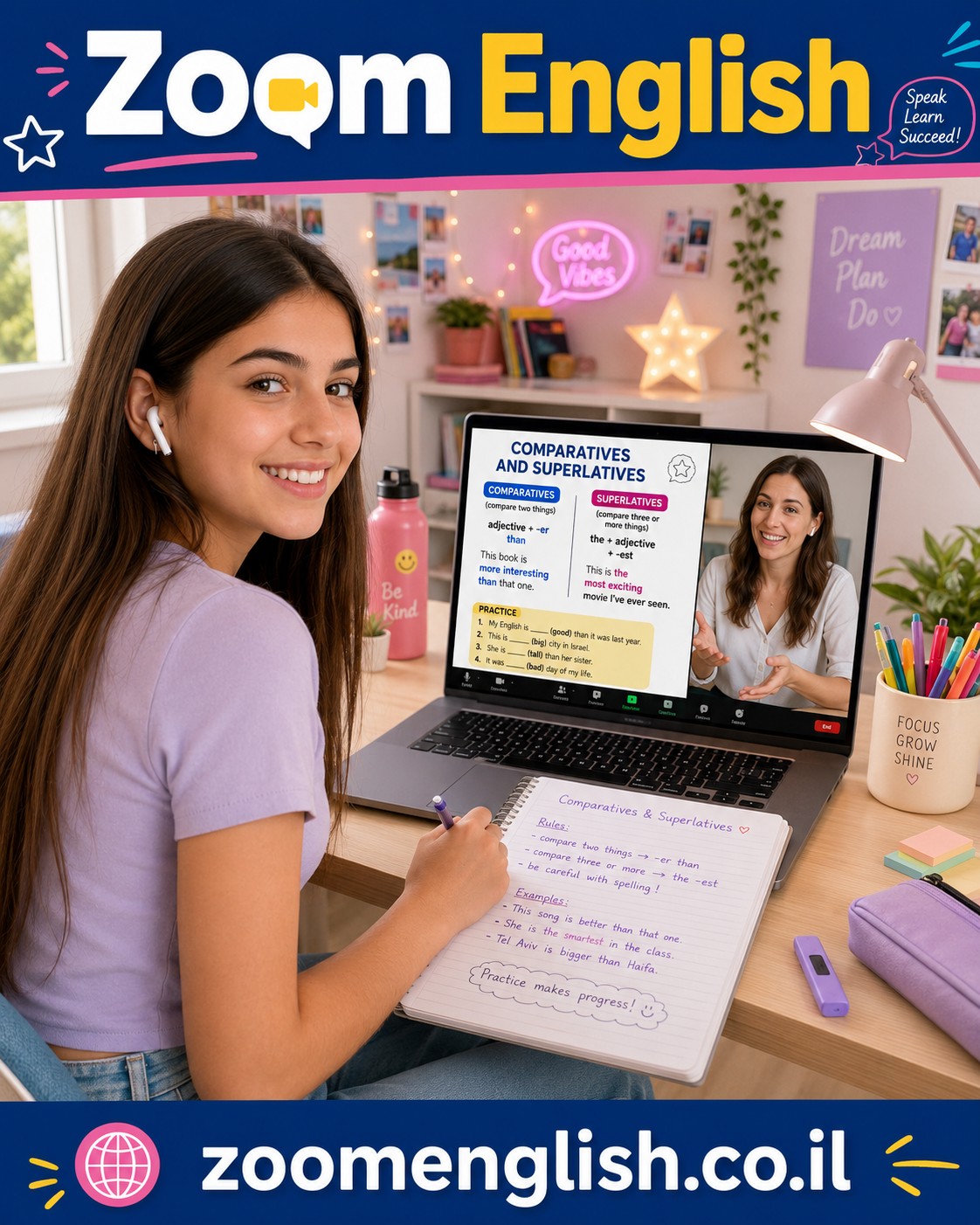
המטרה איננה ללמד “טריק” שמחליף קריאה. ברמה גבוהה אין קיצור דרך אמיתי. יש, לעומת זאת, דרך מסודרת להפחית טעויות: להבין מה השאלה מבקשת, לאתר את אזור ההוכחה, לנסח תשובה עצמאית לפני שמסתכלים באפשרויות, ולבדוק כל מסיח מול הניסוח המדויק של הטקסט. כאשר דרך העבודה הזאת הופכת להרגל, גם טקסטים מורכבים מתחילים להיראות פחות מאיימים.
מי שמגלה במהלך התרגול שהוא מבין את הקטע אך מתקשה להסביר מדוע תשובה מסוימת נכונה, אינו “חלש באנגלית”. לרוב חסר לו אימון ממוקד בשפה של שאלות, בהסקה ובהצדקת בחירה. בשיעור אנגלית אונליין אחד על אחד אפשר לעצור בדיוק בנקודה הזאת, לשמוע כיצד התלמיד חושב, לזהות את דפוס הטעות שלו ולבנות תרגול שמתאים למנגנון החשיבה שלו במקום לתת לו עוד מאותו חומר שכבר לא עבד.
כשהתשובה הלא נכונה מרגישה נכונה
בשאלות אמריקאיות פשוטות, תשובה שגויה עשויה להיות מופרכת מיד. בשאלות ברמה גבוהה, מסיח טוב אינו שטות. הוא נשען על משהו אמיתי: מילה שמופיעה בקטע, רעיון שנרמז בפסקה אחרת, עובדה נכונה באופן כללי או פרשנות שנשמעת אינטליגנטית. לכן תלמיד עשוי לצאת מהמבחן משוכנע שבחר נכון, ורק אחר כך לגלות שהפסיד נקודות בגלל הבדל קטן כמו “חלק מהאנשים” לעומת “רוב האנשים”.
הבעיה נוצרת מפני שהמוח מחפש התאמה מהירה. לאחר קריאת שאלה, העין קולטת באחת האפשרויות מילה מוכרת מהטקסט ומרגישה הקלה: הנה התשובה. אלא שבחינות מתקדמות בנויות לעיתים דווקא נגד ההתאמה השטחית הזאת. האפשרות הנכונה עשויה לנסח את הרעיון במילים אחרות, בעוד שהמסיח מעתיק שלוש מילים מהפסקה אך הופך סיבה לתוצאה, משנה הסתייגות לקביעה מוחלטת או מייחס עמדה לדמות הלא נכונה.
כאשר מתעלמים מהדפוס הזה, התלמיד עלול להסיק שהבעיה שלו היא אוצר מילים וללמוד עוד מאות מילים. אוצר מילים חשוב, אך הוא אינו פותר לבדו שגיאות של לוגיקה ושל דיוק. אדם יכול להכיר כל מילה בארבע האפשרויות ועדיין לבחור במסיח מפני שלא הבחין שהכותב אמר “may contribute” ולא “will cause”, או מפני שהשאלה ביקשה את מטרת הדוגמה ולא את תוכנה.
טעות נפוצה נוספת היא ניסיון להוכיח מדוע האפשרות שנבחרה “יכולה להיות נכונה”. בבחינה אמריקאית השאלה אינה איזו תשובה אפשר להצדיק בעזרת דמיון, ניסיון אישי או ידע חיצוני. השאלה היא איזו תשובה נתמכת בצורה הטובה ביותר על ידי הטקסט. לעיתים שלוש אפשרויות אפשריות בעולם האמיתי, אך רק אחת עומדת במגבלות שהקטע עצמו מציב.
הפתרון המקצועי הוא לעבור משיטת “מה נשמע לי נכון?” לשיטת “איזו מילה בטקסט מגבילה את התשובה?”. אם האפשרות כוללת ניסוח כמו always, entirely, only, proves או all, צריך לחפש האם גם הטקסט משתמש בעוצמה דומה. כאשר הטקסט זהיר והאפשרות מוחלטת, יש סיבה טובה לחשוד בה. כאשר הטקסט מתאר מקרה אחד והאפשרות מסיקה חוק כללי, יש לבדוק האם ההכללה מוצדקת.
בשיעור אנגלית אישי אפשר לבקש מהתלמיד לחשוב בקול. ברגע שהוא אומר “בחרתי ב־B כי ראיתי את המילה productivity”, המורה כבר יודע שהבחירה נעשתה על בסיס התאמת מילים ולא על בסיס משמעות. במקום רק לומר שהתשובה שגויה, אפשר להראות כיצד לקרוא את כל המשפט, להשוות בין הפעלים ולבנות מחדש את הקשר הלוגי. תיקון כזה משפיע על עשרות שאלות עתידיות, לא רק על שאלה אחת.
טיפ שאפשר ליישם כבר עכשיו הוא לסמן ליד כל תשובה שנפסלה סיבה קצרה: “רחבה מדי”, “פרט נכון אך לא רלוונטי”, “הפך סיבה ותוצאה”, “אין הוכחה”, “דעת אדם אחר”. המטרה אינה לכתוב חיבור. שתי מילים מספיקות. לאחר כמה מקבצים תתחילו לזהות איזו מלכודת חוזרת אצלכם, וזה מידע חשוב הרבה יותר מציון כולל.
מה הופך שאלות אמריקאיות ברמה גבוהה לקשות באמת?
שאלת הבנת הנקרא מתקדמת אינה בודקת רק אם הקורא הצליח לפענח את המשפטים. היא יכולה לבדוק האם הוא מבין את הקשר בין שתי פסקאות, מבחין בהסתייגות, מזהה אירוניה, מפרש מילה על פי ההקשר, מסיק מסקנה שאינה נאמרת במפורש או מעריך מדוע הכותב בחר בדוגמה מסוימת. לפי תפיסות מודרניות של אוריינות קריאה, קריאה כוללת לא רק הבנה אלא גם שימוש, הערכה, חשיבה והתמודדות עם מקורות וטענות.
אחת המיומנויות המרכזיות היא הבחנה בין רעיון מרכזי לבין נושא. “הטקסט עוסק בעבודה מרחוק” הוא נושא, אך אינו בהכרח הרעיון המרכזי. הרעיון עשוי להיות שעבודה מרחוק הופכת פעולות ארגוניות מסוימות לבלתי נראות, ולכן מדידה רגילה של תפוקה עלולה להיות מטעה. האפשרות הנכונה צריכה לבטא לא רק את התחום אלא גם את מה שהכותב אומר עליו.
מיומנות אחרת היא הסקה. הסקה טובה אינה ניחוש חופשי. היא בנויה משני חלקים: מידע שנמצא בטקסט ומסקנה שאפשר להגיע אליה בלי להוסיף הנחות גדולות. אם נכתב שחברה ביטלה פגישות רבות, אך העובדים המשיכו לקבל אותה כמות הודעות בערוצים אחרים, אפשר להסיק שהפחתת פגישות לא בהכרח הפחיתה את עומס התקשורת. אי אפשר להסיק שכל העובדים העדיפו את השינוי, אלא אם הדבר נאמר או נתמך.
שאלות על טון ועמדת הכותב קשות במיוחד מפני שהכותב אינו תמיד מצהיר “אני מתנגד”. הוא עשוי להשתמש בביטויים זהירים, בבחירת דוגמאות, בסדר הצגת הטענות או במשפט מסכם שמגלה את עמדתו. קורא שמתרכז רק בעובדות עלול לפספס את המרחק שהכותב יוצר מטענה מסוימת באמצעות מילים כמו supposedly, merely, arguably או at first glance.
גם אוצר מילים נבדק אחרת ברמה גבוהה. לא שואלים רק מה פירוש המילה במילון, אלא מה היא עושה במשפט. המילה “friction”, למשל, יכולה לתאר חיכוך פיזי, קושי בתהליך או עיכוב שמכריח אדם לחשוב. בחירת המשמעות דורשת קריאת המשפטים סביב המילה ובדיקה איזו חלופה שומרת על ההיגיון של הפסקה.
חומרי ההכנה של Cambridge English לרמת C1 מדגישים הרגלים כמו קריאה מגוונת, שימוש ב־skimming וב־scanning, ניחוש משמעות מהקשר, רפלקציה ורישום אוצר מילים שימושי. המשמעות המעשית היא שאין מיומנות אחת שפותרת כל שאלה. קורא טוב משנה את אופן הקריאה בהתאם למשימה.
תרגיל מועיל הוא לקחת שאלה ולכסות את האפשרויות. נסחו תשובה בעברית או באנגלית על סמך הקטע בלבד, ורק אחר כך פתחו את ארבע האפשרויות. לא תמיד הניסוח שלכם יהיה זהה לתשובה הנכונה, אך הוא יצמצם את הסיכוי שמסיח מתוחכם ימשוך אתכם לכיוון שלא חשבתם עליו בזמן הקריאה.
שיטת שלושת הסבבים לקריאת טקסט מתקדם
תלמידים רבים קוראים כל טקסט כאילו יש להם משימה אחת: להבין כל מילה. הם מתחילים במשפט הראשון, נעצרים במילה לא מוכרת, חוזרים לתחילת הפסקה ומאבדים את המבנה. עד שהם מגיעים לשאלה הראשונה, הם זוכרים פרטים בודדים אך אינם יודעים מה תפקידו של כל חלק. קריאה טובה יותר מחלקת את העבודה לשלושה סבבים בעלי מטרות שונות.
בסבב הראשון קוראים כדי לבנות מפה. אין צורך לפתור עדיין את כל הקשיים. מחפשים מי מדבר, מה הנושא, היכן מופיע שינוי כיוון ומה עושה כל פסקה. אפשר לכתוב ליד הפסקאות מילים קצרות: “בעיה”, “דוגמה”, “התנגדות”, “מחקר”, “מסקנה”. הסימונים האלה הופכים טקסט ארוך למבנה שניתן לנווט בו.
בסבב השני קוראים את השאלות ומאתרים את אזור ההוכחה. שאלות רבות מופיעות בסדר דומה לסדר המידע בטקסט, אף שאין להסתמך על כך באופן עיוור. במקום לקרוא מחדש את כל הקטע באותה מהירות, חוזרים לפסקה הרלוונטית וקוראים אותה לאט יותר, כולל משפט אחד לפניה ומשפט אחד אחריה. ההקשר הקרוב מונע טעויות הנגרמות מציטוט חלקי.
בסבב השלישי בודקים את האפשרויות זו מול זו. לא מספיק למצוא שתשובה B נשמעת טובה. צריך לשאול מדוע A, C ו־D אינן טובות באותה מידה. לעיתים ההבדל נמצא במילה אחת בלבד. תשובה אחת אומרת שהכותב “דוחה” טענה, בעוד שהטקסט רק “מטיל בה ספק”. תשובה אחרת אומרת שהדוגמה “מוכיחה”, בעוד שהיא רק “ממחישה”.
התעלמות מהחלוקה הזאת מובילה לשתי תוצאות מנוגדות: קריאה איטית מדי או קריאה מהירה מדי. בקריאה איטית מדי התלמיד משקיע זמן בפרטים שלא נשאלו. בקריאה מהירה מדי הוא בוחר לפי זיכרון כללי. שלושת הסבבים מאפשרים לחלק את תשומת הלב: תחילה מבנה, אחר כך ראיות ולבסוף דיוק בין החלופות.
בשיעור פרטי באנגלית בזום אפשר לתרגל את השיטה בזמן אמת. המורה יכול לראות היכן התלמיד עוצר, אילו מילים הוא מסמן וכמה זמן הוא מקדיש לכל שלב. יש תלמידים שקוראים מצוין אך אינם חוזרים לטקסט לאחר שראו את השאלות. אחרים חוזרים לכל שורה חמש פעמים. ההתאמה נעשית לא רק לפי “הרמה”, אלא לפי הדרך שבה התלמיד בפועל עובד.
נסו לתרגל עם שעון שאינו מלחיץ: שתי דקות למיפוי ראשוני, זמן נפרד לפתרון, ודקה אחרונה לבדיקת שאלות שסומנו. לאחר מכן רשמו לא רק כמה תשובות היו נכונות, אלא באיזה סבב התרחשה התקלה. האם המפה הייתה לא נכונה? האם אזור ההוכחה לא אותר? האם מסיח לא נבדק? כך הופכים ציון לאבחון.
איך מפרקים מסיחים בלי להתווכח עם עצמנו?
מסיחים בנויים לעיתים מחומר גלם אמיתי. לכן קשה לפסול אותם באמצעות תחושה. תלמיד עשוי לומר: “אבל זה כן מוזכר בטקסט”. ייתכן שהוא צודק, אך השאלה היא לא אם הרעיון מוזכר אלא אם הוא עונה בדיוק על מה שנשאל. פרט יכול להיות נכון לחלוטין ובכל זאת להיות תשובה שגויה לשאלת מטרת הכותב, רעיון מרכזי או מסקנה.
הסוג הראשון הוא מסיח ההעתקה. הוא משתמש במילים זהות לטקסט, אך משנה את היחסים ביניהן. למשל, הטקסט אומר שעומס הודעות עלול להקטין את היתרון שבהפחתת פגישות. המסיח אומר שהפחתת פגישות גורמת תמיד ליותר הודעות. המילים דומות, אך הטענה החדשה מוחלטת וסיבתית יותר מהמקור.
הסוג השני הוא מסיח הידע החיצוני. הוא נשמע נכון מפני שאנחנו מכירים את הנושא. אם הקטע עוסק בשינה, תשובה על חשיבות שמונה שעות שינה עשויה להיראות הגיונית, גם אם הטקסט לא הזכיר מספר שעות אלא דן בתפקיד השינה בגיבוש זיכרון. ידע חיצוני אינו בהכרח שגוי, אבל הוא אינו הראיה שנדרשה.
הסוג השלישי הוא מסיח חצי־נכון. החלק הראשון מתאים לטקסט, והחלק השני מוסיף טענה שאינה נתמכת. תלמידים נוטים לעצור לאחר שמצאו התאמה בתחילת האפשרות. לכן חשוב לקרוא כל תשובה עד המילה האחרונה. בבחינה, חצי תשובה נכונה היא תשובה שגויה.
הסוג הרביעי הוא מסיח בעוצמה לא נכונה. שימו לב למילים כמו some, many, often, may, tends to, rarely, never ו־only. ההבדל ביניהן אינו קישוט סגנוני. הוא מגדיר כמה רחבה הטענה ועד כמה הכותב בטוח בה. טקסט אקדמי או עיוני נוטה להשתמש בהסתייגויות, ומסיחים מוחלטים מנסים למחוק אותן.
דרך מקצועית לבדוק אפשרות היא להפוך אותה למשפט שיש להוכיח. לאחר מכן שואלים: “איפה בדיוק הטקסט מוכיח את כל המשפט הזה?” אם מצאתם תמיכה רק לחצי ממנו, פסלו אותו. אם ההוכחה דורשת הנחה שלא נאמרה, השאירו סימן שאלה. אם יש משפט או שילוב ברור של משפטים התומך בכל מרכיבי האפשרות, היא מועמדת חזקה.
בתרגול אישי, המורה יכול להכין לתלמיד “פרופיל מסיחים”. תלמיד אחד נופל בעיקר בהכללות, תלמיד אחר נמשך למילים זהות, ותלמיד שלישי משנה תשובה נכונה מפני שאפשרות אחרת נשמעת מתוחכמת יותר. הטיפ המעשי הוא ליצור טבלה קטנה עם ארבעה טורים: מספר השאלה, התשובה שבחרתי, סוג המסיח, ומה בטקסט היה צריך לעצור אותי.
180 שאלות אמריקאיות בהבנת הנקרא באנגלית ברמה גבוהה
לפניכם 18 קטעי קריאה מקוריים, ובכל אחד עשר שאלות אמריקאיות. הקטעים עוסקים בעבודה, טכנולוגיה, חינוך, סביבה, שפה, מדע, חברה וקבלת החלטות. הגיוון מכוון: הבנת הנקרא ברמה גבוהה אינה נבנית כאשר קוראים שוב ושוב רק סיפורים או רק מאמרים מדעיים. היא מתחזקת כאשר לומדים לזהות טענה ומבנה גם בנושא שאינו מוכר.
מומלץ לפתור כל מקבץ ללא מילון בסבב הראשון. מילה לא מוכרת אינה תמיד קריטית. נסו לבדוק האם היא חיובית או שלילית, האם היא מתארת פעולה, תוצאה או עמדה, ואילו מילים סביבה מגבילות את משמעותה. לאחר סיום המקבץ אפשר לחזור למילים שחסמו הבנה אמיתית ולתעד אותן בתוך משפט, לא כרשימה מנותקת.
אל תמהרו למפתח התשובות. לפני הבדיקה, סמנו ליד כל תשובה את רמת הביטחון שלכם: גבוה, בינוני או נמוך. תשובה שגויה שסומנה בביטחון גבוה חשובה במיוחד, מפני שהיא מצביעה על כלל שגוי או על דפוס חשיבה מטעה. תשובה נכונה שסומנה בביטחון נמוך מצביעה על ידע שקיים אך עדיין אינו יציב.
חלק מהשאלות דורשות איתור מידע, אך רבות דורשות הסקה, זיהוי טון או הבנת תפקידו של משפט. אל תצפו למצוא תמיד משפט זהה לאפשרות הנכונה. ברמה גבוהה משתמשים בפרפרזה: אותה משמעות מוצגת באוצר מילים ובמבנה תחבירי שונים. לעיתים דווקא האפשרות שאין בה אף מילה בולטת מהטקסט היא המדויקת ביותר.
אפשר להשתמש בתרגול גם לדיבור. לאחר פתרון כל קטע, נסו להסביר באנגלית במשך דקה מה הייתה הטענה המרכזית והאם אתם מסכימים איתה. כך הקריאה אינה נשארת מיומנות פסיבית. המילים והרעיונות עוברים לשימוש פעיל, והמורה יכול לתקן ניסוח, להרחיב אוצר מילים ולחבר בין הבנת הנקרא לבין אנגלית מדוברת.
הקטעים אינם מבחן רשמי ואינם מבטיחים התאמה מלאה לבחינה מסוימת. הם נועדו לתרגול מיומנויות מתקדמות ברוח משימות C1 וטקסטים עיוניים מודרניים. השתמשו בהם כדי לזהות כיצד אתם קוראים, לא רק כדי לספור תשובות נכונות.
קטע 1: The Hidden Cost of Convenience
Convenience is usually presented as an unquestionable benefit. A service saves three minutes, an application removes an extra step, or a device makes a decision before its owner has to consider it. Each improvement appears too small to deserve criticism. Yet when convenience becomes the main principle by which products and institutions are designed, something less visible may be lost: the opportunity to notice, choose and learn.
This does not mean that difficulty is automatically valuable. Few people become wiser by completing unnecessarily complicated forms or waiting in avoidable queues. The relevant distinction is between pointless obstacles and useful friction. A navigation system that prevents drivers from getting lost is helpful. However, if it is followed without attention on every journey, users may gradually lose their sense of direction. The system solves the immediate problem while weakening a skill that would otherwise be practised.
Similar effects can occur in digital services. Recommendation systems reduce the effort required to select music, films or news. They may also narrow the range of material a person encounters, not through censorship but through prediction. The user remains free to choose, yet increasingly chooses from options already chosen for them.
The challenge, therefore, is not to reject convenience but to design it selectively. Good design should remove effort that wastes time while preserving moments in which effort creates understanding, independence or judgment.
- What is the main argument of the text?
- Modern technology should be rejected because it weakens human intelligence.
- Convenience is beneficial only when it is expensive to provide.
- Some forms of effort should be preserved because they develop useful abilities.
- People generally prefer difficult systems to simple ones.
- Why does the writer mention complicated forms and queues?
- To show that not every difficulty has educational value.
- To argue that public institutions are poorly designed.
- To compare digital products with government services.
- To suggest that waiting increases patience.
- In the second paragraph, “useful friction” refers to:
- conflict between users and designers
- effort that contributes to learning or judgment
- technical problems that cannot be removed
- competition between similar services
- What can be inferred about navigation systems?
- They always make journeys longer.
- They are most useful to professional drivers.
- Their value depends partly on how they are used.
- They should be legally restricted.
- How may recommendation systems limit users?
- By directly preventing them from choosing other content.
- By charging more for unfamiliar material.
- By predicting preferences and reducing exposure to alternatives.
- By providing too much information to evaluate.
- The phrase “already chosen for them” suggests that:
- users have no legal control over their accounts
- the available options have been shaped in advance
- all recommendations are selected by human editors
- people dislike making independent decisions
- Which statement would the writer most likely agree with?
- Every extra step in a process is harmful.
- Efficient design should remove all need for thought.
- Convenience and independence can sometimes be in tension.
- Prediction systems are a form of censorship.
- What is the writer’s attitude towards convenience?
- Entirely hostile
- Uncritically enthusiastic
- Cautiously supportive
- Mostly indifferent
- What is the function of the final paragraph?
- It introduces a new historical example.
- It offers a balanced principle for design.
- It proves that convenience saves money.
- It withdraws the writer’s earlier criticism.
- Which title best captures the text?
- Why Difficult Products Sell Better
- The Difference Between Helpful Ease and Harmful Ease
- How to Stop Using Navigation Systems
- The End of Consumer Choice
קטע 2: Cooling a City Unequally
On a hot afternoon, two streets in the same city can feel as though they belong to different climates. One is shaded by mature trees and bordered by gardens. The other consists of dark roofs, wide roads and exposed concrete. The temperature difference is not merely uncomfortable. It can influence sleep, health, energy bills and whether people feel able to walk outside.
City authorities increasingly respond to extreme heat by planting trees. The policy appears simple, but the results depend on where trees are planted, which species are selected and who is responsible for maintaining them. A newly planted tree may take years to provide meaningful shade. In areas where residents move frequently or municipal budgets are limited, young trees may die before they deliver the benefit used to justify the project.
There is also a risk that successful greening makes an area more desirable and raises housing costs. Residents who endured years without investment may then be displaced just as their neighbourhood becomes cooler and healthier. This does not mean that deprived districts should remain without trees. It means environmental improvement cannot be separated from housing policy.
A fair heat strategy therefore requires more than counting the number of trees planted. It should measure shade over time, protect tenants, involve local residents in planning and prioritise places where heat exposure and social vulnerability overlap.
- What contrast is presented in the opening paragraph?
- Urban and rural lifestyles
- Different heat conditions within one city
- Public and private gardens
- New and historic neighbourhoods
- Why may the number of trees planted be a misleading measure?
- Most city trees provide too much shade.
- Tree planting is always more expensive than expected.
- Planting does not guarantee long-term survival or useful shade.
- Residents usually oppose tree maintenance.
- The word “deliver” in paragraph two is closest in meaning to:
- transport
- produce
- announce
- exchange
- What unintended consequence of greening is discussed?
- Reduced public transport
- Increased housing costs and displacement
- Lower demand for local businesses
- More traffic in wealthy districts
- Why does the writer state that deprived districts should not remain without trees?
- To prevent the previous argument from being misinterpreted
- To claim that trees solve housing inequality
- To criticise residents who oppose development
- To recommend planting only in poor areas
- According to the text, environmental improvement should be connected to:
- tourism policy
- school admissions
- housing protection
- road construction
- What does “social vulnerability” most likely include?
- A preference for living outside cities
- A reduced ability to avoid or recover from heat-related harm
- A lack of interest in environmental issues
- An unwillingness to participate in planning
- Which policy would best reflect the writer’s recommendations?
- Planting the cheapest trees in every district equally
- Focusing only on the total annual planting target
- Combining shade projects with tenant protections and maintenance plans
- Allowing property developers to choose all planting locations
- What is the overall tone of the passage?
- Analytical and concerned
- Humorous and informal
- Nostalgic and emotional
- Dismissive and impatient
- Which best expresses the central idea?
- Tree planting is ineffective in modern cities.
- Urban cooling policies must consider both environmental and social outcomes.
- Housing prices fall when neighbourhoods become greener.
- Residents should maintain all public trees themselves.
קטע 3: When Repair Becomes a Skill Again
For much of the twentieth century, repairing household objects was ordinary rather than ideological. A radio, chair or coat was expected to require maintenance. In recent decades, however, repair has often become less convenient than replacement. Products are sealed, spare parts are unavailable, and labour may cost more than a new item.
The renewed interest in repair cafés and community workshops is sometimes described mainly as an environmental movement. Reducing waste is certainly one motivation, but participants often report another benefit: they gain a different relationship with objects. A broken toaster is no longer a mysterious box that either works or becomes rubbish. It is a system whose parts can be examined, understood and sometimes restored.
This change in perspective matters even when the repair fails. Someone who opens a device and identifies the damaged component has learned something about materials, design and the limits of their own knowledge. Failure becomes information rather than simple defeat.
Nevertheless, celebrating repair can become unrealistic if responsibility is placed entirely on consumers. People cannot repair products designed to resist access, and they may not have the time, tools or physical ability to perform technical work. A genuine repair culture therefore depends not only on individual enthusiasm but also on product standards, accessible instructions and affordable professional services.
- How has repair changed according to the first paragraph?
- It has become legally prohibited for many products.
- It has shifted from a normal practice to a less convenient option.
- It is now performed mainly by manufacturers.
- It has become cheaper than replacement.
- What benefit of repair cafés is emphasised beyond reducing waste?
- They provide free new products.
- They change how people understand objects.
- They guarantee successful repairs.
- They eliminate the need for professional technicians.
- Calling a toaster “a mysterious box” suggests that users:
- are often separated from knowledge of how products work
- believe electrical devices are dangerous
- prefer traditional cooking methods
- cannot recognise common appliances
- Why can a failed repair still be valuable?
- It makes replacement products cheaper.
- It proves the product was badly designed.
- It can produce knowledge about the object and the repairer’s abilities.
- It allows the manufacturer to avoid responsibility.
- In paragraph three, “limits” refers to:
- legal restrictions
- boundaries of knowledge or ability
- financial targets
- product guarantees
- What warning does the final paragraph provide?
- Repair communities may create too much waste.
- Consumers should not be blamed for barriers created by product design.
- Professional services are always unnecessary.
- Repair instructions should remain confidential.
- Which factor is NOT mentioned as a barrier to consumer repair?
- Lack of time
- Lack of tools
- Physical limitations
- Lack of interest in the environment
- The writer views repair primarily as:
- a complete solution to consumer waste
- a useful practice requiring wider structural support
- a hobby suitable only for technical experts
- an outdated activity with little modern value
- What is the purpose of the final sentence?
- To define the conditions needed for a broader repair culture
- To advertise community workshops
- To compare professional and amateur salaries
- To argue against environmental regulations
- Which title is most suitable?
- Why Every Repair Must Succeed
- Repair as Knowledge, Not Just Maintenance
- The Disappearance of Household Objects
- How to Open a Toaster Safely
קטע 4: The Productivity Paradox of Constant Communication
Organisations often introduce communication platforms with the aim of making work faster. Questions can be answered immediately, files are easy to share, and decisions no longer need to wait for a scheduled meeting. Yet the same tools can produce a workday fragmented into dozens of minor interactions.
The problem is not simply the number of messages. Each notification asks the recipient to evaluate whether it requires action, whether it is urgent and whether a response should be public or private. Even when the answer takes only seconds, attention must shift away from the original task. Returning to that task may take longer than replying to the message itself.
Some companies respond by banning meetings or creating “focus hours”. These policies can help, but they fail when communication is merely displaced. A cancelled meeting may become a long sequence of messages involving the same people, while focus hours may be interrupted by colleagues who believe their request is exceptional.
A more useful approach is to treat communication as part of the workload rather than as an invisible layer around “real work”. Teams can decide which questions genuinely require immediate responses, which decisions need a documented discussion and which updates can wait for a shared weekly summary. The goal is not silence. It is to make the cost of interruption visible enough to manage.
- What paradox is described in the passage?
- Tools intended to speed up work can make sustained work harder.
- Employees communicate less when more tools are available.
- Meetings are shorter but more expensive.
- Written communication is always slower than speech.
- Why can a brief message have a larger effect than its response time suggests?
- Employees usually answer it incorrectly.
- It may require an attention shift and a costly return to the original task.
- Messages are normally sent to too many people.
- Written replies require formal approval.
- The word “fragmented” is closest in meaning to:
- divided into disconnected pieces
- carefully documented
- financially rewarded
- completed ahead of time
- Why might banning meetings fail?
- Employees refuse to use written communication.
- The same communication may reappear in another form.
- Managers cannot measure meeting length.
- Weekly summaries become illegal.
- What does “exceptional” mean in the context of focus hours?
- Of unusually high quality
- Outside the rule and deserving immediate attention
- Impossible to understand
- Suitable for a public announcement
- Which assumption does the writer challenge?
- Communication is separate from the workload itself.
- Employees need access to shared files.
- Some decisions should be documented.
- Weekly summaries can contain updates.
- Which solution would the writer most likely support?
- Requiring an immediate answer to every message
- Replacing all messages with meetings
- Agreeing on different response expectations for different types of communication
- Allowing only managers to send notifications
- The phrase “The goal is not silence” mainly serves to:
- clarify that the writer is not arguing against communication itself
- suggest that offices should be physically noisy
- criticise employees who work alone
- introduce a discussion of sound levels
- What is the writer’s main purpose?
- To promote a particular communication application
- To explain why communication costs should be recognised and managed
- To prove that meetings are the most efficient format
- To argue that remote work is impossible
- Which statement is supported by the text?
- Focus hours always eliminate interruptions.
- The number of messages is the only relevant issue.
- A communication policy can fail if team habits do not change.
- Employees should never respond publicly.
קטע 5: Museums and the Power of Labels
A museum label appears modest: a few lines beside an object, often printed in a typeface small enough to discourage lingering. Yet those lines can determine what visitors believe they are seeing. A bowl may become evidence of trade, a painting may become a record of political conflict, and an ordinary tool may be presented as a symbol of technological change.
Labels are necessary because objects rarely explain themselves. However, the authority of the museum can make interpretation look like neutral fact. Phrases such as “used for ceremonial purposes” may hide uncertainty about who used the object, how often, and according to whose account. Older labels sometimes present a single confident story where current researchers would describe several competing possibilities.
Some museums have responded by displaying uncertainty directly. They may explain that an object’s original owner is unknown, that its date is disputed or that a previous interpretation has been challenged. Critics worry that such labels are confusing. Supporters argue that they reveal how knowledge is produced and revised.
The most effective labels do not abandon expertise. Instead, they distinguish observation from interpretation. They tell visitors what can be seen, what evidence supports a conclusion and where questions remain open. In doing so, they invite visitors to participate in thought rather than merely receive a finished account.
- What does the first paragraph suggest about museum labels?
- Their physical size reflects their importance.
- They strongly shape how objects are understood.
- They are mainly used to protect valuable objects.
- Visitors rarely read them correctly.
- Why are labels necessary?
- Objects do not normally provide their own historical context.
- Museums are required to use identical descriptions.
- Visitors prefer text to physical objects.
- Labels increase the financial value of collections.
- What problem can museum authority create?
- It can make interpretations appear more certain than they are.
- It prevents researchers from entering exhibitions.
- It encourages visitors to damage objects.
- It makes labels too long to read.
- The example “used for ceremonial purposes” illustrates:
- a translation error
- a statement that may conceal unanswered questions
- a proven fact about every ancient object
- a phrase visitors find entertaining
- How do some modern museums deal with uncertainty?
- They remove labels completely.
- They avoid displaying disputed objects.
- They make limits and disagreements visible.
- They allow visitors to invent dates.
- What concern do critics have?
- Visitors may find open uncertainty difficult to follow.
- Researchers will stop revising knowledge.
- Objects will lose their physical value.
- Museums will become too profitable.
- According to supporters, what is gained by acknowledging uncertainty?
- Visitors learn that knowledge develops through investigation and revision.
- Museums no longer need experts.
- Every interpretation becomes equally correct.
- Exhibitions require fewer objects.
- What distinction does the final paragraph recommend?
- Valuable objects versus ordinary objects
- Observation versus interpretation
- Local visitors versus tourists
- Written evidence versus visual design
- The writer’s position is that museums should:
- replace expertise with public voting
- communicate expertise together with its limits
- present only fully proven historical claims
- avoid explaining how conclusions are reached
- Which title best fits the passage?
- The Small Text That Shapes a Large Story
- Why Museums Should Display Fewer Objects
- The Commercial Value of Ancient Bowls
- How to Design a Larger Typeface
קטע 6: Citizen Science and Imperfect Data
Citizen science projects ask members of the public to collect observations that professional researchers could not gather alone. Volunteers may record bird sightings, measure local air quality or photograph changes along a coastline. The resulting datasets can cover enormous areas and long periods at relatively low cost.
Such projects are sometimes criticised because volunteers differ in experience, equipment and attention. One observer may identify a species correctly while another confuses it with a similar bird. A cheap sensor may produce less precise readings than laboratory equipment. These limitations are real, but they do not automatically make the data useless.
Researchers can design projects to account for uneven quality. They may provide training, request photographs, compare several observations from the same area or use statistical methods to identify unusual results. A large quantity of imperfect data can reveal patterns that a small quantity of highly precise data would miss.
The deeper value of citizen science is not limited to information collection. Participants may become more attentive to their surroundings and more capable of understanding scientific uncertainty. However, this benefit should not be romanticised. Volunteers deserve to know how their work will be used, whether commercial organisations will benefit and whether communities will have access to the findings they helped produce.
- What major advantage of citizen science is identified?
- It guarantees laboratory-level precision.
- It allows data to be gathered across broad areas and long periods.
- It eliminates the need for professional researchers.
- It produces results without financial cost.
- Why is citizen science data sometimes criticised?
- Volunteers may collect information with varying levels of accuracy.
- Projects focus only on birds.
- Professional scientists refuse to examine it.
- The public is legally prohibited from using sensors.
- What does “These limitations are real” signal?
- The writer accepts part of the criticism before qualifying it.
- The writer believes all volunteer data should be rejected.
- The writer is changing to an unrelated topic.
- The writer doubts that any errors occur.
- How can researchers improve confidence in the data?
- By accepting only the first observation received
- By combining training, supporting evidence and analytical checks
- By hiding unusual results
- By preventing volunteers from communicating
- What comparison is made in paragraph three?
- Public funding versus private funding
- Many imperfect observations versus fewer highly precise observations
- Bird research versus air-quality research
- Local projects versus international projects
- What can be inferred about data quality?
- Only perfectly precise data can support useful conclusions.
- Quality depends partly on the question and the design of the project.
- Large datasets never contain errors.
- Statistical methods can correct every mistake.
- What additional benefit may participants gain?
- Guaranteed employment as scientists
- Greater awareness of their environment and scientific uncertainty
- Ownership of all commercial products
- Free laboratory equipment
- Why does the writer say this benefit should not be “romanticised”?
- Because volunteers may dislike nature
- Because ethical questions about use, access and benefit still matter
- Because public projects are never educational
- Because scientific uncertainty should be hidden
- Which question reflects the ethical concern in the final paragraph?
- Can every volunteer identify every species?
- Will contributors understand who gains from their unpaid work?
- Are laboratory sensors colourful?
- Should all projects study coastlines?
- What is the writer’s overall view?
- Citizen science is valuable if its limitations and responsibilities are managed.
- Citizen science is less useful than all professional research.
- Volunteer observations should replace formal science.
- Data quantity is always more important than accuracy.
קטע 7: The Slow Science Movement
Scientific research is commonly described as a search for knowledge, but researchers also work within systems of deadlines, grants and publication targets. In many institutions, productivity is measured through visible outputs: papers published, funding secured and projects completed. Activities that take time but produce no immediate result can appear unproductive.
Supporters of “slow science” argue that this pressure can discourage careful observation, replication and the exploration of unexpected findings. They do not necessarily propose that every project should proceed slowly. A public-health emergency, for example, may require rapid evidence. Their claim is that speed has become a default value even when the research question would benefit from patience.
The phrase “slow science” can be misleading because it sounds like a defence of inefficiency. In practice, its advocates often seek a different definition of efficiency. Repeating an experiment may delay publication, but it can prevent years of work from being built on an unreliable result. Time spent discussing methods with colleagues may produce no immediate paper, yet improve the quality of several future studies.
The movement therefore raises a question that extends beyond science: should an activity be judged mainly by how quickly it produces measurable output, or by whether the output remains useful after the deadline has passed?
- What tension is introduced in the first paragraph?
- Researchers seek knowledge but also face institutional performance pressures.
- Scientists prefer teaching to research.
- Grants are available only for slow projects.
- Publications are no longer considered useful.
- Which activity may appear unproductive under current measures?
- Submitting a completed paper
- Securing research funding
- Careful work without an immediate visible result
- Ending a project before its deadline
- What do slow-science supporters argue?
- All research should take the same amount of time.
- Pressure for speed can weaken certain research practices.
- Public-health research should be delayed.
- Scientists should publish no results.
- Why is the public-health emergency mentioned?
- To show that speed can sometimes be necessary
- To prove that slow science is dangerous
- To criticise medical researchers
- To explain how grants are awarded
- What does “default value” mean in this context?
- A financial penalty
- An assumption accepted without case-by-case examination
- A measurement error
- A result that cannot be published
- Why might repeating an experiment be efficient in a broader sense?
- It guarantees additional funding.
- It may prevent later work from relying on a weak result.
- It always produces a second publication.
- It removes the need for discussion.
- What distinction does the passage make?
- Short articles versus long articles
- Immediate output versus durable value
- University science versus private science
- Medical research versus all other research
- The writer’s tone towards slow science is:
- sympathetic but nuanced
- openly mocking
- entirely opposed
- uninterested
- What broader question does the movement raise?
- Whether measurable speed is the best standard of value
- Whether scientists should work alone
- Whether research should receive public money
- Whether deadlines can be removed from society
- Which title best represents the text?
- Why Emergency Research Must Stop
- Rethinking What Productive Research Looks Like
- How to Publish More Papers Each Year
- The Case Against Repeating Experiments
קטע 8: Food Waste and the Meaning of Freshness
Consumers often describe fresh food as food that looks untouched by time. Apples should be firm and evenly coloured; bread should be soft; vegetables should show no marks. Retailers respond by removing products that remain edible but no longer match these expectations.
The preference for visual perfection is not simply individual wastefulness. It has been shaped by supply chains that make natural variation seem unusual. When every tomato in a display is nearly identical, a differently shaped one appears defective rather than ordinary. Standards intended to make packing and pricing easier can gradually become standards for what consumers consider acceptable.
Date labels add another layer of confusion. A safety-related expiry date is different from a quality-related “best before” date, yet many people treat both as instructions to discard food immediately. Campaigns that explain the distinction can help, but information alone may not overcome fear of illness or uncertainty about smell, texture and storage.
Reducing household food waste therefore requires more than telling people to behave responsibly. Shops can offer smaller quantities, clearer storage advice and discounted products approaching their quality date. Consumers can plan meals and learn how to judge food, but the system must also make the less wasteful choice practical rather than morally admirable and inconvenient.
- How is freshness commonly understood by consumers?
- As food grown in a particular country
- As food showing little visible evidence of age or variation
- As food sold without packaging
- As food with the lowest price
- Why may retailers remove edible products?
- They no longer fit consumer expectations of appearance.
- They have always become unsafe.
- They cannot be transported.
- They are too expensive to display.
- What effect can uniform displays have?
- They make natural differences look like defects.
- They teach consumers to grow tomatoes.
- They increase the size of all vegetables.
- They remove the need for quality standards.
- The phrase “another layer of confusion” refers to confusion caused by:
- international food prices
- different kinds of date labels
- unusual vegetable shapes
- restaurant menus
- What distinction does the passage make between dates?
- Local and imported dates
- Safety limits and quality guidance
- Printed and digital dates
- Retail and restaurant dates
- Why may information campaigns be insufficient?
- People may still feel uncertain about assessing food safely.
- Date labels contain no useful information.
- Consumers refuse to read any public advice.
- Storage has no effect on food quality.
- What does the writer criticise in the final paragraph?
- The idea that responsibility belongs only to individual consumers
- The sale of food in small quantities
- The use of discounts
- The practice of planning meals
- Which action is recommended for shops?
- Selling only visually perfect produce
- Removing all date labels
- Making practical low-waste choices easier
- Increasing package sizes
- What is the central idea?
- Food waste results from personal carelessness alone.
- Expectations and systems shape waste, so solutions must address both.
- All food remains safe after its expiry date.
- Visual standards should replace safety standards.
- The writer’s approach is best described as:
- moralistic and blaming
- systemic and practical
- purely historical
- commercial and promotional
קטע 9: The Bilingual Mind at Work
People who use more than one language at work are often described as if they possess two separate sets of words and switch neatly between them. In reality, languages may interact continuously. A person can understand a technical concept in English, discuss it with a colleague in Hebrew and remember the original term only in English.
This interaction is sometimes mistaken for weakness. Bilingual speakers may pause while searching for a word, borrow an expression from another language or feel less articulate in a formal meeting than in a casual conversation. Such moments do not necessarily indicate that the speaker lacks knowledge. The knowledge may be distributed across languages and contexts.
However, it would also be misleading to claim that bilingual experience removes every difficulty. Professional communication depends on precision, speed and awareness of audience expectations. Knowing a concept is not always enough; a person may need practice explaining it clearly to a client, writing it in an email or defending it during a meeting.
Effective language training begins by identifying the situations in which access breaks down. Rather than reviewing general grammar indefinitely, learners can rehearse the transitions they actually need: moving from notes to speech, from an informal explanation to a formal summary, or from understanding a question to answering it under pressure.
- What simplified view of bilingual speakers is challenged?
- They learn languages only at school.
- Their languages operate as completely separate systems.
- They prefer written communication.
- They always translate every word.
- What example demonstrates interaction between languages?
- Forgetting a technical idea entirely
- Understanding a concept in one language and discussing it in another
- Refusing to speak during a meeting
- Learning two unrelated professions
- Why might a bilingual speaker pause?
- The relevant knowledge may be easier to access in another language or context.
- The speaker necessarily lacks subject knowledge.
- Bilingual people cannot communicate formally.
- The meeting topic is always unfamiliar.
- The word “distributed” most nearly means:
- shared or spread across different locations
- permanently lost
- professionally certified
- translated word for word
- What caution does paragraph three add?
- Bilingualism guarantees perfect workplace communication.
- Real communication demands skills beyond conceptual understanding.
- Professional vocabulary should never be translated.
- Informal conversations are more important than meetings.
- Which ability is mentioned as requiring practice?
- Avoiding all borrowed expressions
- Explaining a known concept clearly to different audiences
- Learning every technical term in two languages
- Speaking without any pauses
- What does “access breaks down” mean?
- A digital account stops working.
- A person cannot easily retrieve or express language they partly know.
- A company refuses to translate documents.
- A meeting is cancelled.
- What training approach does the writer recommend?
- Studying general grammar without reference to real situations
- Practising specific transitions and communication demands
- Avoiding workplace language until fluency is complete
- Using only written exercises
- Which learner would most benefit from the suggested approach?
- Someone who understands meetings but struggles to respond quickly
- Someone who has no reason to use English
- Someone interested only in literary history
- Someone who refuses to practise speaking
- What is the main message?
- Language difficulty can involve access and context, not only lack of knowledge.
- Bilingual speakers should use only one language at work.
- Grammar is irrelevant to professional communication.
- Pausing always indicates low proficiency.
קטע 10: Designing for the Edges
Designers often imagine an average user: someone with typical vision, hearing, movement, literacy and access to technology. Products are then tested against this fictional centre. People whose needs fall outside it are treated as special cases requiring additional features.
Inclusive design begins from a different assumption. It studies users at the edges because the obstacles they encounter reveal weaknesses that may affect many others. Captions are essential for a person who cannot hear a video, but they also help someone watching in a noisy station or learning the language. A clearly structured website supports users with cognitive disabilities, yet also benefits anyone who is tired, distracted or unfamiliar with the subject.
This does not mean one design can serve every person equally well. Some needs conflict, and specialised tools remain necessary. The point is that accessibility should influence the main design process rather than be added after major decisions have already been made.
Designing from the edges can also expose assumptions about what counts as normal. When a service requires rapid reading, precise hand movement and constant access to a new smartphone, exclusion is not an accidental technical problem. It is partly the result of choices about whose time, body and resources were considered during development.
- What is criticised in the first paragraph?
- The use of testing in design
- The assumption of a single typical user
- The cost of new smartphones
- The development of specialised tools
- Why does inclusive design study users “at the edges”?
- They are easier to satisfy than average users.
- Their difficulties can reveal broader design weaknesses.
- They always use the newest technology.
- Their needs are identical.
- What do the examples of captions and structured websites show?
- Accessibility features may help people in many situations.
- Video is less accessible than all written text.
- Language learners have cognitive disabilities.
- Stations should provide quieter waiting areas.
- What qualification is made in paragraph three?
- Inclusive design can remove every conflict between users.
- One solution cannot meet all needs equally.
- Specialised tools should be banned.
- Accessibility is useful only after development.
- When should accessibility influence design?
- Only after customer complaints
- From the main stages of the design process
- After the product is no longer sold
- Only when required by a specific user
- What does the final paragraph suggest about exclusion?
- It may result from design assumptions and priorities.
- It is always caused by user error.
- It cannot be reduced by designers.
- It occurs only in digital services.
- The phrase “whose time, body and resources were considered” refers to:
- the range of users imagined during development
- the salaries paid to designers
- the ownership of technology companies
- the speed of factory production
- Which service best follows the passage’s principles?
- One that adds captions only after a legal complaint
- One that tests early versions with users who have varied needs
- One that requires the latest phone for every task
- One that removes specialist accessibility options
- What is the writer’s tone?
- Critical but constructive
- Amused and dismissive
- Uncertain and apologetic
- Hostile towards technology
- What is the central argument?
- Designing with excluded users in mind can improve the main product and reveal hidden assumptions.
- Every person should receive an entirely different product.
- Average users no longer exist.
- Accessibility benefits only people with permanent disabilities.
קטע 11: The Illusion of Personalisation
Digital platforms frequently promise a personalised experience. A dashboard displays recommended lessons, a news feed selects relevant stories, and a shopping site predicts what the visitor may want next. Yet personalisation can describe very different processes.
At its simplest, a system may place a user into a broad category based on age, location or previous clicks. The resulting experience feels individual because it differs from the default, but thousands of other users may receive nearly identical recommendations. More advanced systems update predictions continuously, although greater complexity does not guarantee that the prediction reflects a person’s current goal.
A learner who repeatedly watches easy grammar videos may be shown more of them. The system interprets past behaviour as preference, while the learner may actually be avoiding a difficult skill. Personalisation then reinforces the pattern that prevents progress.
Useful personalisation requires more than prediction. It requires a way to distinguish enjoyment from need, habit from intention and short-term engagement from long-term development. In education, this often involves conversation. A teacher can ask why a learner avoided a task, notice frustration and adjust the level. A platform can infer behaviour, but it may not know what the learner is trying to become.
- What main distinction does the passage make?
- Personalisation can range from broad grouping to more responsive systems.
- Shopping platforms are more accurate than educational platforms.
- Every user dislikes default settings.
- Age is the only useful category.
- Why may a broadly categorised experience feel personal?
- It is designed by a private teacher.
- It differs from the standard version.
- It is unique to one individual.
- It ignores all previous behaviour.
- What limitation can affect advanced prediction systems?
- They cannot process previous clicks.
- They may misread the user’s present purpose.
- They always recommend identical content.
- They use no behavioural information.
- Why might a learner receive more easy grammar videos?
- The platform assumes repeated behaviour reflects preference.
- The teacher has assessed the learner’s needs.
- All difficult material has been removed.
- The learner has completed every advanced task.
- What harmful cycle is described?
- Past avoidance can generate recommendations that support further avoidance.
- Advanced learners are shown increasingly difficult material.
- Teachers prevent learners from using platforms.
- Enjoyable activities always cause poor results.
- In paragraph four, “engagement” most nearly refers to:
- a promise to marry
- measurable interaction with content
- formal employment
- agreement with a teacher
- What can a teacher do that the passage suggests a platform may struggle to do?
- Store previous clicks
- Ask about the reason behind behaviour
- Display video lessons
- Calculate lesson length
- The final sentence contrasts:
- past behaviour with future intention
- teachers with all forms of technology
- shopping with news
- easy grammar with difficult vocabulary
- What is the writer’s attitude to personalisation?
- It is meaningless in every context.
- It is useful only when it reflects goals and needs, not merely patterns.
- It should be based entirely on age.
- It always produces individual instruction.
- Which title best fits the text?
- When “Made for You” Is Really Made from Your Past
- Why Easy Grammar Is Always Best
- The End of Online Education
- How to Increase Video Views
קטע 12: Sleep, Memory and the Myth of More Study
When an examination approaches, sleep is often treated as time that can be borrowed. An extra two hours of study feels visible and productive, while the benefit of going to bed is delayed and difficult to measure. The student can count the pages reviewed but cannot observe memories being stabilised during sleep.
This creates a misleading comparison. The choice is not simply between studying and doing nothing. Sleep participates in learning by supporting attention, emotional regulation and the consolidation of new information. Reducing it may increase the number of hours spent with the material while decreasing the quality of those hours and the likelihood that the material will be retrieved later.
None of this means that sleep can replace preparation. A well-rested student who has not studied will not acquire knowledge overnight. The point is that learning depends on a cycle: focused exposure, retrieval, rest and renewed practice. Removing one stage can weaken the others.
A practical revision plan therefore values stopping as well as starting. It sets a realistic final task for the evening, identifies what must wait and uses the next session to retrieve information rather than merely reread it. The discipline required to stop may be greater than the discipline required to continue.
- Why is extra study likely to feel more productive than sleep?
- Its immediate activity can be seen and counted.
- It always produces better examination results.
- Sleep has no connection to memory.
- Students enjoy every form of revision.
- What comparison does the writer call misleading?
- Reading versus writing
- Studying versus sleep understood as doing nothing
- Morning study versus evening study
- School examinations versus university examinations
- According to the passage, sleep supports all of the following EXCEPT:
- attention
- emotional regulation
- memory consolidation
- automatic acquisition without study
- What may happen when study hours increase through sleep reduction?
- The quality and later usefulness of study may decline.
- Every memory becomes permanent.
- Students require no retrieval practice.
- Examinations become easier.
- Why does the writer say sleep cannot replace preparation?
- To prevent an overstatement of the argument
- To recommend studying all night
- To claim that rest is unimportant
- To change the subject to exercise
- What learning cycle is proposed?
- Reading, highlighting, copying and testing
- Exposure, retrieval, rest and further practice
- Listening, sleeping, translating and guessing
- Planning, worrying, revising and repeating
- What does “retrieve” mean in this passage?
- Bring learned information back to mind
- Download a document
- Return a book to a library
- Copy information into notes
- What feature should a practical evening plan include?
- An unlimited list of tasks
- A clear stopping point and deferred priorities
- Only passive rereading
- No work for the following day
- What does the final sentence imply?
- Continuing to study can sometimes feel easier than stopping responsibly.
- Disciplined students never study in the evening.
- Rest requires no planning.
- All revision should end early.
- What is the main argument?
- Effective study depends on balancing practice with the processes supported by rest.
- Sleep is more important than learning any material.
- Students should reduce all examination preparation.
- Rereading is the only useful revision method.
קטע 13: Public Spaces Without a Purchase
Many indoor spaces that feel public are privately managed. Shopping centres, cafés and transport hubs allow people to meet, sit and pass time, but their welcome is often linked to consumption, movement or compliance with commercial rules. Someone who remains without buying anything may gradually feel that they are occupying space illegitimately.
Libraries complicate this pattern. They provide warmth, seating, internet access, toilets, information and human contact without requiring a purchase. Their value is therefore difficult to capture through traditional measures. Counting borrowed books reveals one function but misses the job seeker using a computer, the teenager studying in a quiet corner or the isolated adult who exchanges a few words with a member of staff.
Because these benefits are dispersed, they are vulnerable during budget decisions. A commercial service can point to revenue. A library may have to prove the value of events that prevented loneliness, questions that helped someone complete a form, or hours of safe indoor time. What matters socially may be precisely what is hardest to convert into a simple number.
Defending public space does not require rejecting commercial spaces. It requires recognising that a city needs places where a person’s right to remain does not depend on the ability or willingness to spend money.
- What limitation of many apparently public indoor spaces is described?
- They are open only at night.
- Belonging may depend on spending, moving or following commercial expectations.
- They contain too many libraries.
- They prohibit all social meetings.
- Why might a non-paying person feel uncomfortable?
- They may sense that their presence is not considered fully legitimate.
- They are always asked to leave immediately.
- Public transport is unavailable.
- They cannot speak to other visitors.
- How do libraries “complicate this pattern”?
- They sell more products than shopping centres.
- They allow access to resources and space without requiring consumption.
- They are all privately managed.
- They discourage people from staying.
- Why is counting borrowed books insufficient?
- Most borrowed books are never returned.
- It captures only one part of what libraries provide.
- Libraries no longer lend books.
- Borrowing data cannot be counted.
- What do the examples in paragraph two illustrate?
- Different forms of value that may not appear in lending statistics
- Reasons to charge for library entry
- The decline of printed books
- Problems caused by library staff
- Why are dispersed benefits vulnerable?
- They may be difficult to demonstrate with a simple financial measure.
- They always cost more than commercial services.
- They benefit only isolated adults.
- They cannot be described in words.
- What contrast is made in paragraph three?
- Revenue that is easy to count and social value that is harder to quantify
- Teenagers and adults
- Printed books and computers
- Large cities and small towns
- What does the writer mean by a “right to remain”?
- Legal ownership of a building
- The ability to stay in a place without being required to purchase
- Permanent residence in a city
- Employment in a public institution
- Which statement would the writer most likely support?
- Commercial spaces should be eliminated.
- Public value should be assessed through more than direct revenue.
- Libraries should measure only book loans.
- Every indoor space should charge an entrance fee.
- What is the main purpose of the passage?
- To explain why non-commercial public spaces have value that is easy to overlook
- To compare the architecture of libraries and cafés
- To argue that people should stop shopping
- To advertise library computers
קטע 14: Career Change as Translation
People changing careers are often told that they lack experience. In a narrow sense, this may be true: a teacher applying for a project-management role may never have held that title. Yet the conclusion that they have no relevant experience depends on describing their previous work too literally.
A career change involves translation. The applicant must identify the underlying abilities within familiar tasks and express them in language recognised by a new field. Organising a school event may involve budgeting, risk management, scheduling, stakeholder communication and adaptation under pressure. None of these claims should be exaggerated, but neither should they disappear behind the phrase “helped with an event”.
This translation is difficult because experienced people perform many skills automatically. They remember the activity but not the decisions hidden inside it. A useful interview exercise is therefore to slow the experience down: What changed? What problem appeared? Who needed information? What options were rejected? What happened because of the applicant’s decision?
Transferable skills do not make every candidate immediately qualified for every role. Technical gaps may remain and require training. However, a clear account of existing abilities helps employers distinguish between someone beginning from zero and someone learning a new context for capabilities already tested elsewhere.
- What assumption is challenged in the first paragraph?
- A new job title always means no relevant previous experience.
- Teachers never change careers.
- Project management requires no training.
- Applicants should use literal translations.
- What does “translation” mean in this passage?
- Changing words from one spoken language to another
- Expressing existing abilities in terms understood by a new profession
- Copying a job advertisement
- Removing previous work from a CV
- Why is “helped with an event” a weak description?
- It may hide the decisions and responsibilities involved.
- Events have no relevance to employment.
- The word “helped” is grammatically incorrect.
- Employers dislike school activities.
- What warning accompanies the stronger description of experience?
- Applicants should invent impressive responsibilities.
- Skills should be explained without exaggerating them.
- Every activity should be called project management.
- Technical knowledge is unnecessary.
- Why do experienced people struggle to identify their skills?
- Many of their decisions have become automatic and unnoticed.
- They have forgotten every previous task.
- Interviewers refuse to ask questions.
- Skills cannot be transferred between contexts.
- What is the purpose of the questions in paragraph three?
- To help uncover the reasoning and actions inside an experience
- To test grammar knowledge
- To replace all interview questions
- To prove that every decision was successful
- What limitation of transferable skills is acknowledged?
- They remove the need for technical learning.
- They do not automatically provide every qualification needed.
- They are relevant only to teachers.
- Employers never recognise them.
- What distinction can a clear account help employers make?
- Between candidates who have tested related abilities and those starting entirely from zero
- Between formal and informal clothing
- Between local and international applicants
- Between written and spoken interviews
- Which action best follows the writer’s advice?
- Listing duties without describing outcomes
- Analysing past tasks for decisions, constraints and results
- Claiming expertise in every requirement
- Hiding all experience from another sector
- What is the central message?
- Career changers need to reinterpret and communicate relevant experience accurately.
- Job titles are more important than abilities.
- Technical gaps should always be ignored.
- Only managers possess transferable skills.
קטע 15: News Under Uncertainty
During a rapidly developing event, the public often wants a clear account before reliable information exists. News organisations face pressure to publish, update and explain simultaneously. Early reports may contain genuine facts, reasonable estimates and unsupported claims presented within the same article.
Responsible reporting does not eliminate uncertainty; it labels it. A report can distinguish what has been confirmed by several independent sources, what comes from a single official statement and what remains unknown. This language may appear less confident, but confidence is not the same as accuracy.
Readers also have work to do. The first version of a story is not a final historical record. Numbers may change because access improves, definitions are clarified or earlier reports are corrected. A revision does not automatically prove dishonesty. On the other hand, constant change should not be used to excuse careless claims that lacked evidence from the beginning.
The most reliable habit is neither immediate belief nor automatic suspicion. It is calibrated trust: giving different weight to claims according to their evidence, source and stage of development. This approach is slower than reacting to a headline, but it is better suited to a world in which information arrives before understanding.
- What difficulty do news organisations face during developing events?
- They must communicate before all information is settled.
- They are prohibited from updating reports.
- The public prefers no information.
- Official statements are always unavailable.
- What may early reports contain?
- Only confirmed facts
- A mixture of information with different levels of reliability
- No numerical information
- Final historical conclusions
- According to the writer, responsible reporting should:
- avoid mentioning uncertainty
- separate confirmed, limited and unknown information
- wait several years before publishing
- use the most confident language possible
- What distinction is made in paragraph two?
- Confidence versus accuracy
- Print versus television
- Officials versus journalists
- Local versus international news
- Why may reported numbers change?
- Access, definitions or corrections may improve.
- Numbers are never based on evidence.
- Readers demand larger figures.
- Journalists cannot perform calculations.
- What does the writer say a correction does NOT automatically prove?
- That the earlier version was incomplete
- That the organisation was dishonest
- That new evidence appeared
- That definitions changed
- What opposite danger is acknowledged?
- Uncertainty might be used to defend claims that were careless from the start.
- Readers may trust several sources.
- News reports may include official statements.
- Headlines may be shorter than articles.
- What is “calibrated trust”?
- Believing every published claim
- Rejecting all information during a crisis
- Adjusting confidence according to evidence and context
- Trusting only anonymous sources
- The phrase “information arrives before understanding” suggests that:
- facts can circulate faster than they can be fully interpreted
- understanding is no longer possible
- news should never be read immediately
- historical records are always incorrect
- What is the passage mainly advocating?
- A balanced way of judging changing information
- The complete rejection of breaking news
- Government control of all reports
- Faster reactions to headlines
קטע 16: Remote Work and Invisible Labour
Remote work is often evaluated through visible outputs: completed documents, answered messages and attendance at online meetings. Yet functioning teams also depend on less visible labour. Someone notices that a new colleague is confused, summarises an unclear decision or checks whether silence in a meeting reflects agreement or hesitation.
In a shared office, some of this coordination occurs through brief encounters. Online, it usually requires deliberate action. A person must send the message, arrange the call or write the summary. Because these actions may not belong to a formal job description, they are easily overlooked when performance is assessed.
Invisible labour is not distributed equally. Employees who are considered approachable or organised may receive more requests for help. Others may repeatedly take responsibility for maintaining social connection. The team benefits, but the individual loses time for tasks that are more likely to be recognised and rewarded.
Making this work visible does not mean measuring every supportive conversation. Excessive tracking could destroy the trust that makes support possible. Instead, managers can ask who is carrying coordination, include it in workload discussions and rotate recurring responsibilities. The aim is recognition and fair distribution, not surveillance.
- What does the passage identify as invisible labour?
- Work performed without an internet connection
- Informal coordination and support that helps a team function
- Tasks completed outside normal hours only
- Documents hidden from managers
- Why can this labour become more deliberate online?
- Remote workers are less supportive.
- Actions that occurred casually in person may require explicit communication.
- Online meetings contain no decisions.
- Job descriptions become longer.
- Why may invisible labour be overlooked?
- It may not appear in formal duties or easily measured outputs.
- It is always performed by managers.
- Employees refuse to discuss it.
- It has no effect on team performance.
- Who may receive more requests for help?
- Employees perceived as approachable or organised
- Only recently hired employees
- People who attend no meetings
- Employees with the shortest job descriptions
- What disadvantage can the individual experience?
- Less time for work that receives formal recognition
- Guaranteed promotion
- Fewer relationships with colleagues
- Complete removal from team communication
- Why does the writer reject measuring every supportive conversation?
- Supportive conversations are illegal to record.
- Detailed tracking may damage the trust behind the activity.
- Managers are unable to count.
- Remote work should contain no measurement.
- What alternative is proposed?
- Ignoring coordination completely
- Discussing, recognising and rotating recurring supportive duties
- Assigning all support work to one person
- Rewarding only visible output
- The final contrast is between:
- recognition and surveillance
- remote and office salaries
- messages and documents
- new and experienced workers
- What broader issue does the passage raise?
- Work that benefits a group may be unevenly carried and poorly rewarded.
- Online employees complete no measurable tasks.
- Support should never be part of employment.
- Formal job descriptions include every useful activity.
- Which title best fits the passage?
- The Work That Keeps Remote Teams Together
- Why Online Meetings Should Be Recorded
- The End of Informal Communication
- How to Avoid Helping New Colleagues
קטע 17: Climate Stories That Move People
Climate communication often relies on scale: global temperature, millions of tonnes, decades of projected change. These figures are necessary, but their size can make them difficult to connect with daily decisions. A number can be understood intellectually while remaining emotionally distant.
Storytelling is sometimes offered as the solution. A family adapting a home to repeated floods or a farmer responding to changing rainfall can make an abstract trend concrete. Yet a powerful story creates its own risks. One memorable case may be treated as representative of every region, and emotional identification may replace attention to broader evidence.
The choice is therefore not between data and stories. Each corrects a weakness in the other. Data provides scale, comparison and context. Stories show how change is experienced and why the same event affects people differently. Used together, they can connect individual experience to patterns without pretending that one person’s experience proves the entire pattern.
Effective communication also leaves room for agency. Messages that describe only disaster may create urgency, but they can also produce paralysis. A credible account should neither promise easy solutions nor present the future as already fixed. It should show where decisions still matter.
- What limitation of large-scale climate figures is described?
- They are always scientifically incorrect.
- They may be hard to connect with personal experience and action.
- They cannot be compared over time.
- They are understood only by farmers.
- What advantage can a personal story provide?
- It can make an abstract issue concrete.
- It can replace all scientific data.
- It can represent every location accurately.
- It guarantees political agreement.
- What risk accompanies a memorable story?
- It may be incorrectly generalised beyond the case.
- It contains too many statistics.
- It prevents emotional response.
- It makes climate events less visible.
- What relationship between data and stories does the writer recommend?
- Using stories only after data has failed
- Combining them because each supplies what the other lacks
- Keeping them completely separate
- Replacing data with emotional identification
- What does data contribute?
- Scale, comparison and context
- A guarantee of individual motivation
- A complete account of personal experience
- An easy solution
- What do stories contribute?
- Proof that one experience is universal
- Insight into how change is lived and unevenly felt
- Exact global measurements
- Removal of uncertainty
- Why may disaster-only messages be ineffective?
- They may create helplessness as well as urgency.
- They always underestimate the problem.
- They contain no emotional language.
- They encourage too many decisions.
- In the final paragraph, “agency” refers to:
- a government department
- the capacity to make meaningful choices and act
- a news organisation
- scientific authority
- Which message would best follow the writer’s advice?
- “Nothing can now influence future outcomes.”
- “One family’s story proves every climate prediction.”
- “The risks are serious, and specific choices can still affect their scale.”
- “Statistics should never appear in public communication.”
- What is the central argument?
- Climate communication should combine evidence, human experience and realistic scope for action.
- Emotional stories are more accurate than research.
- Global figures should be removed from climate reports.
- Urgency can be created only through disaster imagery.
קטע 18: AI Tutors and the Question of Friction
An artificial-intelligence tutor can respond immediately, generate unlimited examples and adjust the apparent difficulty of an exercise. These abilities make practice more available, especially when a human teacher is not present. However, educational value depends on more than the speed and quantity of responses.
Learning often requires productive struggle. A student who attempts to retrieve a word before seeing it may remember it better than a student who receives the answer instantly. A learner who explains why an option is wrong must examine the text more deeply than one who is simply shown a green tick. If assistance arrives too early, it can remove the very mental work the exercise was designed to create.
Delayed help is not always better. A beginner who remains confused for too long may practise an error or lose motivation. The relevant question is not whether support should be fast or slow, but what kind of difficulty the learner is experiencing. Is the task challenging existing knowledge, or does it depend on knowledge the learner has never acquired?
A strong tutoring system, human or artificial, therefore manages friction rather than eliminating it. It knows when to wait, when to give a clue, when to model an answer and when to ask the learner to explain. The quality of tutoring lies partly in the timing of help.
- What advantage of AI tutors is presented in the first paragraph?
- They guarantee deep learning.
- They can make large amounts of practice readily available.
- They completely replace human judgment.
- They prevent every error.
- Why is speed alone an insufficient measure of educational value?
- Fast systems are always inaccurate.
- Learning may require effort before assistance is provided.
- Students prefer waiting for all feedback.
- Quantity has no role in practice.
- What is “productive struggle”?
- Difficulty that encourages useful mental effort
- Conflict between a teacher and student
- Repeated failure without support
- Competition for access to technology
- Why might retrieving a word before seeing it help learning?
- The attempt may strengthen later memory.
- The word becomes shorter.
- The learner avoids all mistakes.
- The tutor provides more examples.
- What deeper activity is required when explaining a wrong option?
- Examining the reasoning and evidence
- Changing the colour of the answer
- Memorising the letter of the option
- Skipping the text
- What danger can result from help arriving too early?
- The task’s intended thinking may be removed.
- The learner will always lose motivation.
- The correct answer becomes unavailable.
- The exercise becomes technically impossible.
- Why can delayed help also be harmful?
- A learner may reinforce confusion or disengage.
- All beginners require immediate answers.
- Difficult tasks should never be attempted.
- Human teachers cannot provide clues.
- What distinction should a tutor make?
- Whether difficulty activates existing knowledge or reflects missing knowledge
- Whether the learner uses a phone or computer
- Whether examples are short or long
- Whether the answer is printed in green
- What does it mean to “manage friction”?
- Adjust the timing and form of support to preserve useful effort
- Remove all challenge from learning
- Delay every explanation
- Use artificial intelligence for every lesson
- What is the main conclusion?
- Good tutoring depends partly on knowing when and how to help.
- Immediate feedback is always superior.
- Human and artificial tutoring cannot share principles.
- Beginners learn best without assistance.
מפתח תשובות מלא והסבר לכל שאלה
מפתח תשובות אינו אמור להיות רק רשימת אותיות. כאשר בודקים תרגול מתקדם, חשוב לזהות את הראיה ואת סוג ההחלטה שנדרשנו לקבל. לכן לכל תשובה מצורף הסבר קצר המראה מה הופך אותה למדויקת יותר מהמסיחים. מומלץ לחזור לטקסט ולסמן את המשפט שתומך בה לפני שקוראים את ההסבר.
כאשר טעיתם, אל תסתפקו במשפט “לא הבנתי”. נסו להגדיר מה בדיוק קרה. ייתכן שהבנתם את הפסקה אך פירשתם לא נכון את מילת השאלה. ייתכן שמצאתם פרט נכון אך התעלמתם מהמילה main. ייתכן שהאפשרות שבחרתם הייתה נכונה בחלקה, אך הכילה בסופה תוספת שלא הופיעה בטקסט.
גם תשובה נכונה ראויה לבדיקה אם היא נבחרה בניחוש. בבחינה אמיתית אין הבדל בציון בין תשובה מבוססת לניחוש מוצלח, אך בתהליך הלמידה ההבדל גדול. ניחוש אינו יוצר שיטה שאפשר לשחזר בשאלה הבאה. הסבר ברור כן.
נסו להסביר את התשובה באנגלית פשוטה: “C is correct because the writer says…”. הפעולה הזאת מחברת בין הבנת הנקרא לבין ניסוח פעיל. היא גם חושפת במהירות אם הבחירה נשענת על הטקסט או רק על תחושה.
אם מצאתם מקבץ שבו רוב הטעויות הן שאלות inference, tone או purpose, אין צורך להתחיל שוב את כל הדקדוק באנגלית. עדיף לבנות תרגול ממוקד בסוג השאלה. לעומת זאת, אם הטעויות נובעות שוב ושוב מאי־הבנת משפטים ארוכים, ייתכן שצריך לעבוד על מבנה משפט, מילות קישור וכינויי גוף.
שיעורי אנגלית אונליין כוללים את השימוש במפתח כנקודת פתיחה לשיחה. המורה אינו רק מגלה לתלמיד איזו אות נכונה, אלא מבקש ממנו להגן על בחירתו, מציג שינוי קטן באפשרות ובודק האם התלמיד מזהה כיצד המשמעות משתנה. כך נבנית גמישות ולא תלות במבנה אחד של שאלה.
תשובות 1–10
1. C — הכותב אינו דוחה נוחות, אלא טוען שיש לשמור מאמץ היוצר הבנה, עצמאות ושיקול דעת.
2. A — הדוגמאות מבהירות שלא כל קושי הוא “חיכוך מועיל”; יש גם מכשולים מיותרים.
3. B — בהקשר הזה friction הוא מאמץ מועיל המפעיל למידה או שיפוט.
4. C — המערכת יכולה לעזור, אך שימוש אוטומטי בה עלול להחליש התמצאות; ההשפעה תלויה באופן השימוש.
5. C — ההגבלה נוצרת באמצעות חיזוי והצגת טווח מצומצם יותר של אפשרויות.
6. B — המשתמש עדיין בוחר, אך הבחירה נעשית מתוך מבחר שעוצב מראש.
7. C — הטקסט מציג מתח אפשרי בין הקלה מיידית לבין פיתוח עצמאות.
8. C — העמדה מאוזנת: תמיכה בנוחות מועילה לצד ביקורת על הסרת כל מאמץ.
9. B — הסיום מציע עיקרון מעשי ומאוזן לתכנון: להסיר מאמץ מבוזבז ולשמור מאמץ מלמד.
10. B — הכותרת משקפת את ההבחנה המרכזית בין נוחות מועילה לנוחות המחלישה יכולת.
תשובות 11–20
11. B — הפתיחה משווה בין שתי רמות חשיפה לחום בתוך אותה עיר.
12. C — עצם השתילה אינה מבטיחה שהעצים ישרדו או יספקו צל משמעותי.
13. B — deliver פירושו כאן לספק או לייצר את התועלת שהובטחה.
14. B — שיפור סביבתי עלול להעלות מחירי דיור ולדחוק תושבים קיימים.
15. A — הכותב מונע מסקנה שגויה שלפיה הסיכון לדחיקה מצדיק אי־השקעה.
16. C — נכתב במפורש שאי אפשר להפריד בין שיפור סביבתי למדיניות דיור.
17. B — הכוונה היא לפגיעוּת של אוכלוסייה שקשה לה יותר להימנע מהחום או להתמודד עם נזקיו.
18. C — זו המדיניות היחידה המשלבת צל, תחזוקה והגנה חברתית.
19. A — הטון מנתח בעיה מורכבת ומביע דאגה מהשפעות לא שוויוניות.
20. B — הרעיון המרכזי הוא ששיפור סביבתי חייב להיבחן יחד עם תוצאות חברתיות.
תשובות 21–30
21. B — תיקון עבר מפעולה רגילה לאפשרות שלעתים קשה ויקרה יותר מהחלפה.
22. B — מעבר להפחתת פסולת, המשתתפים לומדים לראות מוצר כמערכת שניתן להבין.
23. A — “קופסה מסתורית” מתארת נתק בין המשתמש לבין אופן פעולת המוצר.
24. C — גם כישלון חושף מידע על החלקים, העיצוב וגבולות היכולת.
25. B — limits הם גבולות הידע או המיומנות של האדם.
26. B — אי אפשר להטיל את מלוא האחריות על צרכן כאשר המוצר תוכנן כך שלא ניתן לפתוח אותו.
27. D — חוסר עניין סביבתי אינו מוזכר כמכשול מעשי.
28. B — הכותב מעריך תיקון אך דורש גם תקנים, הוראות ושירותים נגישים.
29. A — המשפט האחרון מגדיר אילו תנאים מערכתיים נדרשים לתרבות תיקון אמיתית.
30. B — הקטע מתמקד בתיקון כמקור להבנה ולא רק כאמצעי להחזיר מוצר לפעולה.
תשובות 31–40
31. A — כלי תקשורת שנועדו להאיץ עבודה יכולים לפצל את הקשב ולהקשות על עבודה רציפה.
32. B — העלות כוללת מעבר קשב וחזרה למשימה, לא רק את זמן כתיבת התשובה.
33. A — fragmented פירושו מחולק לקטעים קטנים ולא רציפים.
34. B — ביטול פגישה עלול להעביר את אותה תקשורת לרצף ארוך של הודעות.
35. B — העובד רואה בבקשה שלו חריג המצדיק הפרעה למרות הכלל.
36. A — הכותב מבקר את התפיסה שתקשורת היא שכבה חיצונית ולא חלק מעומס העבודה.
37. C — הגדרת ציפיות שונות לפי סוג הפנייה תואמת את ההמלצה בטקסט.
38. A — הכותב מבהיר שאינו מבקש לבטל תקשורת אלא לנהל את עלותה.
39. B — המטרה היא להסביר מדוע הפרעות ותקשורת צריכות להיות מוכרות כחלק מהעבודה.
40. C — מדיניות פורמלית אינה מספיקה כאשר ההרגלים מעבירים את ההפרעה לערוץ אחר.
תשובות 41–50
41. B — למרות גודלן הצנוע, התוויות מעצבות את משמעות החפץ בעיני המבקר.
42. A — חפץ ללא הקשר אינו מסביר בעצמו את השימוש, התקופה או המשמעות שלו.
43. A — סמכות המוזיאון יכולה לגרום לפרשנות להיראות כעובדה ניטרלית ומוחלטת.
44. B — הביטוי נשמע בטוח אך עשוי להסתיר אי־ודאות לגבי משתמשים, תדירות ומקור המידע.
45. C — מוזיאונים מסוימים מציגים במפורש מחלוקות, תאריכים לא ודאיים ופרשנויות שהשתנו.
46. A — המבקרים עלולים להתקשות לעקוב אחר תווית המציגה כמה אפשרויות פתוחות.
47. A — הצגת אי־ודאות מלמדת כיצד ידע נבנה, נבדק ומשתנה.
48. B — הכותב ממליץ להפריד בין מה שניתן לראות לבין המסקנה הפרשנית.
49. B — מומחיות נשמרת, אך יחד איתה מוצגים הראיות והגבולות שלה.
50. A — הכותרת מבטאת כיצד טקסט קטן ליד החפץ יוצר סיפור רחב.
תשובות 51–60
51. B — מתנדבים מאפשרים איסוף לאורך אזורים ותקופות שמספר קטן של חוקרים לא יכול לכסות.
52. A — הביקורת נוגעת לשונות בניסיון, ציוד ודיוק בין המתנדבים.
53. A — הכותב מכיר במגבלות אך מיד מסביר מדוע הן אינן מבטלות את ערך הנתונים.
54. B — הכשרה, תמונות, השוואות ובדיקות סטטיסטיות משפרות את אמינות הממצאים.
55. B — ההשוואה היא בין כמות גדולה של מידע לא מושלם לכמות קטנה של מידע מדויק מאוד.
56. B — ערך הנתונים תלוי במטרת המחקר ובאופן שבו תוכנן תהליך האיסוף והבדיקה.
57. B — המשתתפים עשויים לפתח תשומת לב סביבתית והבנה טובה יותר של אי־ודאות מדעית.
58. B — אסור להתעלם משאלות של שקיפות, גישה לתוצאות ומי מפיק תועלת.
59. B — השאלה בוחנת האם המתנדבים יודעים כיצד עבודתם משמשת ומי מרוויח ממנה.
60. A — העמדה חיובית אך מותנית בניהול איכות ובאחריות כלפי המשתתפים.
תשובות 61–70
61. A — המחקר מבקש ידע, אך החוקרים פועלים גם תחת מדדי תפוקה ומימון.
62. C — עבודה זהירה ללא תוצאה מיידית עלולה שלא להיראות “יצרנית” במדדים רגילים.
63. B — לחץ מתמיד למהירות עלול לפגוע בשחזור, בתצפית ובבדיקת כיוונים לא צפויים.
64. A — הדוגמה מראה שהכותב אינו טוען שכל מחקר חייב להיות איטי.
65. B — מהירות הפכה להנחת ברירת מחדל גם בלי לבדוק אם היא מתאימה לשאלה.
66. B — חזרה על ניסוי יכולה למנוע השקעת שנים בתוצאה שאינה יציבה.
67. B — הקטע משווה בין תפוקה מיידית לבין ערך המחזיק לאורך זמן.
68. A — הכותב אוהד את הביקורת אך מכיר בצורך במהירות במקרים מסוימים.
69. A — השאלה הרחבה היא האם מהירות מדידה היא באמת המדד הטוב ביותר לערך.
70. B — הכותרת מתארת דיון מחודש במה שנחשב מחקר יעיל ויצרני.
תשובות 71–80
71. B — רעננות נתפסת כמראה מושלם וכמעט ללא סימני זמן או שונות טבעית.
72. A — מוצרים אכילים מוסרים מפני שאינם מתאימים לציפיות החזותיות.
73. A — אחידות גורמת לצורה טבעית אחרת להיראות כמו פגם.
74. B — שכבת הבלבול הנוספת היא ההבדל בין סוגי תאריכים על האריזה.
75. B — הטקסט מבדיל בין תאריך בטיחותי לבין תאריך המתייחס לאיכות מיטבית.
76. A — אנשים עלולים עדיין לחשוש ממחלה ולא לדעת להעריך ריח, מרקם ואחסון.
77. A — הכותב מתנגד להטלת האחריות כולה על התנהגות הפרט.
78. C — חנויות יכולות להציע כמויות קטנות, הדרכה והנחות כדי להפוך את הבחירה המעשית לקלה.
79. B — בזבוז מעוצב בידי ציפיות ומערכות, ולכן נדרשים פתרונות בשתי הרמות.
80. B — הניתוח מערכתי ומציע צעדים מעשיים במקום להאשים את הצרכן.
תשובות 81–90
81. B — הכותב דוחה את התיאור של שתי שפות כמערכות נפרדות לחלוטין.
82. B — הדוגמה מראה מושג שנלמד באנגלית, נדון בעברית ונזכר במונח האנגלי.
83. A — המילה או הידע עשויים להיות נגישים יותר בשפה או בסיטואציה אחרת.
84. A — distributed פירושו מפוזר בין שפות והקשרים שונים.
85. B — ידיעת הרעיון אינה מבטיחה הסבר מהיר, מדויק ומותאם לקהל.
86. B — נדרש תרגול בניסוח אותו ידע ללקוח, למייל או לישיבה.
87. B — מדובר ברגע שבו הידע קיים אך האדם מתקשה לשלוף או לבטא אותו.
88. B — הכותב ממליץ לתרגל מעברים אמיתיים בין הבנה, דיבור, סיכום ורשמיות.
89. A — זהו בדיוק אדם שהידע שלו קיים אך הגישה אליו נשברת תחת לחץ תגובה.
90. A — קושי שפתי יכול להיות בעיית נגישות והקשר ולא רק חוסר ידע.
תשובות 91–100
91. B — הקטע מבקר תכנון סביב דמות ממוצעת דמיונית אחת.
92. B — קשיים של משתמשי קצה חושפים חסמים שיכולים לפגוע גם באנשים רבים אחרים.
93. A — כתוביות ומבנה ברור עוזרים גם במצבים זמניים ולא רק למוגבלות קבועה.
94. B — הכותב מכיר בכך שאין עיצוב יחיד המתאים באופן שווה לכל צורך.
95. B — נגישות צריכה להשפיע על התכנון המרכזי ולא להיות תוספת מאוחרת.
96. A — הדרה נובעת בחלקה מהחלטות לגבי המשתמשים שנלקחו בחשבון.
97. A — הביטוי שואל אילו סוגי גוף, זמן ומשאבים דמיינו המפתחים.
98. B — בדיקה מוקדמת עם משתמשים מגוונים משלבת נגישות בלב התהליך.
99. A — הכותב ביקורתי כלפי הנחות קיימות אך מציע כיוון בונה.
100. A — תכנון מהשוליים יכול לשפר את המוצר המרכזי ולחשוף הנחות נסתרות.
תשובות 101–110
101. A — המונח personalisation כולל שיטות שונות, מקטגוריה רחבה ועד חיזוי מתעדכן.
102. B — החוויה מרגישה אישית משום שאינה ברירת המחדל, אף שהיא משותפת לרבים.
103. B — מערכת מורכבת עדיין יכולה לטעות בהבנת המטרה הנוכחית.
104. A — צפייה חוזרת מתפרשת כהעדפה, אף שהיא עשויה להיות הימנעות.
105. A — הימנעות בעבר מייצרת המלצות המקשות לצאת מאותה הימנעות.
106. B — engagement הוא אינטראקציה מדידה כמו צפייה, לחיצה או השלמת משימה.
107. B — מורה יכול לשאול מדוע התלמיד נמנע ולא רק להסיק מהתנהגותו.
108. A — הסיום משווה בין דפוסי עבר לבין האדם והיכולת שהוא מבקש לפתח בעתיד.
109. B — התאמה טובה צריכה להבין מטרות, צרכים וכוונות ולא רק לחזור על הרגלים.
110. A — הכותרת מבטאת כיצד המלצה “אישית” עלולה לשקף רק את התנהגות העבר.
תשובות 111–120
111. A — דפי לימוד ניתנים לספירה, בעוד שתהליכי הזיכרון בשינה אינם גלויים.
112. B — השוואה בין לימוד לבין “אי־עשייה” מתעלמת מתפקידה הפעיל של השינה בלמידה.
113. D — הטקסט מדגיש ששינה אינה יוצרת ידע שלא נלמד.
114. A — יותר שעות ערות אינן מבטיחות איכות, קשב או שליפה טובים יותר.
115. A — המשפט מונע מהקורא להקצין את הטענה ולחשוב ששינה מחליפה הכנה.
116. B — המחזור המוצע הוא חשיפה, שליפה, מנוחה ותרגול נוסף.
117. A — retrieve פירושו להעלות את הידע מהזיכרון ללא קריאה מחדש.
118. B — תוכנית טובה מגדירה משימה אחרונה ומה יידחה למפגש הבא.
119. A — לעיתים קל רגשית להמשיך מאשר לקבל החלטה אחראית לעצור.
120. A — למידה יעילה משלבת תרגול עם מנוחה התומכת בקשב ובזיכרון.
תשובות 121–130
121. B — במרחבים מסחריים הזכות לשהות קשורה לעיתים לקנייה, תנועה או כללים עסקיים.
122. A — אדם שאינו קונה עלול להרגיש שהוא תופס מקום שאינו באמת מיועד לו.
123. B — ספרייה מאפשרת חום, ישיבה, מידע וקשר אנושי ללא רכישה.
124. B — ספירת השאלות ספרים מתעלמת משימושי מחשב, לימוד, בטיחות וקשר חברתי.
125. A — הדוגמאות מציגות ערכים שאינם מופיעים בנתוני השאלה.
126. A — קשה להוכיח במספר פשוט מניעת בדידות או עזרה חד־פעמית בטופס.
127. A — הכנסות קלות למדידה לעומת ערך חברתי מפוזר וקשה לכימות.
128. B — הכוונה לאפשרות להישאר בלי שתשלום יהיה תנאי לנוכחות.
129. B — הכותב טוען שמדידת ערך ציבורי אינה יכולה להתבסס רק על הכנסה.
130. A — מטרת הקטע היא להראות את הערך הנסתר של מרחב שאינו מותנה בצריכה.
תשובות 131–140
131. A — תואר חדש אינו אומר בהכרח שהמועמד מתחיל ללא יכולות רלוונטיות.
132. B — “תרגום” הוא הצגת יכולות מוכרות בשפה המקצועית של התחום החדש.
133. A — הביטוי מסתיר תקציב, תיאום, ניהול סיכונים והחלטות.
134. B — יש להבליט את האחריות בלי לייחס לעצמנו תפקיד שלא ביצענו.
135. A — מומחיות הופכת החלטות רבות לאוטומטיות ולכן קשה לזהותן.
136. A — השאלות מפרקות את החוויה ומגלות בעיות, בחירות ותוצאות.
137. B — יכולות ניתנות להעברה אינן ממלאות אוטומטית פערים טכניים.
138. A — המעסיק יכול להבחין בין למידת הקשר חדש לבין התחלה מוחלטת מאפס.
139. B — ניתוח החלטות, אילוצים ותוצאות הוא דרך מדויקת לתאר יכולת.
140. A — שינוי קריירה דורש פירוש והצגה מדויקים של ניסיון קיים.
תשובות 141–150
141. A — החדשות נדרשות להסביר אירוע לפני שכל הפרטים התבררו.
142. B — בדיווח מוקדם עשויים להתערבב עובדות, הערכות וטענות לא מבוססות.
143. B — דיווח אחראי מסמן מה מאומת, מה מקורו יחיד ומה עדיין לא ידוע.
144. A — ניסוח בטוח אינו בהכרח ניסוח מדויק יותר.
145. A — נתונים משתנים עם שיפור גישה, הגדרות ותיקונים.
146. B — תיקון אינו מוכיח אוטומטית כוונת הטעיה.
147. A — אי־ודאות אינה תירוץ לפרסום טענה חסרת בסיס מלכתחילה.
148. C — אמון מכויל מתאים את רמת הביטחון לראיות, למקור ולשלב האירוע.
149. A — מידע יכול להתפשט לפני שניתן להבין את משמעותו המלאה.
150. A — הקטע מציע גישה מאוזנת שאינה אמונה מיידית ואינה חשד אוטומטי.
תשובות 151–160
151. B — מדובר בתיאום, עזרה וקשר אנושי שאינם נרשמים תמיד כתוצר רשמי.
152. B — מה שקרה במקרה במסדרון דורש הודעה או שיחה מכוונת בעבודה מרחוק.
153. A — העבודה אינה תמיד מופיעה בתיאור התפקיד או במדדי ביצוע גלויים.
154. A — אנשים הנתפסים כנגישים ומסודרים מקבלים יותר פניות.
155. A — זמן התמיכה בא על חשבון משימות שזוכות להכרה ותגמול.
156. B — מעקב מפורט מדי עלול להפוך תמיכה טבעית לפעולה מפוקחת ולפגוע באמון.
157. B — הכותב מציע לזהות, לדון ולחלק אחריות חוזרת בצורה הוגנת.
158. A — המטרה היא הכרה וחלוקה, לא מערכת פיקוח על כל שיחה.
159. A — הקבוצה נהנית מעבודה שאדם מסוים עלול לשאת ללא תגמול מתאים.
160. A — הכותרת מתארת את העבודה הבלתי נראית המחברת צוותים מרוחקים.
תשובות 161–170
161. B — נתונים עצומים מובנים שכלית אך עשויים להישאר רחוקים מהחיים ומהחלטות יומיומיות.
162. A — סיפור אישי נותן לתופעה מופשטת ביטוי מוחשי.
163. A — מקרה מרגש אחד עלול להיתפס בטעות כמייצג כל מקום ואוכלוסייה.
164. B — הכותב מציע שילוב שבו הנתונים והסיפור מתקנים זה את חולשתו של זה.
165. A — נתונים מספקים קנה מידה, השוואה והקשר רחב.
166. B — סיפורים מראים כיצד אנשים חווים שינוי באופן שונה.
167. A — תיאור אסון בלבד עלול ליצור תחושת חוסר אונים.
168. B — agency היא היכולת לבחור ולפעול באופן שמשפיע.
169. C — המשפט מכיר בחומרת הסיכון בלי למחוק את האפשרות להשפיע.
170. A — תקשורת טובה משלבת ראיות, חוויה אנושית ופעולה מציאותית.
תשובות 171–180
171. B — בינה מלאכותית יכולה לספק תרגול רב ונגיש גם ללא נוכחות מורה.
172. B — תגובה מהירה עלולה למנוע את המאמץ הקוגניטיבי שהלמידה דורשת.
173. A — productive struggle הוא קושי המפעיל חשיבה מועילה ולא תסכול חסר כיוון.
174. A — ניסיון שליפה לפני חשיפת התשובה יכול לחזק את הזיכרון.
175. A — הסבר מדוע מסיח שגוי דורש בדיקת היגיון וראיות.
176. A — עזרה מוקדמת מדי מבטלת את העבודה שהתרגיל נועד לעורר.
177. A — המתנה ארוכה מדי עלולה לחזק טעות או לגרום לתלמיד להתנתק.
178. A — צריך להבחין בין אתגר של ידע קיים לבין דרישה לידע שטרם נלמד.
179. A — ניהול החיכוך פירושו להתאים את סוג העזרה והתזמון תוך שמירה על מאמץ מועיל.
180. A — איכות ההדרכה תלויה לא רק בתשובה הנכונה אלא בעיתוי ובאופן מתן העזרה.
איך להפוך טעות בתרגול למיומנות חדשה?
הדרך הפחות יעילה לבדוק תרגול היא לספור תשובות נכונות, להתאכזב או לשמוח ולהמשיך לעמוד הבא. ציון אומר מה קרה במקבץ מסוים, אך לא בהכרח מדוע. שני תלמידים שקיבלו 70 עשויים להזדקק לתהליכים שונים לגמרי. אחד לא הבין את התחביר, והשני הבין הכול אך שינה ארבע תשובות נכונות בגלל חוסר ביטחון.
לאחר כל מקבץ, חלקו את הטעויות לארבע משפחות: הבנת משפט, איתור ראיה, פירוש השאלה ובחירה בין מסיחים. אם לא הבנתם מי עשה מה במשפט, זו בעיית שפה. אם הבנתם את המשפט אך חיפשתם בפסקה הלא נכונה, זו בעיית ניווט. אם עניתם על נושא במקום על מטרת הכותב, זו בעיית משימה. אם ידעתם את התשובה לפני שראיתם את האפשרויות אך מסיח משך אתכם, זו בעיית החלטה.
השלב הבא הוא תיקון פעיל. במקום לקרוא את ההסבר ולומר “הבנתי”, כסו אותו והסבירו מחדש. כתבו מה צריך להשתנות במסיח כדי שיהפוך לנכון. לדוגמה, אם האפשרות אומרת “all users”, אולי החלפת all ב־some תהפוך אותה למדויקת. הפעולה הזאת מפתחת רגישות לעוצמת הטענה.
חשוב גם ליצור שאלה מקבילה. לאחר שטעיתם בשאלת inference, כתבו בעצמכם מסקנה אחת שהטקסט מאפשר ומסקנה אחת שנשמעת הגיונית אך דורשת מידע חיצוני. תלמיד שמסוגל לבנות מסיח מבין טוב יותר כיצד מסיחים פועלים. הוא מפסיק לראות בהם מלכודת מסתורית ומתחיל לזהות את ההנדסה שמאחוריהם.
התעלמות מתהליך הניתוח עלולה ליצור “תרגול שטוח”: התלמיד פותר מאות שאלות, אך מפעיל בכל פעם את אותה שיטה לא מדויקת. הכמות גדלה, אולם המנגנון אינו משתפר. זו אחת הסיבות שאנשים אומרים “תרגלתי המון ועדיין אני נופל באותן שאלות”. הבעיה אינה חוסר מאמץ אלא היעדר משוב על איכות המאמץ.
בשיעור אנגלית אונליין אחד על אחד אפשר לבחור שלוש טעויות מייצגות במקום לעבור במהירות על כל הדף. המורה שואל מה התלמיד חשב, מבודד את ההנחה השגויה ונותן שאלה קצרה נוספת שבודקת האם התיקון נקלט. לעיתים שינוי קטן בדרך החשיבה שווה יותר מעוד עשרים שאלות שנפתרות באותה צורה.
טיפ מעשי הוא לנהל “יומן טעויות חכם” ובו לא יותר ממשפט אחד לכל טעות. לדוגמה: “בחרתי במילה זהה ולא בדקתי את הפועל”, “התעלמתי מ־however”, או “הוספתי ידע שלא היה בטקסט”. עברו על היומן לפני מקבץ חדש. הוא יהפוך את ניסיון העבר לרשימת אזהרות אישית.
למה שיעור אחד על אחד משנה את אופן הקריאה ולא רק את הציון?
בכיתה או בקורס מוקלט אפשר להסביר אסטרטגיה כללית, אך קשה לדעת כיצד כל תלמיד משתמש בה. שני אנשים עשויים לסמן את אותה תשובה שגויה מסיבות שונות. תלמיד אחד לא הכיר את המילה relevant. תלמיד אחר הכיר אותה, אך פירש את שאלת המטרה כשאלת תוכן. תיקון קבוצתי המציג רק את האות הנכונה לא בהכרח מגיע לשורש של אף אחת מהבעיות.
בשיעור אנגלית אישי, המורה יכול לבקש מהתלמיד לקרוא קטע קצר ולספר מה הוא עושה בכל שלב. האם הוא קורא קודם את השאלות? האם הוא מסמן כל מילה לא מוכרת? האם הוא מתרגם לעברית משפט אחר משפט? האם הוא חוזר לטקסט או סומך על הזיכרון? התשובות האלה יוצרות תמונה מדויקת יותר ממבחן רמה רגיל.
ההתאמה אינה מסתכמת בבחירת “טקסט לרמה C1”. ייתכן שתלמיד קורא מאמרים מקצועיים היטב אך מתקשה בסיפורים שבהם הטון מרומז. תלמידה אחרת מבינה טיעונים אך נתקעת בכינויי גוף ובמשפטים ארוכים. מורה לאנגלית בזום יכול לבחור טקסטים המבוססים על החולשה הספציפית ולשנות את סוג השאלות עד שהמיומנות מתייצבת.
יתרון נוסף הוא האפשרות לחבר בין קריאה לדיבור. תלמיד יכול לבחור תשובה נכונה אך לא להצליח להסביר אותה באנגלית. כשהוא נדרש לומר “The author is not rejecting technology; he is qualifying its value”, מתברר אילו מילים חסרות לו לשם ניתוח. מכאן אפשר לבנות אוצר מילים פעיל כמו implies, contrasts, challenges, illustrates, qualifies ו־supports.
המרחב האישי חשוב במיוחד למי שמתבייש לטעות. בקבוצה, תלמיד עשוי להימנע מלנמק בחירה מפני שהוא חושש שההסבר יישמע “טיפשי”. בשיעור רגוע מהבית אפשר לעצור, לחשוב, לתקן ולנסות שוב בלי להרגיש שמישהו מחכה. המטרה אינה להעלים כל אי־נוחות, אלא להפוך אותה לאתגר לימודי ולא לאיום חברתי.
גם קצב העבודה נעשה מדויק יותר. תלמיד שמזהה מידע במהירות אינו צריך להקדיש עשרים דקות לשאלות איתור קלות רק מפני שזהו סדר החוברת. אפשר לעבור לשאלות של הסקה והערכת טענה. תלמיד שעדיין מתקשה במשפטים מורכבים יכול לקבל פירוק תחבירי לפני שמוסיפים לחץ זמן. כך השיעור מתאים את עצמו לתלמיד ולא להפך.
הדוגמה המעשית יכולה להיות תלמיד שמקבל בדרך כלל שבע מתוך עשר. במקום לומר לו “צריך לתרגל יותר”, המורה מגלה שכל שלוש הטעויות נובעות מאפשרויות מוחלטות מדי. בשיעורים הבאים מתרגלים מילות הסתייגות, משווים זוגות משפטים ומנסחים טענות בעוצמות שונות. התוצאה המבוקשת אינה רק עוד נקודה, אלא יכולת לזהות דיוק גם בקריאה אקדמית, בכתבה ובעבודה.
טעויות נפוצות של תלמידים ושל הורים בבחירת תרגול
טעות נפוצה של תלמידים היא בחירת חומר קשה מדי משום שהוא נראה “רציני”. טקסט שבו כמעט כל משפט דורש מילון אינו בהכרח תרגול מתקדם טוב. כאשר עומס הפענוח גבוה מדי, אין מספיק קשב לניתוח טענה, טון ומסיחים. רמה גבוהה צריכה לאתגר את הקורא, אך עדיין לאפשר לו להבין את המבנה הכללי וללמוד מן הטעויות.
הטעות ההפוכה היא להישאר זמן רב בחומר נוח. תלמיד פותר שאלות שבהן התשובה מועתקת מהטקסט ומקבל ציונים גבוהים, אך אינו מתרגל הסקה, פרפרזה או הבנת עמדה. התחושה טובה, אולם המפגש עם בחינה מורכבת יוצר הפתעה. תרגול נכון כולל הצלחות לצד שאלות הדורשות מאמץ אמיתי.
הורים נוטים לעיתים לבחור מורה רק לפי היכולת לדבר אנגלית ברמה גבוהה. שליטה בשפה חשובה, אך הוראה דורשת יכולת נוספת: לזהות מדוע התלמיד טעה ולהסביר זאת בצורה שהוא מסוגל להשתמש בה. מורה יכול לדעת מיד שהתשובה היא C, אך אם אינו מצליח לפרק את ההבדל בין C ל־D, התלמיד נשאר תלוי בסמכותו.
טעות נוספת היא למדוד התקדמות רק במספר מילים חדשות או בציון שבועי. בהבנת הנקרא מתקדמת יש גם סימנים איכותיים: התלמיד חוזר לאזור ההוכחה באופן עצמאי, משתמש במילות קישור כדי לזהות שינוי כיוון, מסביר מדוע מסיח רחב מדי, ומסוגל להשאיר שאלה פתוחה במקום לנחש בפזיזות. אלה הרגלים שמקדימים לעיתים את העלייה בציון.
יש תלמידים שמתרגמים כל טקסט לעברית מלאה לפני שהם עונים. תרגום יכול לעזור בנקודה מורכבת, אך תרגום אוטומטי של כל שורה מכפיל את העומס ועלול לטשטש ניסוחים שאין להם מקבילה מדויקת. המטרה היא לבנות הבנה ישירה יותר באנגלית, תוך שימוש בעברית ככלי הסבר ולא כתנאי לכל קריאה.
הורים ותלמידים עלולים גם לחפש “שיטה שעובדת לכולם”. תלמיד עם הפרעת קשב עשוי להזדקק לקטעים מחולקים, לסימון חזותי ולהפסקות קצרות. תלמיד חרד עשוי לדעת את החומר אך למהר בגלל לחץ. מבוגר שחזר ללמוד לאחר שנים זקוק לפעמים לבניית סיבולת קריאה לפני תזמון. התאמה מקצועית מתייחסת לתהליך, לא רק לגיל ולכיתה.
לפני בחירת מסגרת, בקשו לראות כיצד המורה עובד עם טעות. האם הוא רק מוסר תשובה? האם הוא שואל את התלמיד כיצד הגיע אליה? האם הוא מתאים את רמת הטקסט, בודק אוצר מילים בהקשר ומחבר את הקריאה למטרות כמו בגרות, לימודים או עבודה? התשובות לשאלות האלה מלמדות יותר מהבטחה כללית ל“שיפור מהיר”.
למי מתאים תרגול מתקדם של שאלות אמריקאיות?
תלמידי תיכון הם קהל טבעי לתרגול, במיוחד כאשר הם מתמודדים עם טקסטים ארוכים ושאלות שבהן התשובה אינה מועתקת. עם זאת, הגיל לבדו אינו קובע. תלמיד בחטיבה בעל קריאה חזקה יכול להפיק תועלת מחלק מהקטעים, ואילו תלמיד בוגר יותר עשוי להזדקק תחילה לחיזוק מבנה המשפט ואוצר המילים.
סטודנטים ומועמדים ללימודים נדרשים לקרוא מאמרים, הנחיות ושאלות מבחן במהירות יחסית. עבורם, היכולת לזהות טענה מרכזית והסתייגות חשובה לא פחות מהבנת מילים. טעות קטנה בפירוש מילים כמו although, merely, likely או primarily יכולה לשנות את משמעותו של טיעון שלם.
מבוגרים העובדים מול לקוחות, ספקים או צוותים מחו״ל משתמשים בהבנת הנקרא גם בלי לקרוא לזה “Unseen”. הם קוראים מייל, דוח, הצעה, מסמך מדיניות או תקציר פגישה ונדרשים להבין מה הוחלט, מה עדיין פתוח ומה נאמר בזהירות. השאלות כאן מחזקות בדיוק את הרגישות הזאת.
מחפשי עבודה יכולים להשתמש בקטעים כדי לפתח קריאה מקצועית ואוצר מילים של טיעון. לאחר כל מקבץ אפשר לכתוב תקציר קצר, להסביר עמדה או לקשר את הנושא לניסיון מקצועי. כך שיעורי אנגלית למבוגרים אינם מתפצלים באופן מלאכותי ל“קריאה” ו“דיבור”, אלא בונים יכולת תקשורת שלמה.
התרגול מתאים גם למי שמבין אנגלית אך מתקשה לענות. יש אנשים שיכולים לצפות בסדרה ולקרוא כתבה, אך קופאים כאשר מבקשים מהם לבחור, לנמק או לדבר. הם אינם בהכרח חסרי ידע. לעיתים הם זקוקים לתרגול בשליפה, בארגון תשובה ובקבלת החלטה בלי לחפש ודאות מוחלטת.
לומדים עם קשיי קשב יכולים להפיק תועלת כאשר החומר מחולק למקטעים ברורים. אפשר לפתור חמש שאלות, לבדוק אותן ולחזור לחמש הנוספות. מורה פרטי לאנגלית אונליין יכול לצמצם עומס חזותי, להשתמש בסימון עקבי ולהחליט מתי טיימר מסייע ומתי הוא רק מוסיף לחץ שאינו מודד את היכולת האמיתית.
התרגול פחות מתאים כנקודת התחלה למי שעדיין מתקשה להבין משפטים בסיסיים. במקרה כזה אין כישלון ואין צורך “להילחם” בחומר. מתחילים בקריאה מותאמת, מפתחים אוצר מילים שכיח, לומדים לזהות נושא, פועל ומילות קישור, ורק בהמשך עוברים לטקסטים כאלה. מסלול אישי טוב מתחיל במקום שבו התלמיד נמצא.
שאלות נפוצות על 180 שאלות אמריקאיות בהבנת הנקרא ברמה גבוהה
העבודה עם מאגר גדול מעלה שאלות מעשיות: כמה לפתור בכל יום, האם להשתמש במילון, מהו ציון טוב וכיצד יודעים אם החומר מתאים. אין תשובה אחת המתאימה לכל תלמיד, אך יש עקרונות שמונעים תרגול אקראי ושחיקה.
חשוב להבדיל בין תרגול שמטרתו אבחון לבין תרגול שמטרתו ביצוע תחת זמן. באבחון עוצרים, חושבים וכותבים הסברים. בתרגול זמן מנסים ליישם הרגלים שכבר נלמדו. ערבוב מוקדם מדי בין השניים עלול לגרום לתלמיד להתאמן בעיקר בלחץ ולא בקריאה.
גם שימוש בעזרה צריך להיות מדורג. אין צורך לבחור בין “בלי שום עזרה” לבין “לבדוק כל מילה”. אפשר לקרוא פעם אחת ללא מילון, לסמן חסמים, לנסות לפתור, ורק אחר כך לבדוק מילים שהיו חיוניות. בדרך הזאת המילון משרת את הלמידה ואינו מנהל אותה.
מומלץ לשמור את התשובות וההסברים במשך כמה שבועות. כאשר חוזרים לשאלה ישנה ללא זיכרון ברור של האות, אפשר לבדוק האם השיטה השתנתה. חזרה מסוג זה מודדת למידה טוב יותר מפתרון רצוף של חומר חדש בלבד.
להלן תשובות מפורטות לשאלות המעסיקות תלמידים, הורים ומבוגרים שרוצים להשתמש בתרגול באופן יעיל ולא רק “לסיים את הדף”.
1. האם 180 השאלות מתאימות לתלמידי חמש יחידות באנגלית?
כן, חלק גדול מהשאלות מתאים לתלמידים חזקים המתכוננים לקריאה ברמה מתקדמת, אך ההתאמה אינה נקבעת רק לפי מספר היחידות. יש תלמידי חמש יחידות שמבינים את הקטעים היטב אך מתקשים בשאלות הסקה וטון, ולעומתם תלמידים במסלול אחר בעלי קריאה עצמאית חזקה. לכן כדאי לפתור תחילה מקבץ אחד ללא לחץ זמן ולבדוק לא רק את הציון, אלא גם את סוג הקושי.
אם התלמיד מבין את הנושא, מצליח לאתר את רוב הראיות וטועה בעיקר בין שתי אפשרויות קרובות, החומר כנראה מתאים ומאתגר. אם כמעט כל משפט דורש תרגום וכל השאלות הופכות לניחוש, עדיף לרדת זמנית לרמה נגישה יותר ולחזק תחביר ואוצר מילים.
בשיעור פרטי אפשר לבחור רק את הקטעים המתאימים כעת, לעבוד עליהם לעומק ובהמשך להעלות את המורכבות. אין צורך להשתמש בכל 180 השאלות באותו שלב.
2. כמה שאלות כדאי לפתור בכל יום?
לרוב עדיף לפתור עשר שאלות ולבדוק אותן ברצינות מאשר לפתור ארבעים שאלות במהירות. מקבץ אחד כולל קטע, שאלות, בדיקת תשובות, חזרה לראיות ורישום של שתיים או שלוש טעויות משמעותיות. תהליך כזה יכול להימשך בין שלושים לשישים דקות, בהתאם לרמה ולמטרת הלמידה.
תלמיד המתכונן למבחן קרוב יכול לשלב שני סוגי ימים: יום ניתוח שבו פותרים קטע אחד ללא לחץ, ויום ביצוע שבו פותרים שני קטעים בזמן קצוב. השילוב מונע מצב שבו כל התרגול איטי מדי, אך גם מונע הפיכת הלמידה למרוץ ניחושים.
לומדים שחוזרים לאנגלית אחרי שנים יכולים להתחיל בחמש שאלות. עקביות של שלוש פעמים בשבוע חשובה יותר מיום אחד ארוך שמוביל לעייפות ולהפסקה של שבועיים.
3. האם מותר להשתמש במילון בזמן התרגול?
כן, אך רצוי להשתמש בו בשלב הנכון. בקריאה הראשונה נסו לבנות תמונה כללית בלי לבדוק כל מילה. סמנו מילה רק אם היא חוזרת, מופיעה בשאלה או חוסמת את ההיגיון של משפט מרכזי. לאחר ניסיון הפתרון, בדקו את המילים החיוניות וחזרו לשאלה כדי לראות אם הבחירה השתנתה.
שימוש מיידי במילון בכל קושי מונע פיתוח של ניחוש מושכל מהקשר. מצד שני, איסור מוחלט על מילון עלול להשאיר תלמיד עם פירוש שגוי שהוא מתרגל שוב ושוב. המטרה היא עצמאות הדרגתית, לא מבחן כוח.
כאשר רושמים מילה חדשה, כדאי לתעד גם את המשפט ואת התפקיד שלה. במקום לכתוב רק friction – חיכוך, כתבו useful friction – effort that helps learning. כך הסיכוי להשתמש במילה בעתיד גבוה יותר.
4. מהו ציון טוב בתרגול ברמה גבוהה?
ציון טוב תלוי בשלב. במקבץ אבחון ראשון, שבע או שמונה תשובות נכונות יכולות להראות בסיס חזק לצד נקודות ברורות לעבודה. תשע או עשר תשובות נכונות אינן בהכרח סימן שאין מה ללמוד, במיוחד אם חלק מהבחירות היו ניחוש. לעומת זאת, חמש תשובות נכונות אינן אומרות שהתלמיד “לא מתאים לרמה”; ייתכן שסוג מסיח אחד גרם לכמה טעויות.
חשוב לבחון מגמה לאורך כמה מקבצים דומים. אם הציון נע בין ארבע לתשע, ייתכן שהביצוע תלוי מאוד בנושא או באוצר מילים. אם הציון נשאר שבע אך ההסברים נעשים מדויקים והזמן מתקצר, יש התקדמות שטרם הופיעה במלואה במספר.
מדד מועיל נוסף הוא מספר התשובות שהתלמיד מסוגל להצדיק בעזרת משפט מהטקסט. המטרה היא לא רק לבחור נכון, אלא לדעת מדוע.
5. למה אני מבין את הקטע אבל עדיין טועה בשאלות?
הבנה כללית של קטע אינה זהה להבנת הדרישה המדויקת של כל שאלה. אפשר להבין שהטקסט עוסק בספריות ציבוריות ועדיין לבחור תשובה שמסכמת את השירותים שלהן במקום את הטענה על ערך שאינו נמדד בקלות. שאלות מתקדמות בודקות לעיתים את הקשר בין הפרטים ולא את הפרטים עצמם.
סיבה נוספת היא השפעת המסיחים. לפני קריאת האפשרויות ידעתם פחות או יותר מה התשובה, אך ניסוח בטוח או מילה מוכרת גרמו לכם לסטות. במצב כזה הבעיה אינה הקריאה הראשונית אלא תהליך ההחלטה.
נסו לכסות את האפשרויות ולענות במשפט משלכם. לאחר מכן בדקו איזו אפשרות שומרת על אותה משמעות בלי להוסיף טענה. בשיעור אישי אפשר לתרגל את השלב הזה בקול ולזהות באיזה רגע ההבנה משתנה.
6. האם כדאי לקרוא קודם את הטקסט או קודם את השאלות?
אין כלל אחד שמתאים לכל קורא ולכל מבחן. בטקסט ארוך, הצצה מהירה לשאלות יכולה לתת כיוון, אך קריאה עמוקה של כל האפשרויות לפני הטקסט עלולה להעמיס ארבעים טענות ולגרום לחיפוש מילים במקום להבנת המבנה. לרוב מומלץ לקרוא תחילה את הכותרת ואת הקטע במיפוי מהיר, ואז לעבור לשאלות.
בשאלות הדורשות מידע נקודתי, אפשר לחזור ולסרוק את הפסקה. בשאלת רעיון מרכזי או טון, חשוב לשמור על תמונת הטקסט כולו. תלמיד שקורא רק סביב מילת מפתח עלול לפספס שינוי כיוון בפסקה הבאה.
נסו שתי שיטות בשני מקבצים דומים ורשמו זמן, ציון ורמת ריכוז. הבחירה צריכה להתבסס על ביצוע בפועל ולא על כלל ששמעתם במקרה.
7. איך משפרים אוצר מילים דרך שאלות הבנת הנקרא?
בחרו מעט מילים בעלות ערך גבוה. אין צורך לרשום כל שם עצם נדיר. עדיף להתמקד במילים שחוזרות בטקסטים עיוניים או עוזרות להבין טיעון: reinforce, distinguish, misleading, acknowledge, imply, distribute, qualify ו־evidence. למדו אותן בתוך הצירוף שבו הופיעו.
לאחר הבדיקה, כתבו משפט חדש הקשור לחיים שלכם או לנושא אחר. לדוגמה: “A high score does not automatically prove that the strategy is effective.” שימוש חדש דורש הבנת משמעות עמוקה יותר מהעתקה.
מורה יכול לבחור חמש מילים מתוך קטע ולהפוך אותן לתרגול דיבור, השלמת משפטים או השוואת ניואנסים. כך אוצר המילים עובר מזיהוי פסיבי ליכולת שימוש, שהיא המטרה האמיתית של לימוד אנגלית בהתאמה אישית.
8. האם תרגול שאלות אמריקאיות משפר גם דיבור באנגלית?
פתרון שקט בלבד אינו מבטיח שיפור בדיבור, אך אפשר להפוך כל קטע לבסיס מצוין לשיחה. לאחר הבחירה, הסבירו באנגלית את הטענה המרכזית, נמקו תשובה אחת וספרו האם אתם מסכימים עם הכותב. הקטע מספק רעיונות ואוצר מילים, ולכן אין צורך להמציא נושא מאפס.
אפשר גם לתרגל משפטי ניתוח שימושיים: “The writer suggests that…”, “This example illustrates…”, “Option B is too broad because…” ו־“The passage acknowledges the problem but does not reject the idea.” אלה משפטים המתאימים ללימודים, לפגישות ולדיונים מקצועיים.
בשיעור אנגלית אחד על אחד המורה יכול לשים לב לפער בין הבנה לתגובה. אם התלמיד יודע לבחור אך מתקשה לדבר, עובדים על שליפה, מבנה תשובה והגייה בלי להוריד את רמת החשיבה.
9. איך אפשר להתאים את התרגול לבעלי הפרעות קשב וריכוז?
ראשית, מפחיתים עומס שאינו חלק ממיומנות הקריאה. אפשר להציג קטע אחד בכל פעם, להסתיר את מפתח התשובות, לפתור חמש שאלות ולעשות הפסקה קצרה. סימון עקבי של מילות ניגוד, דוגמאות ומסקנות עוזר ליצור עוגנים חזותיים.
תזמון צריך לשמש כלי אבחון ולא עונש. יש תלמידים שטיימר קצר ממקד אותם, ואחרים מפסיקים לקרוא ומתחילים לנחש ברגע שהם רואים שעון. מתחילים ללא לחץ, בונים שיטה ורק לאחר מכן מוסיפים זמן בהדרגה.
בשיעור מקוון אישי אפשר לשנות את גודל הטקסט, לקרוא חלקים בקול, להשתמש בלוח משותף ולבדוק הבנה לאחר כל פסקה. ההתאמה אינה הקלה בדרישות החשיבה; היא הסרת רעש שמונע מהתלמיד להראות מה הוא יודע.
10. מתי כדאי לפנות למורה פרטי לאנגלית אונליין?
כדאי לשקול עזרה כאשר אתם מתרגלים באופן עקבי אך אותן טעויות חוזרות, כאשר אינכם יודעים להסביר מדוע תשובה מסוימת נכונה, או כאשר חומר כללי אינו מתאים לפער שלכם. גם תלמיד שמקבל ציונים טובים יכול להיעזר במורה אם הוא רוצה לעבור מקריאה אינטואיטיבית לקריאה מדויקת ויציבה.
הורה יכול לפנות כאשר הילד אומר “אני מבין אבל לא יודע לענות”, משקיע זמן רב ללא שיפור או מאבד ביטחון מול טקסטים. מבוגר יכול לפנות כאשר הוא קורא מיילים ומסמכים אך מתקשה להגיב, לסכם או להבין ניסוח זהיר.
מורה מתאים אינו אמור להבטיח שטף או ציון מושלם בתוך זמן קצר. הוא צריך לאבחן את דרך העבודה, להגדיר מטרות מציאותיות, לבחור חומר מתאים ולתת משוב שהתלמיד מסוגל ליישם גם כשהמורה אינו לידו.
החשיבות המעשית של הבנת הנקרא באנגלית בישראל
הבנת הנקרא באנגלית אינה מיומנות השייכת רק לשיעורי בית ולבחינות. תלמידים פוגשים אנגלית בקבלה ללימודים, במאמרים, בהוראות לתוכנות, בסרטוני הדרכה ובמקורות מידע שאינם זמינים תמיד בעברית. ככל שהטקסט מקצועי יותר, נדרש לא רק תרגום אלא גם שיקול דעת: מהי טענה, מהי הסתייגות ומה עדיין לא הוכח.
בשוק העבודה הישראלי משתמשים באנגלית בתחומים רבים: הייטק, עיצוב, שיווק, תיירות, רפואה, מדע, שירות לקוחות, מסחר, משפטים, אקדמיה, ייבוא, ייצוא וניהול פרויקטים. גם עובד שאינו מנהל שיחה יומית באנגלית עשוי לקרוא ממשק, כרטיס משימה, הסכם, מפרט, פנייה מלקוח או עדכון אבטחה.
היכולת לקרוא באופן ביקורתי נעשית חשובה במיוחד בעידן של כמויות מידע גדולות. תפיסת אוריינות הקריאה של OECD כוללת הבנה, שימוש, הערכה, חשיבה ומעורבות בטקסטים. המשמעות היא שקורא מתקדם אינו רק קולט מידע; הוא בוחן את מקורו, את ניסוחו ואת התאמתו למטרה.
תוכנית האנגלית בישראל מיושרת למסגרת CEFR ומדגישה שימוש תקשורתי ותפקודי בשפה. מבחינה מעשית, תלמיד זקוק ליכולת להעביר את מה שקרא לפעולה: לענות, לסכם, להסביר, להשוות או לקבל החלטה. לכן חיבור בין קריאה, דיבור, כתיבה והבנת הנשמע חשוב יותר מתרגול מבודד של כללים.
אנגלית יכולה לעזור גם לעסקים קטנים ולעצמאים. בעל מקצוע הקורא תנאי שירות, משווה פלטפורמות או לומד כלי חדש מסתמך על הבנת ניסוח מדויק. טעות בין may לבין will או בין estimate לבין guarantee יכולה להשפיע על החלטה עסקית. שאלות אמריקאיות הן רק מסגרת אימון; הדיוק שהן דורשות שימושי הרבה מעבר למבחן.
הבעיה היא ששנים של לימוד אינן מבטיחות שימוש בטוח. תלמיד יכול להשלים דפי דקדוק רבים בלי לקבל מספיק הזדמנויות להסביר טקסט, לשאול שאלה או להתמודד עם ניסוח לא מוכר. מבוגר יכול לדעת אנגלית אך להימנע ממסמך ארוך מפני שהוא אינו סומך על הפרשנות שלו. הפער הזה אינו נסגר תמיד באמצעות עוד קורס כללי.
לימוד אנגלית אונליין עם מורה פרטי מאפשר לעבוד על הצורך המדויק: קטעי בגרות לנער, מאמר אקדמי לסטודנט, מיילים ודוחות לעובד או בניית קריאה בסיסית יותר למי שחזר ללמוד. המטרה אינה לדעת “את כל האנגלית”, אלא לפתח יכולת שמשרתת את החיים האמיתיים של הלומד.
מקורות מקצועיים
Cambridge English – Developing Reading Skills for C1 Advanced
מדריך לפיתוח מיומנויות קריאה ברמת C1
Cambridge English הוא גוף מרכזי בתחום הערכה והוראת אנגלית. המדריך מפרט את מבנה משימות הקריאה, את המיומנויות הנבדקות ואת הצורך לנתח גם מדוע אפשרויות מסוימות שגויות. הוא מוסיף בסיס מקצועי לשימוש ב־skimming, scanning, ניחוש מהקשר ורפלקציה על טעויות.
British Council – C1 Reading
תרגול קריאה באנגלית ברמה מתקדמת
British Council הוא גוף בינלאומי ותיק להוראת אנגלית. עמוד C1 כולל טקסטים ארוכים ומורכבים במגוון נושאים, ובהם מאמרים מקצועיים, ביוגרפיות וסיכומים. המקור תומך בחשיבות הגיוון בין סוגי טקסטים ובתרגול המתאים לרמת הלומד.
OECD – How Does PISA Define and Measure Reading Literacy?
הגדרת אוריינות הקריאה במסגרת PISA
OECD מפתח מסגרות בינלאומיות להערכת מיומנויות תלמידים. המקור מציג קריאה כיכולת להבין, להשתמש, להעריך, לחשוב ולהיות מעורב בטקסט. הוא חשוב משום שהוא מרחיב את המושג “הבנת הנקרא” מעבר לאיתור מידע או תרגום מילים.
משרד החינוך – מבוא לתוכנית הלימודים באנגלית
תוכנית האנגלית המותאמת למסגרת CEFR
המקור הרשמי מציג את החיבור בין תוכנית האנגלית בישראל לבין המסגרת האירופית המשותפת לשפות. הוא מוסיף את ההקשר הישראלי ומדגיש התפתחות של יכולת תקשורתית ותפקודית. הקשר זה מסביר מדוע קריאה צריכה להתחבר לדיבור, כתיבה ושימוש ממשי בשפה.
המקורות משמשים בסיס לעקרונות ההוראה וההערכה, אך קטעי הקריאה, 180 השאלות, האפשרויות וההסברים בעמוד זה נכתבו כתרגול מקורי. הם אינם שאלות רשמיות של הגופים המוזכרים ואינם מחליפים חומר בחינה רשמי.
סיכום: לא לבחור תשובה שנשמעת נכונה, אלא תשובה שאפשר להוכיח
שאלות אמריקאיות בהבנת הנקרא ברמה גבוהה אינן קשות רק מפני שהטקסט ארוך או שאוצר המילים מתקדם. הן קשות משום שהן דורשות שליטה בפרטים ובתמונה הרחבה באותו זמן. הקורא צריך להבין מה נאמר, מה רק נרמז, מהו קולו של הכותב ואיזו תשובה משנה מעט את עוצמת הטענה.
180 השאלות יכולות לספק שעות רבות של תרגול, אך הכמות לבדה אינה המטרה. השיפור האמיתי מתחיל כאשר כל טעות מקבלת שם. ברגע שאתם יודעים שאתם נמשכים להכללות, מתעלמים ממילות ניגוד או בוחרים לפי מילה זהה, אפשר לבנות פעולה מתקנת ברורה.
התקדמות אינה חייבת להיות דרמטית כדי להיות אמיתית. בתחילה תעצרו לפני בחירה מוחלטת מדי. אחר כך תחזרו לטקסט בלי להזכיר לעצמכם. בהמשך תצליחו להסביר מדוע מסיח שגוי, והזמן הנדרש יתקצר. אלה סימנים לכך שהקריאה נעשית נשלטת יותר ופחות תלויה במזל.
תלמידים, בני נוער ומבוגרים אינם צריכים להתאים את עצמם לשיטה אחת. יש מי שזקוק לעבודה על משפטים ארוכים, מי שזקוק לאוצר מילים בהקשר, מי שצריך לבנות סיבולת ומי שמבין היטב אך מאבד ביטחון ברגע הבחירה. מסיבה זו שיעור אנגלית אישי יכול להיות שונה מהותית מעוד חוברת או שיעור קבוצתי.
בלימודי אנגלית מהבית ניתן לעבוד על הקטעים בקצב שמאפשר חשיבה, לבקש מהתלמיד לנמק, לתקן טעויות בזמן אמת ולחבר את הקריאה לדיבור, כתיבה והבנת הנשמע. מורה שמקשיב לדרך שבה התלמיד מגיע לתשובה יכול לזהות חולשה שלא תמיד מופיעה בציון.
אין צורך להבטיח תוצאה מיידית. קריאה מתקדמת נבנית באמצעות תהליך עקבי: טקסט מתאים, שיטה ברורה, משוב מדויק וחזרה על המיומנות עד שהיא נעשית טבעית יותר. כאשר התהליך אישי, קל יותר להשקיע זמן בדיוק בנקודה שמעכבת את ההתקדמות.
אם אתם או ילדכם מבינים אנגלית אך מתקשים לענות, מתלבטים בין אפשרויות דומות או מרגישים שתרגול כללי אינו פותר את הבעיה, שיעורי אנגלית אונליין אחד על אחד יכולים לספק מסלול רגוע ומדויק יותר. אפשר להתחיל מהקושי הקיים, לפרק אותו לצעדים ברורים ולבנות בהדרגה קריאה בטוחה, עצמאית ושימושית.